
Engineers Guide to Thermal Resistance Tape for Industrial Piping
Engineer’s Perspective: How to Select and Apply Thermal Resistance Tape in Industrial Systems
In industrial engineering and equipment maintenance, thermal management remains one of the most critical factors affecting system reliability, energy efficiency, and long-term operational stability. With continuous advances in material science, functional adhesive products have become integral components of modern thermal control strategies. Among them, thermal resistance tape, thermal resistant tape, and thermal tape for pipes are widely used across manufacturing, energy, HVAC, and process industries.
From an engineering standpoint, these materials are no longer simple auxiliary consumables. They are part of the thermal design framework that directly influences heat loss control, condensation prevention, and structural protection under thermal cycling. This article provides an objective, application-oriented analysis of thermal tapes, including technical principles, performance indicators, and best-practice selection guidelines.
1. What Is Thermal Resistance Tape?
Thermal resistance tape refers to adhesive materials engineered to provide controlled resistance to heat transfer while maintaining mechanical stability under elevated temperatures. Unlike conventional adhesive tapes, which are designed primarily for mechanical fixation, thermal resistance tape contributes directly to heat management by slowing conductive heat flow or stabilizing thermal interfaces.
A typical thermal resistance tape structure includes:
- Base material layer: such as polyimide, fiberglass, or silicone composites with inherent heat resistance;
- Functional coating: additives that enhance thermal stability or control heat diffusion;
- Adhesive layer: formulated to retain bonding strength during temperature fluctuations.
In engineering design, the selection of thermal resistance tape must account for service temperature range, thermal cycling frequency, mechanical stress, and potential chemical exposure.
2. Thermal Resistant Tape vs. Conventional Adhesive Tapes
It is essential to distinguish thermal resistant tape from general-purpose adhesive products. While ordinary tapes are suitable for temporary fixation or packaging, they degrade rapidly when exposed to heat, leading to adhesive failure, deformation, or residue contamination.
| Property | Conventional Tape | Thermal Resistant Tape |
|---|---|---|
| Temperature Tolerance | Low | High |
| Thermal Cycling Stability | Poor | Excellent |
| Heat Control Capability | None | Controlled Thermal Performance |
| Typical Applications | Packaging, Light Fixation | Thermal Insulation, Equipment Protection |
In high-temperature or thermally sensitive environments, using non-rated adhesive materials can lead to premature system failure and increased maintenance costs. Therefore, thermal resistant tape is considered a functional engineering material rather than a generic accessory.
3. Role of Thermal Tape for Pipes in Industrial Systems
In piping networks that transport steam, hot water, chilled fluids, or chemical media, thermal tape for pipes serves several important engineering purposes:
- Reducing heat loss during long-distance thermal fluid transmission;
- Preventing condensation on cold pipelines, protecting surrounding equipment;
- Mitigating freezing risks in low-temperature environments;
- Enhancing energy efficiency of thermal systems;
- Extending service life by reducing thermal stress on joints and supports.
In practical projects, thermal tape for pipes is commonly used together with insulation sleeves and protective outer wraps to form multi-layer thermal control structures, particularly in heat exchangers, boiler systems, and chemical processing units.
4. Key Performance Parameters Engineers Should Evaluate
When selecting thermal resistance tape or thermal resistant tape, engineers should focus on quantitative material properties rather than marketing descriptions.
4.1 Operating Temperature Range
Different formulations are designed for specific temperature limits. Some industrial-grade thermal resistance tape products can withstand continuous exposure above 200 °C, while others are optimized for moderate temperatures with enhanced flexibility. Matching the tape’s rating to actual operating conditions is essential.
4.2 Thermal Resistance and Conductivity
Thermal resistance values (R-value) and thermal conductivity coefficients directly determine how effectively the tape limits or regulates heat flow. In insulation-focused applications, lower conductivity and higher thermal resistance are preferred.
4.3 Mechanical Flexibility
Pipe bends, valve joints, and irregular equipment surfaces require materials that can conform without cracking or losing adhesion. Excessively rigid tapes may perform well in flat interfaces but fail in complex geometries.
4.4 Adhesion Stability
Repeated expansion and contraction caused by thermal cycling can gradually weaken adhesive bonds. High-quality thermal resistant tape maintains bonding integrity even after prolonged exposure to temperature fluctuations.
5. Product Example: Integrating Thermal Tape into Heat Transfer Interfaces
In many systems, thermal control does not only involve insulation but also efficient heat conduction between components. In such cases, materials that combine thermal stability with conductive performance are required.
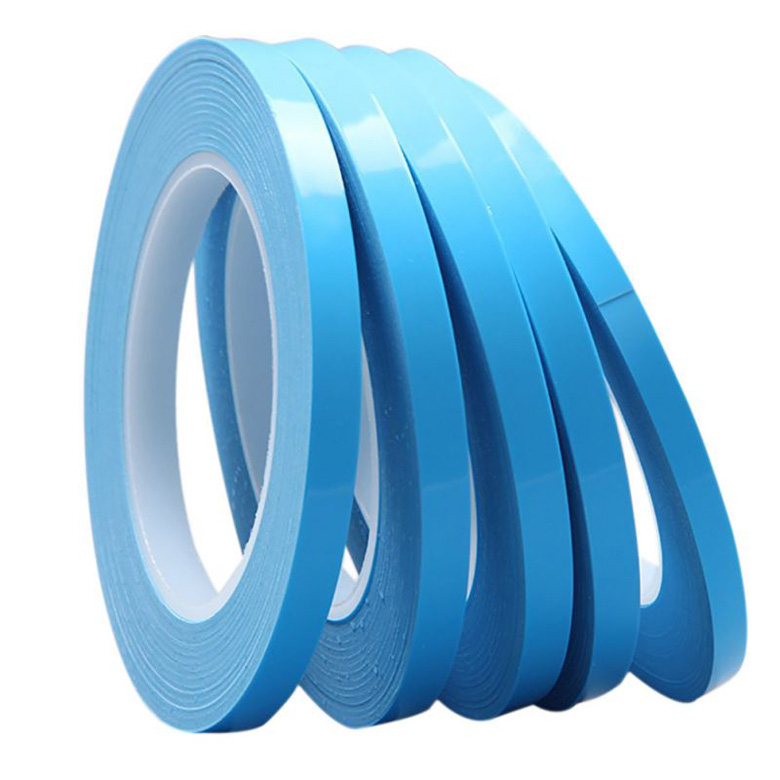
One practical solution is ITousen’s Thermal Conductive Double-Sided Tape , which can function both as a thermal interface material and as a stable adhesive layer in high-temperature environments.

From an engineering application perspective, this type of thermal resistance tape can be effectively used in:
- Thermal coupling between electronic modules and heat sinks;
- Attachment of heat spreaders in control cabinets;
- Supplementary thermal management at pipe supports and brackets;
- High-frequency thermal cycling environments where mechanical fasteners are impractical.
The combination of strong adhesion, thermal stability, and controlled heat transfer simplifies installation while improving overall system reliability.
6. Practical Selection Strategy for Engineering Projects
Based on field experience, the following selection process is recommended when evaluating thermal resistance tape or thermal tape for pipes:
- Define actual temperature conditions, including peak and continuous operating limits;
- Evaluate thermal cycling behavior rather than static temperature resistance only;
- Verify material compatibility with pipe coatings, metals, and insulation layers;
- Conduct small-scale validation tests before full deployment in critical areas.
This engineering-driven approach significantly reduces the risk of premature material degradation and unplanned maintenance.
7. Typical Industrial Application Scenarios
Case 1: Steam Recovery Pipeline Insulation Upgrade
In chemical processing facilities, thermal tape for pipes is often applied to reinforce existing insulation layers and reduce heat loss at connection points. Properly selected thermal resistant tape can improve system efficiency while preventing insulation displacement caused by vibration.
Case 2: Thermal Management in Automation Equipment
Inside automated production lines, thermal resistance tape is frequently used to secure thermal interface components and optimize heat dissipation paths. Improved thermal stability directly contributes to reduced failure rates and extended equipment service life.
Conclusion
From an engineering perspective, thermal resistance tape, thermal resistant tape, and thermal tape for pipes are essential materials in modern thermal management systems. Their correct selection and application influence not only temperature control but also mechanical reliability and long-term operating costs.
By focusing on material properties, system requirements, and verified performance data, engineers can integrate thermal tape solutions into broader thermal design strategies with confidence. When combined with reliable products such as ITousen’s thermal conductive double-sided tape, thermal management becomes both more efficient and easier to implement in complex industrial environments.
High Performance SSD GPU and CPU Thermal Pad Solutions
Thermal Heat Pad Guide Best GPU Thermal Pads Selection
Related Article