
Thermal Pad Solutions for Energy Storage Battery Thermal Management
Thermal Management in Energy Storage Battery Systems: An Engineer’s Perspective on Thermal Pad Selection
In modern energy storage battery systems, thermal management is no longer a secondary consideration—it is a core engineering discipline that directly impacts safety, performance, and service life. As battery energy density and system power continue to increase, effective heat dissipation has become one of the most critical challenges for system designers.
From an engineering standpoint, thermal interface materials such as thermal pads play a fundamental role in maintaining thermal stability across battery modules, power electronics, and structural heat spreaders. This article provides a technical, objective analysis of thermal pad applications in energy storage systems, focusing on material selection principles, performance requirements, and real-world engineering practices.
Why Thermal Management Is Critical in Energy Storage Batteries
Energy storage batteries generate heat through internal resistance, electrochemical reactions, and power conversion processes. If this heat is not properly managed, excessive or uneven temperature distribution can lead to:
- Accelerated battery aging and capacity fade
- Reduced charge–discharge efficiency
- Increased risk of thermal runaway
- Inconsistent performance between battery cells
For engineers designing battery packs, maintaining temperature uniformity is often as important as controlling peak temperature. This is where thermal pad solutions become indispensable, especially when mechanical tolerances and surface flatness cannot be perfectly controlled.
The Role of Thermal Pads in Battery Thermal Management
A thermal pad is a compliant thermal interface material designed to fill microscopic air gaps between heat-generating components and heat dissipation structures. Compared with air, which has extremely low thermal conductivity, thermal pads significantly reduce interfacial thermal resistance.
In energy storage systems, thermal pads are commonly applied between:
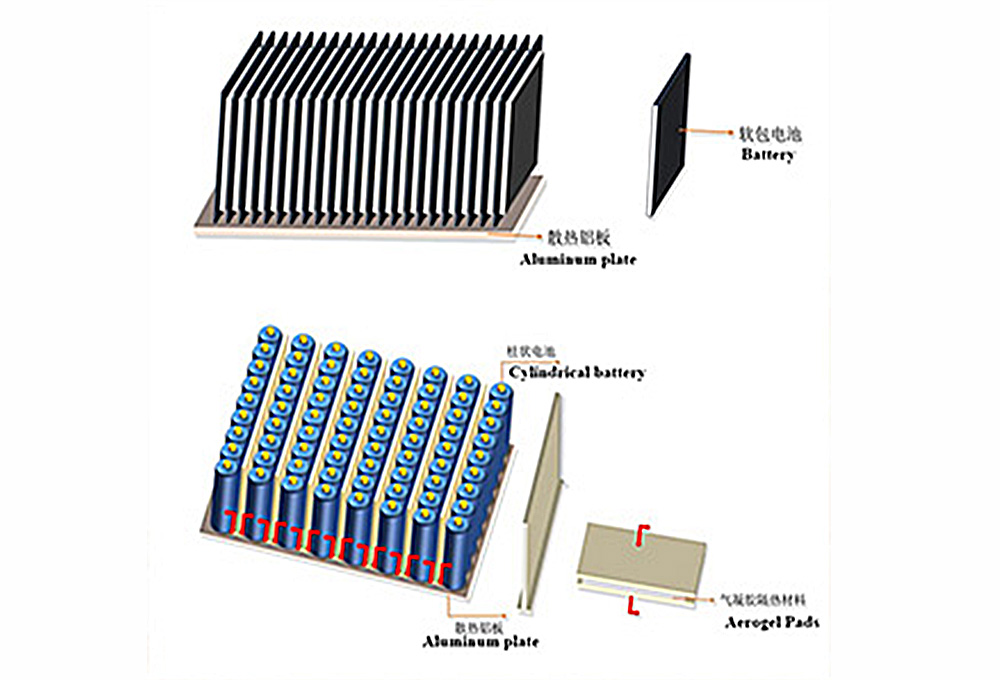
- Battery cells and cooling plates
- Battery modules and aluminum housings
- Power conversion components and heat sinks
By conforming to surface irregularities, thermal pads improve effective contact area and enable more consistent heat transfer throughout the system.
Key Engineering Criteria for Thermal Pad Selection
From an engineering evaluation perspective, selecting the right thermal pad requires balancing multiple performance parameters rather than focusing on a single data point. Key criteria include:
1. Thermal Conductivity
Thermal conductivity (W/m·K) determines how efficiently heat can pass through the material. Higher values generally improve heat transfer, but they must be evaluated together with thickness and compression behavior.
2. Compressibility and Mechanical Compliance
Battery systems involve stack tolerances, vibration, and thermal expansion. A suitable thermal pad must maintain stable contact pressure while accommodating mechanical movement over long operating cycles.
3. Electrical Insulation
In high-voltage energy storage systems, electrical insulation is non-negotiable. Most silicone-based thermal pads provide excellent dielectric strength, reducing the risk of short circuits.
4. Long-Term Reliability
Thermal pads must withstand prolonged exposure to elevated temperatures without hardening, oil bleeding, or performance degradation.
Pad Thermalr Me: Evolving Expectations for Thermal Interface Materials
As energy storage systems scale in capacity and power density, traditional thermal solutions are being pushed to their limits. This has driven increasing attention toward next-generation interface materials, often discussed under emerging concepts such as pad thermalr me.
From an engineering viewpoint, this trend emphasizes not only higher thermal conductivity, but also:
- Lower overall thermal resistance at realistic compression levels
- Stable performance under cyclic thermal loading
- Compatibility with automated assembly processes
Rather than relying solely on nominal material specifications, engineers increasingly validate pad thermalr me solutions through system-level thermal simulations and physical testing.
Application Example: Thermal Pads in High-Capacity Energy Storage Systems
In a recent high-capacity energy storage project, localized overheating was observed within battery modules despite the use of aluminum cooling plates. Detailed thermal analysis revealed insufficient interface contact due to surface flatness variations.
By introducing properly specified thermal pads between the battery modules and cooling plates, interfacial thermal resistance was significantly reduced. Post-implementation testing showed:
- Improved temperature uniformity across modules
- Lower peak operating temperatures
- Enhanced overall system stability
This case reinforces the importance of selecting thermal pads based on real mechanical and thermal conditions, rather than theoretical assumptions alone.
Integrating Product-Level Solutions into Engineering Design
When evaluating commercial thermal pad solutions, engineers should prioritize suppliers with strong material consistency, technical documentation, and customization capabilities.
One example suitable for energy storage battery applications is the silicone-based thermal pad solution available at:
https://www.itousen.com/sf500-silicone-thermal-pad.html

This thermal pad series offers a balanced combination of thermal conductivity, mechanical compliance, and electrical insulation, making it suitable for battery modules, power electronics, and auxiliary thermal interfaces within energy storage systems.
From an engineering integration perspective, such thermal pad products support simplified assembly while maintaining consistent thermal performance over long-term operation.
Engineering Recommendations
Effective battery thermal management should be addressed from the earliest design stages. Engineers are advised to:
- Incorporate thermal interface materials into early thermal simulations
- Validate thermal pad performance under realistic compression conditions
- Conduct long-duration reliability testing
- Collaborate closely with material suppliers during design optimization
By integrating high-quality thermal pads and advanced pad thermalr me concepts into system architecture, energy storage solutions can achieve higher reliability, improved safety margins, and extended operational life.
Conclusion
Thermal management remains one of the defining engineering challenges in modern energy storage battery systems. As power density increases, the role of thermal interface materials—particularly thermal pad solutions—becomes increasingly critical.
Through objective evaluation, careful material selection, and data-driven testing, engineers can leverage thermal pads to significantly enhance system thermal performance. Emerging approaches such as pad thermalr me further highlight the ongoing evolution of thermal interface technology within the energy storage industry.
A well-engineered thermal pad is not simply an accessory—it is a foundational component of reliable, safe, and high-performance energy storage systems.
Thermal Pads for EV Thermal Management-Engineering Perspective
High Performance SSD GPU and CPU Thermal Pad Solutions
Related Article