
Thermal Pad Solutions for EV Charging Stations-Engineering View
An Engineer’s Perspective on Thermal Management in EV Charging Stations
As electric vehicles continue to gain widespread adoption, the demand for reliable and high-power charging infrastructure has increased significantly. Modern EV charging stations—especially high-power DC fast chargers—are no longer simple electrical devices. They are complex power conversion systems that integrate high-density power modules, control electronics, and advanced communication units.
From a thermal engineering standpoint, effective heat dissipation is one of the most critical factors determining system reliability, safety, and long-term performance. Among various thermal interface materials (TIMs), the thermal pad has become a key component in pad thermal management strategies for EV charging equipment.
Why Thermal Management Matters in EV Charging Systems
High-power charging stations operate under continuous electrical and thermal stress. Power semiconductors such as IGBTs, MOSFETs, rectifiers, and capacitors generate substantial heat during operation. If this heat is not efficiently transferred away from critical components, it can lead to:
- Increased junction temperatures and reduced component efficiency
- Accelerated aging of electronic components
- Unstable system performance or unexpected shutdowns
- Potential safety risks under extreme operating conditions
For engineers, thermal management is not an afterthought—it is a core design requirement. Optimizing heat flow paths from the heat source to the cooling structure is essential, and this is where thermal pads play a crucial role.
The Role of Thermal Pads in Charging Station Design
What Is a Thermal Pad?
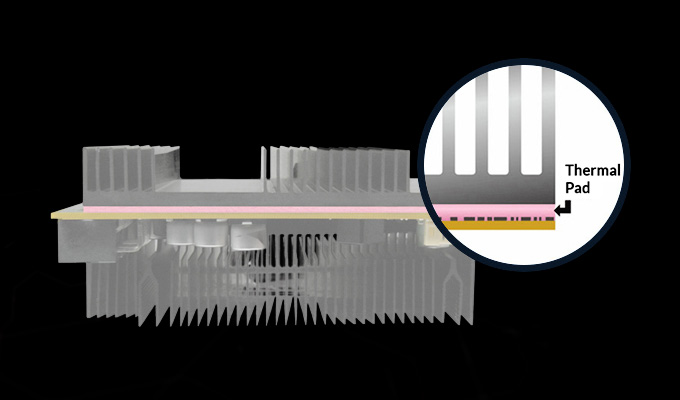
A thermal pad is a solid yet compressible thermal interface material designed to fill microscopic air gaps between heat-generating components and heat sinks or enclosures. Unlike thermal grease, thermal pads offer consistent thickness, clean installation, and reliable long-term performance.
In EV charging stations, surfaces are rarely perfectly flat. Even minor surface irregularities can introduce air gaps that dramatically increase thermal resistance. Thermal pads eliminate these gaps, creating a continuous and efficient heat transfer path.
Common Applications of Thermal Pads in EV Chargers
From practical engineering experience, thermal pads are commonly applied in the following areas:
- Between power semiconductor modules and aluminum heat sinks
- Between power control boards and metal enclosures
- Inside power modules where vibration resistance is required
- Applications requiring both thermal conductivity and electrical insulation
Compared with liquid TIMs, thermal pads provide superior mechanical stability and repeatable assembly performance—key advantages for mass production and field maintenance.
Engineering Criteria for Selecting Thermal Pads
Selecting the right thermal interface material is a data-driven engineering decision. When evaluating a thermal pad for EV charging equipment, engineers typically consider the following parameters:
Thermal Conductivity
Thermal conductivity directly impacts how efficiently heat is transferred from the component to the cooling structure. High-power charging systems often benefit from higher-conductivity thermal pads to minimize overall thermal resistance.
Compressibility and Conformability
A well-designed thermal pad must compress enough to accommodate tolerances while maintaining sufficient contact pressure. Balanced compressibility ensures optimal pad thermal management without compromising mechanical integrity.
Electrical Insulation
Safety is critical in high-voltage charging systems. Thermal pads used in these environments must provide reliable electrical insulation to prevent short circuits or dielectric breakdown.
Long-Term Reliability
Thermal cycling, vibration, and continuous high-temperature operation demand materials that resist aging, deformation, and performance degradation over time.
Pad Thermal Management for High-Power Applications
Advanced pad thermal management solutions are engineered to meet the demanding conditions of industrial and EV charging environments. High-performance thermal pads combine elevated thermal conductivity with excellent mechanical compliance, ensuring stable thermal performance throughout the product lifecycle.
These materials are especially valuable in charging stations where compact designs and increasing power densities leave little margin for thermal inefficiency. A properly selected thermal pad can significantly reduce component temperatures, contributing to improved system uptime and extended service life.
For engineers seeking reliable thermal interface materials tailored for high-power electronics, a range of industrial-grade thermal pad solutions is available here:
High-Performance Thermal Pads for Power Electronics

Integrating Thermal Pads into a Complete Thermal Strategy
It is important to note that thermal pads are part of a broader thermal management system. Optimal results are achieved when thermal interface materials are selected in coordination with:
- Heat sink design and surface finish
- Airflow or liquid cooling strategies
- Mechanical assembly tolerances
- System-level thermal simulations and validation testing
When integrated correctly, thermal pads provide a reliable, scalable, and cost-effective solution for managing heat in EV charging infrastructure.
Conclusion
As EV charging technology continues to evolve toward higher power and greater reliability requirements, effective thermal management remains a fundamental engineering challenge. The strategic use of thermal pad materials enables engineers to bridge mechanical gaps, reduce thermal resistance, and enhance system stability.
From an engineering perspective, investing in high-quality thermal pads is not merely a materials choice—it is a design decision that directly impacts performance, safety, and long-term operational success. In the context of modern EV charging stations, advanced pad thermal management solutions are an essential part of building dependable and future-ready infrastructure.
Thermal Pad Solutions for Home Appliances-Engineering Insight
Thermal Pads for EV Thermal Management-Engineering Perspective
Related Article