
Thermal Pads for EV Thermal Management-Engineering Perspective
Thermal Pads in Electric Vehicle Thermal Management: An Engineer’s Perspective
As electric vehicles (EVs) continue to scale in power density, energy efficiency, and system integration, thermal management has evolved from a supporting function into a core engineering discipline. Battery packs, power electronics, and drive units all operate under increasingly demanding thermal conditions. From an engineering standpoint, the reliability, safety, and lifespan of an EV are inseparable from the effectiveness of its thermal design.
Among the many components within an EV thermal management system, the thermal pad often receives less attention than active cooling technologies such as liquid cold plates or heat exchangers. However, in practical engineering applications, thermal pads play a decisive role in reducing interface thermal resistance and ensuring stable heat transfer across critical assemblies.
Understanding the Role of Thermal Pads in EV Systems
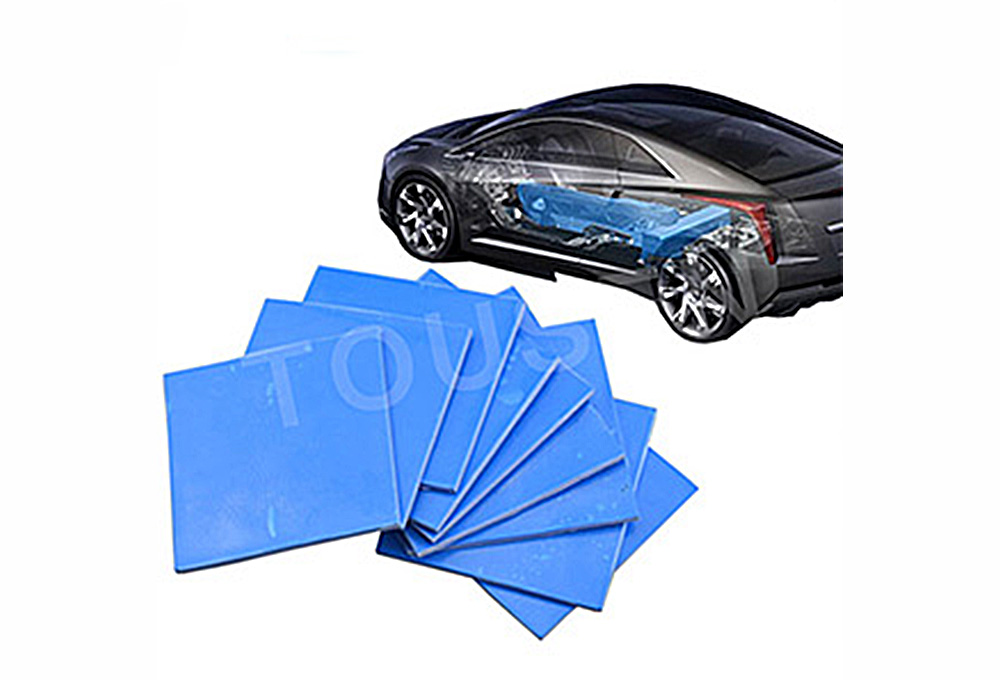
A thermal pad is a compliant thermal interface material (TIM) designed to bridge microscopic air gaps between heat-generating components and heat-dissipating structures. In electric vehicles, such interfaces are found throughout the system, including battery modules, inverter housings, onboard chargers (OBC), DC-DC converters, and motor controllers.
From an engineering perspective, air gaps represent one of the largest contributors to thermal resistance. Even surfaces that appear flat at the macro level exhibit roughness at the microscopic scale. Properly selected thermal pads deform under compression, filling these gaps and establishing a continuous thermal conduction path. This function is central to effective pad thermal management strategies in EV platforms.
Key Thermal Challenges in Electric Vehicles
Electric vehicles present a unique combination of thermal challenges:
- High power density in compact electronic assemblies
- Wide operating temperature ranges
- Frequent thermal cycling during charge and discharge
- Mechanical vibration and long-term reliability requirements
For example, lithium-ion battery cells must remain within a narrow temperature window to maintain performance and safety. Uneven temperature distribution within a battery pack can accelerate cell aging and increase the risk of thermal runaway. In such cases, thermal pad solutions are commonly used between cells, modules, and cooling plates to improve thermal uniformity.
Similarly, power electronics such as IGBT or MOSFET modules generate localized heat fluxes that must be efficiently transferred to heat sinks or liquid cooling structures. In these assemblies, thermal pads provide both thermal conduction and electrical insulation, supporting compact and reliable designs.
Critical Performance Parameters for Thermal Pads
Selecting the appropriate thermal pad for EV applications requires a system-level evaluation rather than reliance on a single material parameter. Engineers typically consider the following key factors:
1. Thermal Conductivity
Thermal conductivity indicates how efficiently heat flows through the material. While higher values are generally preferred, real-world performance depends on the entire interface, not just the material itself. In EV power electronics and battery systems, thermal pads with medium-to-high thermal conductivity are commonly adopted to balance performance and mechanical compliance.
2. Contact Thermal Resistance
Interface resistance often dominates overall heat transfer performance. A thermal pad with moderate conductivity but excellent surface conformity may outperform a rigid, high-conductivity material in practical applications. This is a key consideration in pad thermal management design.
3. Compressibility and Mechanical Stability
EV assemblies experience vibration and thermal expansion over long service lives. Thermal pads must maintain stable thickness and performance under repeated compression and temperature cycling without excessive creep or degradation.
4. Electrical Insulation and Safety
Many EV components operate at high voltage. In these cases, thermal pads must provide reliable electrical insulation in addition to heat transfer, ensuring compliance with safety standards.
Common Misconceptions in Thermal Pad Selection
A frequent misconception in early-stage design is that higher thermal conductivity automatically leads to better system performance. In practice, thermal interface effectiveness is influenced by surface flatness, mounting pressure, material thickness, and long-term stability.
From an engineering viewpoint, the optimal thermal pad is the one that minimizes total interface thermal resistance under real operating conditions. This is why prototype testing and thermal validation remain essential steps in EV development programs.
Why Supplier Expertise Matters
Thermal interface materials are not purely commodity products. Consistent material quality, thickness tolerance, and application-specific support are critical for successful integration. Experienced suppliers are able to provide:
- Multiple thermal conductivity options
- Custom thicknesses and die-cut solutions
- Stable material formulations for long-term reliability
- Engineering-level technical support
ITousen offers a comprehensive portfolio of thermal pads designed for demanding thermal management environments, including electric vehicle applications. Their solutions support both standard and customized requirements across battery systems, power electronics, and motor control assemblies.
More detailed product specifications and application options can be found at:
https://www.itousen.com/TIM-thermal-pads.html

Engineering Case Insight: Power Electronics Cooling
In a recent EV inverter project, localized overheating was observed in high-frequency switching components during peak load conditions. Thermal analysis revealed excessive interface resistance between the power module baseplate and the cooling structure.
By replacing the original interface material with a properly specified thermal pad, optimized for compressibility and long-term stability, the maximum junction temperature was reduced by approximately 10°C. The improvement resulted in enhanced thermal margins, increased system reliability, and improved overall performance consistency.
This case highlights how well-designed thermal pads can deliver measurable benefits in real-world EV systems.
Conclusion: Thermal Pads as a Foundation of EV Thermal Design
Thermal management is not an auxiliary consideration in electric vehicle engineering—it is a foundational design requirement. From battery longevity to power electronics reliability, effective heat transfer underpins system performance and safety.
Within this context, thermal pads serve as critical enablers of efficient pad thermal management, ensuring stable and repeatable thermal interfaces throughout the vehicle. Engineers who approach thermal pad selection with a system-level mindset—considering material properties, mechanical behavior, and application conditions—are better positioned to achieve robust and scalable EV designs.
For engineers seeking reliable thermal interface solutions tailored to electric vehicle applications, ITousen’s thermal pad portfolio provides a proven and adaptable foundation for modern thermal management systems.
Thermal Pad Solutions for EV Charging Stations-Engineering View
Thermal Pad Solutions for Energy Storage Battery Thermal Management
Related Article