TOUSEN Technical Insight: Thermal Pads vs Insulation Sheets Explained
TOUSEN Technical Insight | Thermal Pads vs. Thermal Insulation Sheets: Name Confusion and Application Differences
In power electronics, automotive electronics, energy storage, UPS systems, and power modules, engineers often encounter confusion when selecting thermal interface materials (TIMs): “Thermal Pads” and “Thermally Conductive Insulation Sheets / Films / Cloths” have similar names but differ significantly in structure and applications. Misunderstanding these distinctions can lead to suboptimal material selection, affecting thermal performance and electrical insulation reliability.
This article provides an in-depth analysis from the perspective of material structure, mechanical properties, thermal resistance, and typical applications. We present three representative materials in a key parameter comparison table to help engineers clearly differentiate these two categories:
- ITOUSEN SC800-PI-2-K10 Film
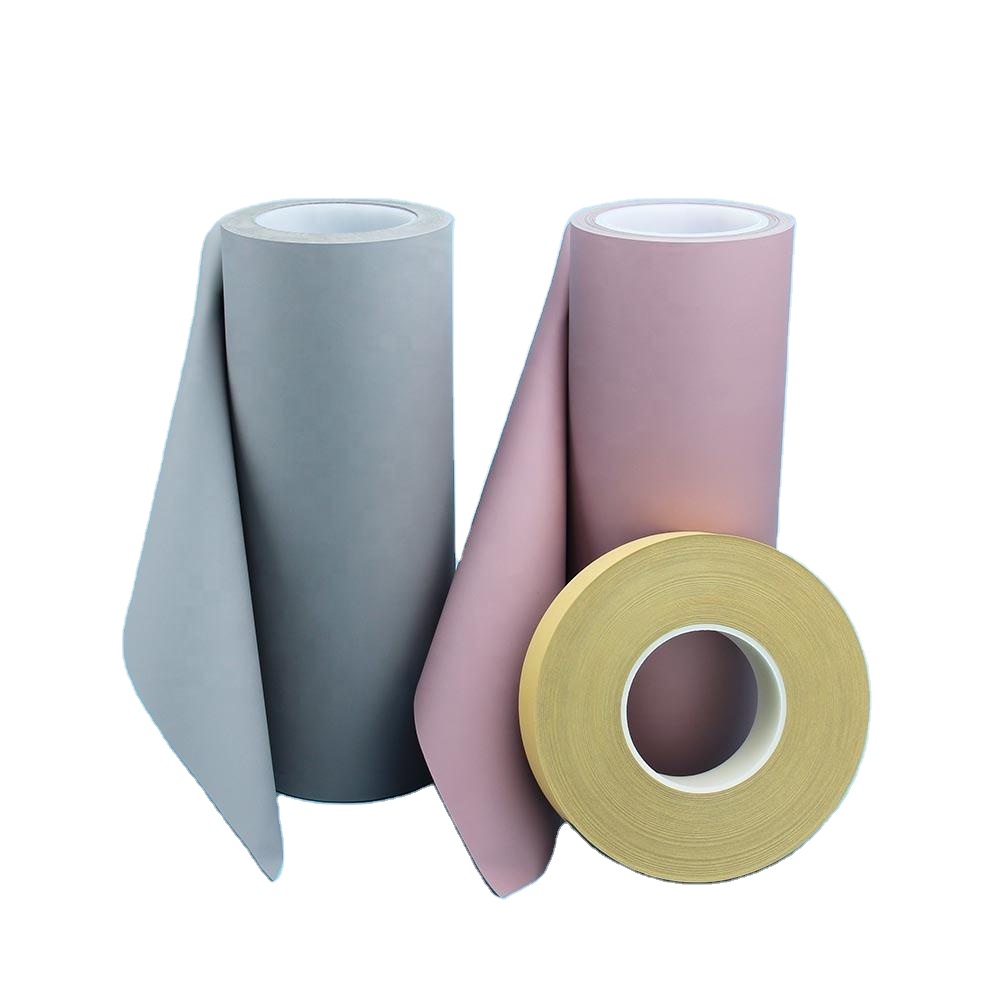
- ITOUSEN SPA-SP050 High-Thermal Conductivity Insulation Sheet
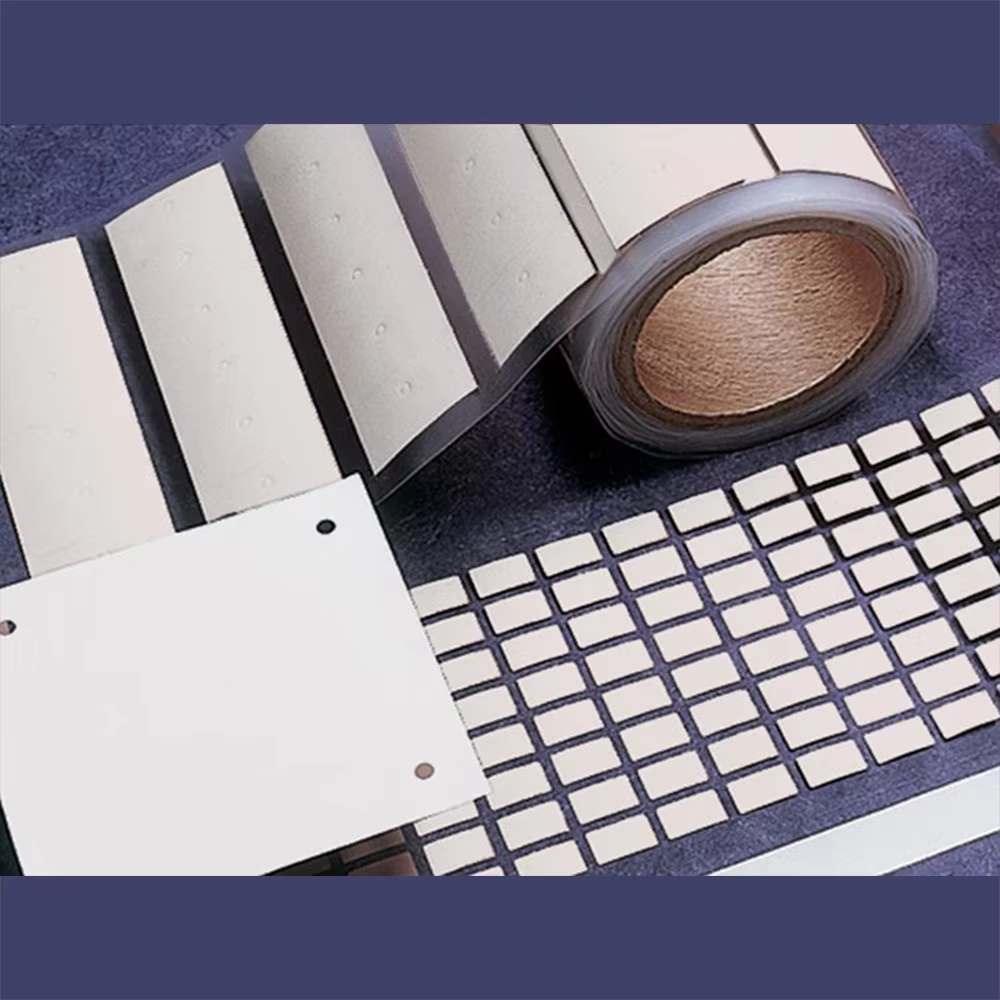
- B******** Sil-Pad K-10
1. Key Parameters of Three Representative Materials
| Property | B******** Sil‑Pad K‑10 | SC800‑PI‑2‑K10 Film | SPA‑SP050 High-Thermal Conductivity Insulation Sheet |
|---|---|---|---|
| Structure / Type | Kapton (PI) film with silicone coating | Polyimide (PI) film with double-sided thermal silicone | Silicone + Boron Nitride (BN) filler + fiberglass-reinforced sheet |
| Thermal Conductivity (W/m·K) | ~1.3 | ~1.3 | 5.0 |
| Thickness | 0.152 mm | 0.15 mm | 0.25–0.50 mm (selectable) |
| Dielectric Breakdown / Voltage | ~6 kV | >4 kV | >4 kV |
| Volume Resistivity / Electrical Insulation | ~10¹² Ω·cm | ~10¹² Ω·cm | >10¹⁴ Ω·cm |
| Compressibility / Mechanical Properties | Nearly incompressible, tear-resistant | Thin film, precision die-cuttable | Low compressibility, high strength, fiberglass-reinforced, dimensionally stable |
| Operating Temperature Range | –60 °C ~ +180 °C | –50 °C ~ +200 °C | –60 °C ~ +200 °C |
| Typical Applications | Base insulation and thermal conduction for power modules | Compact modules and controllers with limited space | High-power density modules, large inverters, EV drives requiring stable insulation and high thermal conductivity |
2. Origin of Name Confusion: Structure Determines Classification, Not Appearance or Thickness
2.1 Thermal Pads
Typical structure:
- Soft silicone elastomer
- Thermally conductive fillers (Al₂O₃, BN, etc.)
- No fiber-reinforced carrier
- High compressibility (10%–40%)
Applications:
- Compensating gaps between components and heatsinks
- Interfaces with uneven surfaces requiring gap filling
- Thermal paths needing both conductivity and compressibility
2.2 Thermal Insulation Sheets / Films / Cloths
Typical structure:
- Polyimide (PI), fiberglass, polyester reinforced substrates
- Flexible thermal silicone coating
- Thin but mechanically strong
- Low compressibility, not suitable for large gap compensation
Applications:
- High-voltage insulation in power modules and electronic devices
- Thin, compact designs
- Requirements for high dielectric strength and stable installation
SPA-SP050 is a fiberglass-reinforced thermal insulation sheet, not a typical compressible thermal pad.
3. Technical Difference 1: Material Structure Determines Thermal Resistance Behavior
- SPA-SP050 provides high thermal conductivity (5 W/m·K) and mechanical strength but low compressibility, ideal for stable mounting and high-power density applications.
- K-10 and SC800 Films are thin and non-compressible, with interface thermal resistance depending primarily on clamping force and surface flatness.
4. Technical Difference 2: Compressibility Determines Interface Thermal Resistance Optimization
Thermal pads can conform to uneven surfaces, reducing interface thermal resistance.
Thermal insulation sheets / films have low compressibility; thermal resistance is determined by thickness and thermal conductivity, suitable for flat, high-pressure interfaces.
5. Technical Difference 3: Thermal Conductivity and Thickness Combine to Affect Thermal Management
- High thermal conductivity alone does not guarantee low interface thermal resistance.
- Thickness and compressibility together determine effective heat transfer through the interface.
- For high-power density modules, fiberglass-reinforced thermal insulation sheets (like SPA-SP050) provide stable thermal conduction and insulation under flat, high-pressure conditions.
6. Overall Conclusion
From an engineering perspective, selecting between thermal pads and thermal insulation sheets requires careful consideration of structure, thermal conductivity, compressibility, mechanical strength, and electrical insulation, rather than relying on commercial naming conventions.
- Thermal Pads: Suitable for gap compensation, compressible, adaptable to interfaces.
- Thermal Insulation Sheets / Films / Cloths: Suitable for flat surfaces, high-power density, mechanically robust, and electrically insulated applications.
By referencing the key parameter table and technical analysis, engineers can quickly identify the material’s intrinsic properties and achieve precise material selection and reliable thermal management in power modules, electronic devices, inverters, and EV drives.
Fighting Thermal Runaway: How High-Performance Thermal Pads Become the Lifeline of New Energy Battery Packs
Related Article