
Can Thermal Silicone Pads Really Reduce Temperature?
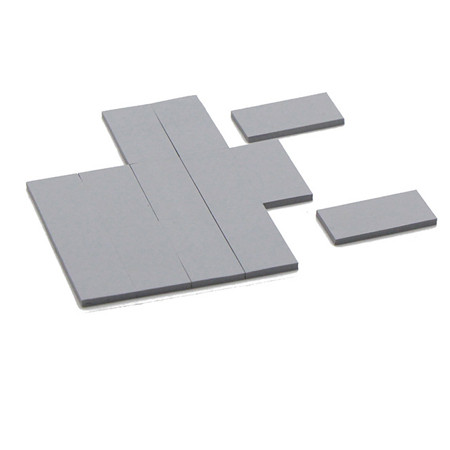
Can Thermal Silicone Pads Really Reduce Temperature?
A Complete Guide to How They Work, Key Parameters, and How to Choose the Right One
In today’s high-performance electronics, thermal management is one of the biggest engineering challenges. Whether it’s a gaming GPU, CPU, compact LED light, or power adapter, excessive heat can cause throttling, reduce efficiency, and shorten device lifespan.
Among all heat dissipation solutions, one small yet powerful material stands out — the thermal silicone pad. But many still wonder: can such a small pad really help reduce temperature effectively? Let’s find out how it works and how to select the right one for your application.
What Is a Thermal Silicone Pad and How Does It Work?
A thermal silicone pad, also known as a thermal interface material (TIM), doesn’t “cool” on its own — it conducts heat.
Its main purpose is to fill the microscopic air gaps between a heat source (such as a chip or IC) and a heat sink or metal casing. Since air is a poor conductor of heat, these gaps create high thermal resistance that blocks efficient heat transfer.
A soft, compressible thermal pad fills those gaps, pushes out trapped air, and creates a continuous thermal conduction path — transferring heat quickly from the component to the heat sink.
In short: Thermal pads don’t generate cooling — they enable it. When properly selected and applied, they can significantly lower operating temperatures and improve device reliability.
Key Performance Factors When Choosing a Thermal Silicone Pad
Not all thermal pads perform the same. Below are the most important factors to consider before buying or specifying one:
1. Thermal Conductivity (W/m·K)
This value measures how efficiently the pad transfers heat. The higher the number, the better the thermal performance. Typical ranges are 1.5 W/m·K to 15 W/m·K, depending on your application and cooling needs.
2. Thickness and Hardness
The thickness should match the actual gap between the heat source and heat sink. Too thick or too thin can reduce performance. Hardness (Shore 00) determines how well the pad conforms to surfaces — too hard causes poor contact, too soft may compress excessively.
3. Electrical Insulation
A high-quality thermal silicone pad not only transfers heat but also provides excellent electrical insulation, preventing short circuits and improving system safety.
4. Flexibility and Compressibility
Good flexibility allows the pad to fit uneven surfaces, while sufficient compressibility ensures full gap filling under pressure, achieving ultra-low thermal resistance.
5. Reliability (Temperature & Aging Resistance)
Durable pads should maintain stable performance across a wide temperature range — typically from -40°C to 150°C — and resist oil bleeding, drying, and aging during long-term use.
Where Are Thermal Pads Used?
Because of their versatility and safety, thermal interface pads are widely used across consumer, automotive, and industrial electronics:
- Computing: GPU/CPU cooling, motherboard VRM modules, SSD heat dissipation.
- LED Lighting: LED strips, floodlights, and driver modules.
- Automotive Electronics: EV battery management systems (BMS), onboard chargers, motor controllers.
- Telecommunications: 5G base stations, routers, and network switches.
- Power Electronics: Inverters, switching power supplies, and power modules.
Selection Tips and Installation Guidelines
✅ Match the Performance to Your Application
Don’t blindly pursue the highest thermal conductivity. Choose the most cost-effective pad that meets your real thermal requirements and budget.
✅ Proper Installation
Before mounting, clean all contact surfaces thoroughly, remove the protective film, and apply even pressure so the pad compresses by 15–30% for optimal contact and heat transfer.
✅ Seek Professional Advice
For complex or high-power applications, consult a professional thermal material supplier. They can help you choose the right thermal interface material (TIM) and offer customized solutions.
Conclusion
In modern thermal design, thermal silicone pads are truly indispensable. By efficiently filling micro-gaps between components, they drastically improve heat dissipation and ensure stable, long-lasting performance.
Though small and often overlooked, these pads are the “invisible heroes” behind reliable, high-performance electronics — from smartphones and LED lights to EV batteries and industrial control systems.
Choosing the right thermal interface material will not only enhance your product’s cooling efficiency but also extend its lifespan and improve customer satisfaction.
TOUSEN Battery Pack Safety System Management
Related Article