Thermal Interface Materials in 5G/6G | TOUSEN SF & BN Pads
Thermal Interface Materials (TIM) in 5G/6G Telecom: Engineering Analysis
Focus: System-level review of TIMs with integrated discussion of TOUSEN SF series silicone thermal pads and boron nitride solutions (Boron Nitride Thermal Pad, BN Gap Filler Pad, High Thermal Conductivity Insulating Pad).
Executive Summary
As radio access networks evolve from 5G toward 6G, power density, integration, and RF frequency content rise. TIMs now directly affect RF performance, reliability, and manufacturability. This document provides a systems-level engineering review of TIM usage, including TOUSEN SF series silicone pads and boron nitride based materials: Boron Nitride Thermal Pad, BN Gap Filler Pad, and High Thermal Conductivity Insulating Pad.
1. Problem Statement: Why TIMs Matter
In BBU, RRU, AAU, and RF front-ends, thermal management protects semiconductor devices and ensures linearity and stability. TIMs reduce interface thermal resistance, provide dielectric insulation near RF circuits, and ensure mechanical compliance for assembly variance and vibration.
2. Functional Categories of TIMs
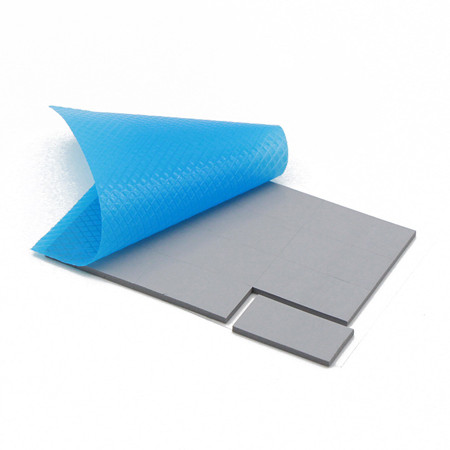
- Silicone Thermal Pads: Sheet-form, compressible. TOUSEN SF series is ideal for general gap filling with consistent thermal performance. View SF series.
- Filled Gap Fillers: Ceramic or BN fillers for higher conductivity while retaining compliance.
- Thermal Films / BN Nanosheets: Thin spreaders for lateral heat transfer in space-constrained areas.
- Thermal Greases / Phase Change Materials: Minimal thermal resistance applications where rework is infrequent.
3. Performance Vectors and Design Constraints
Design must balance thermal conductivity, thermal impedance under assembly pressure, dielectric constant and loss tangent across RF bands, mechanical compliance, outgassing, flammability, and manufacturability. For mmWave and THz modules, dielectric properties are critical.
4. Why Boron Nitride Systems are Technically Attractive
BN-based TIMs — Boron Nitride Thermal Pad, BN Gap Filler Pad, High Thermal Conductivity Insulating Pad — combine low dielectric constant, high thermal conductivity, electrical insulation, and chemical/thermal stability. They are preferred near PA modules, ceramic packages, and mmWave circuits.

5. Practical Integration: Silicone SF Series and BN Solutions
TOUSEN SF series pads provide baseline compressible TIM for bulk gap filling. BN-based TIMs are introduced for RF-sensitive or high-power areas. A hybrid approach is common: SF series for general gaps, BN Gap Filler Pad or Boron Nitride Thermal Pad in localized critical regions.
6. Key Engineering Challenges and Verification Requirements
- Directional vs. bulk conductivity: Verify BN nanosheet orientation meets heat path requirements.
- Thermal impedance under realistic assembly pressure.
- RF dielectric characterization across all operating frequencies.
- Environmental stress testing: thermal cycling, damp heat, vibration, UV exposure.
- Manufacturability: die-cutting, pick-and-place, handling of fragile BN films.
7. Selection Guidance — Engineering Checklist
- Define heat source area and power density.
- Measure mechanical gap distribution post-assembly.
- Specify RF loss and S-parameter tolerances.
- Request vendor datasheets: thermal impedance, dielectric properties, environmental stability.
- Prototype SF series vs BN TIMs for temperature and RF evaluation.
8. Case Notes and Best Practices
Localized BN use at PA or mmWave interfaces combined with SF series pads for general gaps ensures RF compatibility and mechanical robustness. High Thermal Conductivity Insulating Pads are ideal for lateral spreading under tight spacing.
9. Summary and Forward View
BN-based TIMs — Boron Nitride Thermal Pad, BN Gap Filler Pad, High Thermal Conductivity Insulating Pad — excel in high-power, RF-sensitive telecom modules. SF series silicone pads remain reliable for bulk gap filling. Verification-first testing for thermal, dielectric, and mechanical properties is critical for 6G systems.
Thermally Conductive Silicone Pads in TIM: Applications and Challenges
High-Performance Thermal Materials for Mining Rigs | TOUSEN
Related Article