
Kritical Thermal Pads and Thermal Heat Pad Solutions for Laptop Cooling
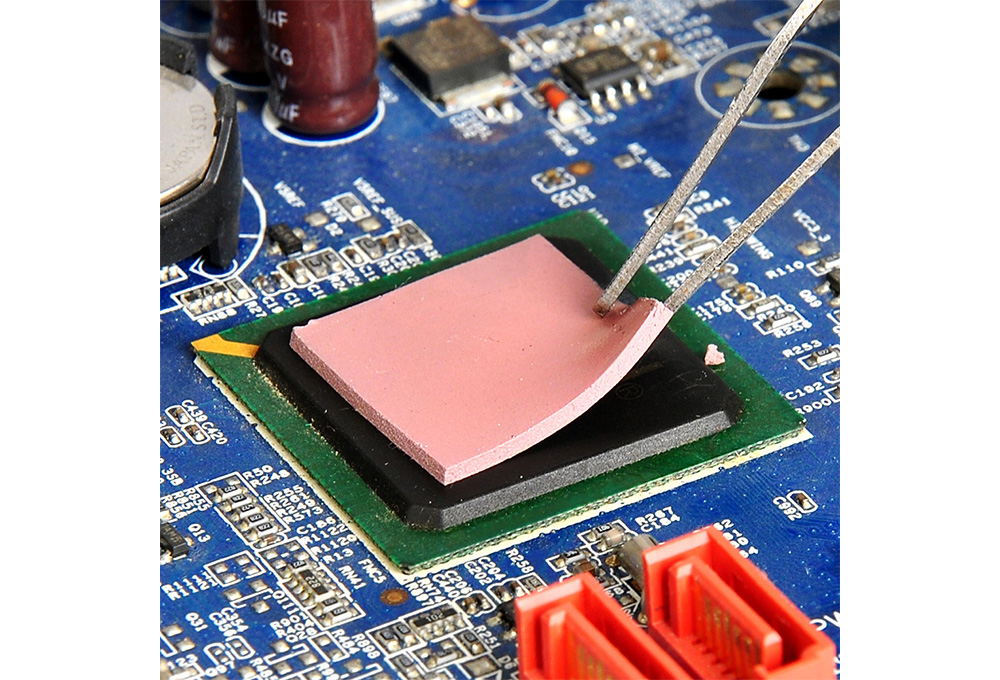
Engineering Perspective on Thermal Interface Materials: The Critical Role of Thermal Pads in Laptop and Electronics Cooling
As electronic devices continue to evolve toward higher power density and more compact form factors, thermal management has become one of the most critical constraints in product design. From an engineering standpoint, the effectiveness of a cooling system is not determined solely by heat sinks and airflow, but also by the quality of thermal interfaces that connect heat sources to dissipation structures. In this context, kritical thermal pads and advanced thermal heat pad materials play a decisive role in reducing thermal resistance and improving long-term reliability, especially in highly integrated systems such as thermal pad laptop designs.
Why Thermal Interface Materials Matter in Modern Electronics
In practical thermal design, microscopic surface roughness between components such as processors, power modules, heat pipes, and heat spreaders creates air gaps that significantly increase interface thermal resistance. Even precisely machined metal surfaces cannot achieve perfect contact. This is where kritical thermal pads become essential: their compliant structure allows them to conform to surface irregularities, displacing trapped air and forming an efficient thermal bridge between heat-generating devices and cooling hardware.
Compared with traditional thermal greases, a properly selected thermal heat pad offers more consistent thickness control, cleaner assembly, and improved mechanical stability over repeated thermal cycles. These advantages are particularly relevant in thermal pad laptop assemblies, where compact layouts, vibration, and frequent temperature fluctuations can degrade conventional interface materials over time.
Key Performance Parameters Engineers Evaluate
When engineers specify kritical thermal pads for production designs, several performance metrics must be evaluated together rather than in isolation. Thermal conductivity is often the most visible parameter, but interface performance is equally influenced by compressibility, elastic recovery, dielectric strength, and operating temperature range.
A high-performance thermal heat pad must maintain low thermal resistance not only under initial assembly pressure, but also after long-term exposure to heat and mechanical stress. In laptop applications, for example, repeated power cycling and structural flex can gradually alter contact pressure. Therefore, the mechanical stability of thermal pad laptop materials is as important as their nominal thermal conductivity values.
Thermal Pads in Laptop System-Level Design
From a system engineering perspective, laptops present one of the most demanding thermal environments. Multiple heat sources—including CPUs, GPUs, voltage regulators, and memory modules—must share limited cooling capacity within a tightly confined chassis. Strategic placement of kritical thermal pads enables efficient heat spreading across heat pipes and shared heat sinks, helping balance temperature distribution across the entire thermal network.
In controlled validation tests, replacing low-performance interface materials with optimized thermal heat pad solutions has demonstrated measurable temperature reductions at critical junction points. For certain high-power notebook platforms, improved thermal pad laptop configurations can reduce peak component temperatures by several degrees Celsius, which directly contributes to higher sustained performance and reduced fan noise.
Material Selection and Structural Compatibility
Selecting appropriate kritical thermal pads requires careful coordination between thermal simulation and mechanical design. Pad thickness must accommodate component height tolerances without introducing excessive compression forces that could damage sensitive packages or circuit boards. At the same time, insufficient compression may lead to elevated thermal resistance.
Advanced thermal heat pad formulations with enhanced filler technology can achieve both high conductivity and good conformability, allowing engineers to optimize thermal performance while maintaining assembly safety margins. In thermal pad laptop systems, where stacking height and mechanical tolerances are tightly controlled, such material consistency is essential for mass production reliability.
Reliability Under Thermal and Mechanical Stress
Beyond initial performance, long-term stability is a key concern in professional thermal design. Accelerated aging tests and thermal cycling evaluations are commonly used to verify that kritical thermal pads maintain structural integrity and thermal efficiency throughout the product lifecycle. Material degradation, pump-out effects, or permanent deformation can compromise heat transfer if not properly controlled.
High-quality thermal heat pad materials are engineered to resist hardening, cracking, and performance drift, even under continuous high-temperature operation. For mobile platforms, robust thermal pad laptop solutions ensure consistent cooling across years of real-world use, protecting sensitive semiconductor devices from premature failure.
Integration with Overall Cooling Architecture
Thermal interface materials should never be evaluated in isolation. Effective cooling depends on the entire heat transfer path, including heat spreaders, vapor chambers, fin stacks, and airflow management. Well-designed kritical thermal pads reduce interface resistance, allowing downstream cooling components to operate closer to their theoretical efficiency limits.
During the design phase, computational thermal modeling can predict how different thermal heat pad options influence temperature distribution across the system. These models help engineers refine thermal pad laptop placement strategies and validate design margins before physical prototypes are built, reducing development cycles and minimizing late-stage redesigns.
Engineering-Validated Product Solutions
For projects requiring stable and scalable thermal interface solutions, the TOUSEN TIM Thermal Pad series offers well-balanced material properties and consistent manufacturing quality. These products are designed to meet the demanding requirements of modern electronics, including high thermal conductivity, reliable compression behavior, and strong dielectric performance.
Detailed technical specifications and application guidance can be found at: https://www.itousen.com/TOUSEN-TIM-THERMAL-PAD.HTML . From an engineering standpoint, such validated kritical thermal pads provide a practical foundation for building robust and efficient thermal pad laptop cooling architectures, while also supporting broader applications across industrial and communication equipment.

Conclusion: Thermal Pads as a Core Element of Reliable Thermal Design
In modern electronic systems, thermal interface materials are no longer secondary components but core elements of the overall thermal strategy. Properly engineered kritical thermal pads and high-performance thermal heat pad solutions directly influence system stability, acoustic performance, and long-term reliability. For compact and high-power platforms, particularly in thermal pad laptop applications, disciplined material selection and placement are critical engineering decisions that should be addressed early in the design process.
By integrating reliable thermal interface materials with optimized mechanical design and airflow management, engineers can achieve balanced, repeatable, and scalable thermal solutions that support both performance and durability in next-generation electronic products.
Engineering Guide to Gold Thermal Tape for Electrical Systems
Thermal Pad vs Thermal Compound and Best Thermal Pads for GPU
Related Article