Phase Change Thermal Pad Analysis: PTM7950 vs SP250A-60
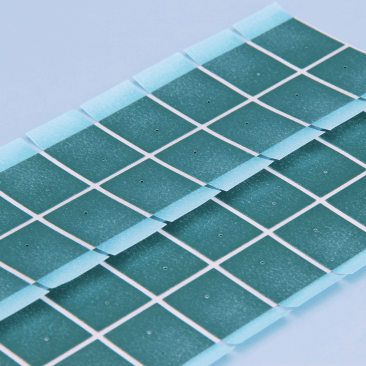
Phase Change Thermal Pads: Engineering Evolution Driven by High-Power Electronics
Over the past two years, phase change thermal interface materials have gained remarkable momentum in the thermal management market. Driven by rapidly increasing power density in CPUs, GPUs, AI accelerators, and power electronics, conventional thermal greases and standard thermal pads are increasingly challenged by long-term reliability, process consistency, and interface resistance. Against this background, the ptm7950 thermal pad has become one of the most frequently referenced benchmarks in high-performance applications, bringing phase change thermal pad technology into mainstream engineering discussions.
Among these materials, honeywell ptm7950 is widely recognized for combining low thermal impedance with the handling convenience of a solid pad. At the same time, TOUSEN—an integrated thermal management materials supplier with more than 15 years of experience in R&D, manufacturing, and global supply—has introduced its own high-performance phase change solution: SP250A-60. This article provides an objective, engineering-oriented analysis of phase change thermal pads, with a direct technical comparison between Honeywell PTM7950 and TOUSEN SP250A-60.
Understanding Phase Change Thermal Pad Technology
A phase change thermal pad is designed to transition from a solid to a semi-liquid state when the operating temperature exceeds a defined phase change point, typically around 45–55 °C. During assembly, the material remains solid, enabling clean handling and precise placement without the drawbacks of thermal grease. Once the device reaches operating temperature, the material softens and flows microscopically, filling surface asperities and eliminating interfacial air gaps.
From a thermal engineering perspective, this mechanism significantly reduces contact thermal resistance, allowing the interface to approach the performance of liquid-based materials while retaining excellent mechanical stability. Compared with traditional thermal grease, phase change thermal pads offer superior resistance to pump-out, dry-out, and contamination, especially under long-term thermal cycling.
These advantages explain why the ptm7950 thermal pad has become a preferred solution in high-end computing platforms, and why similar phase change thermal pad technologies are increasingly specified in enterprise and industrial designs.
Honeywell PTM7950: Industry Reference for Phase Change Materials
Honeywell PTM7950 is widely regarded as a reference-grade phase change thermal interface material. Its popularity is rooted in a strong balance between thermal conductivity, low thermal impedance, and proven reliability in demanding environments.
Key engineering characteristics of honeywell ptm7950 include a thermal conductivity of approximately 8.5 W/m·K and exceptionally low interface thermal resistance once phase transition occurs. The material is available in multiple thickness options, typically ranging from 0.2 mm to 0.5 mm, making it adaptable to different mechanical tolerances and stack-up designs.
In practice, the ptm7950 thermal pad is frequently specified in server CPUs, high-performance GPUs, networking ASICs, and power modules where interface thermal resistance directly limits system performance. For engineers, PTM7950 represents a mature, well-characterized solution with predictable thermal behavior.
TOUSEN SP250A-60: Engineering-Oriented Phase Change Solution
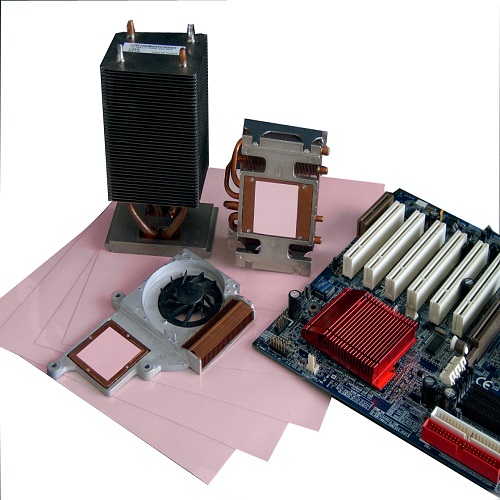

Building on extensive experience in thermal interface material development, TOUSEN has introduced SP250A-60, a high-performance phase change thermal pad designed to address both thermal efficiency and manufacturability. While sharing the same fundamental working principle as the ptm7950 thermal pad, SP250A-60 emphasizes balanced performance across thermal, mechanical, and process dimensions.
SP250A-60 exhibits a thermal conductivity of 6.0 W/m·K, combined with very low thermal impedance under typical assembly pressures. Its phase change temperature window is carefully controlled to ensure effective interface wetting during normal device operation, without excessive material migration.
From a production standpoint, SP250A-60 offers excellent die-cutting accuracy, dimensional stability, and rework capability, making it well suited for automated assembly lines and volume manufacturing. Detailed product information is available at: https://www.itousen.com/high-performance-phase-change-thermal-pad.html
Technical Comparison: PTM7950 vs. SP250A-60
To support objective material selection, the following table summarizes key technical parameters of honeywell ptm7950 and TOUSEN SP250A-60. All values are based on typical datasheet information and standard test conditions.
| Parameter | Honeywell PTM7950 | TOUSEN SP250A-60 |
|---|---|---|
| Material Type | Phase Change Thermal Pad | Phase Change Thermal Pad |
| Thermal Conductivity | ~8.5 W/m·K | 6.0 W/m·K |
| Thermal Impedance | Low (typ. 0.04–0.08 °C·cm²/W) | Very Low (typ. 0.015 °C·in²/W @ 30 psi) |
| Phase Change Temperature | ~45 °C | ~45–55 °C |
| Available Thickness | 0.2–0.5 mm | 0.2–0.5 mm (customizable) |
| Density | ~2.8 g/cm³ | ~3.0 g/cm³ |
| Typical Applications | Server CPUs, GPUs, ASICs | CPUs, GPUs, VRAM, Power Electronics |
The comparison shows that while honeywell ptm7950 offers higher intrinsic thermal conductivity, SP250A-60 delivers competitive interface performance with optimized thermal impedance and enhanced processing flexibility. Both materials clearly outperform conventional thermal pads in high-heat-flux environments.
Application Considerations for Engineers
When selecting a phase change thermal pad, engineers should evaluate not only peak thermal conductivity, but also long-term interface stability, mechanical compliance, and manufacturing compatibility. In ultra-high-performance systems where maximum thermal headroom is critical, the ptm7950 thermal pad remains a proven choice.
For high-volume electronics, industrial systems, and designs requiring consistent assembly quality, TOUSEN SP250A-60 provides a well-balanced alternative with strong cost-performance efficiency. Its stable phase change behavior and low thermal impedance make it suitable for a wide range of thermal architectures.
Conclusion: Phase Change Materials Shaping the Future of Thermal Management
The rapid adoption of phase change thermal pad technology reflects a broader shift in thermal management strategy—from manually applied materials toward engineered, repeatable interface solutions. Products such as honeywell ptm7950 have set clear performance benchmarks, while advanced alternatives like TOUSEN SP250A-60 demonstrate how material science and manufacturing expertise can deliver optimized solutions for modern electronics.
As power densities continue to rise, phase change thermal pads will play an increasingly important role in ensuring system stability, performance, and reliability. With its integrated R&D and production capabilities, TOUSEN remains committed to supporting engineers worldwide with practical, high-performance thermal interface materials.
GPU Thermal Pads for High-Performance Computing Systems
Pad Thermal Solutions for CPU and GPU Thermal Management
Related Article