
Silicone Thermal Pad for Semiconductor Thermal Management
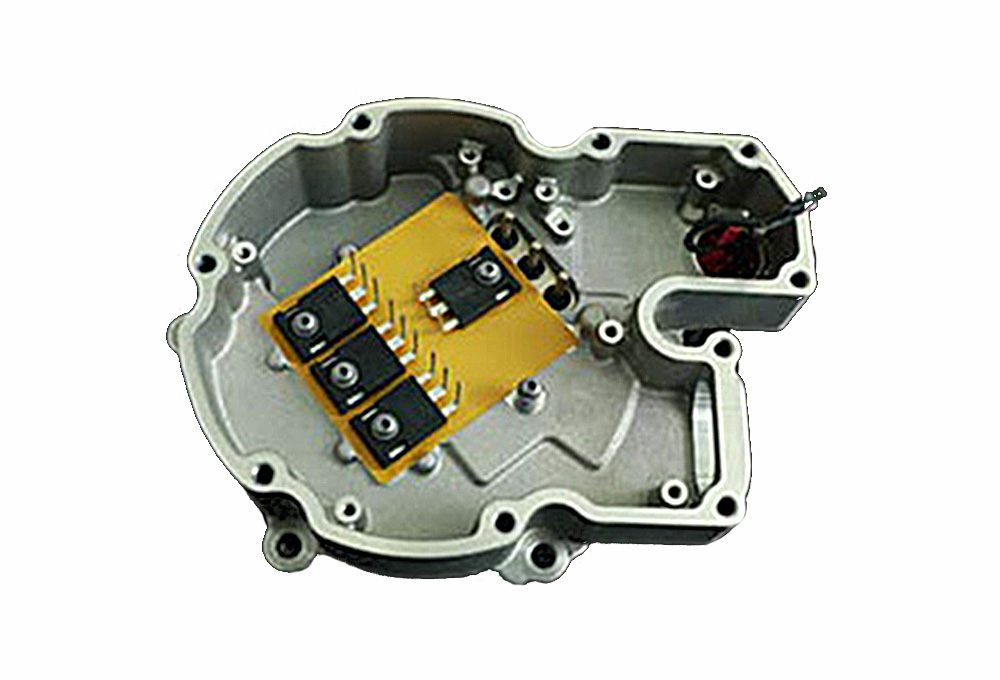
Engineering Guide to Thermal Pad Selection for Semiconductor Applications — Featuring SF500 Silicone Thermal Pad
In modern semiconductor design, increasing power density and device integration have made thermal management a critical factor in system reliability and longevity. From an engineering perspective, efficiently transferring heat within constrained spaces while preventing localized hot spots is essential.
As a key type of thermal interface material (TIM), the thermal pad plays a vital role in improving heat transfer efficiency between components and heat sinks. Its inherent compliance and stability make it a preferred solution in semiconductor packaging and system-level thermal design.
1. Thermal Challenges in Semiconductor Design and the Role of Thermal Pad
Power devices such as MOSFETs, IGBTs, CPUs, GPUs, and 5G communication chips continue to generate higher heat flux. Due to unavoidable microscopic surface irregularities, air gaps between components significantly reduce heat transfer efficiency.
A properly selected thermal pad fills these gaps, reducing interfacial thermal resistance and enabling efficient heat conduction from the heat source to the cooling structure.
2. Key Material Properties and Selection Criteria
Most thermal pad materials are silicone-based composites filled with thermally conductive particles. From an engineering standpoint, the following parameters are critical:
- Thermal Conductivity: Typically ranges from 0.8 to 15 W/m·K
- Thickness: Commonly between 0.3 mm and 5 mm
- Operating Temperature: -40°C to 200°C
- Compressibility: Recommended compression ratio of 10%–30%
- Electrical Insulation: Essential for high-voltage applications
Optimal thermal pad selection requires balancing thermal performance with mechanical compliance and interface conformity.
3. Typical Application Areas in Semiconductor Systems
In practical engineering applications, thermal pad solutions are widely used in the following locations:
- Between semiconductor chips and heat sinks
- Between PCBs and metal enclosures
- Inside power modules such as IGBT assemblies
- For memory modules and high-speed interface components
Strategic placement of thermal pad materials significantly improves thermal performance and system stability.
4. SF500 Silicone Thermal Pad: Engineering Advantages

In real-world applications, material consistency and reliability are essential. The SF500 silicone thermal pad is engineered to meet the demands of semiconductor thermal management.
Key Benefits:
- Stable Thermal Performance: Designed for medium to high power density applications
- Excellent Conformability: Effectively fills microscopic surface gaps to reduce thermal resistance
- High Electrical Insulation: Suitable for high-voltage semiconductor modules
- Customizable Options: Available in multiple thicknesses and shapes
- Manufacturing Efficiency: Easier handling compared to thermal grease, ideal for automated assembly
The thermal pad design of SF500 provides a balanced solution between performance, reliability, and manufacturability.
5. Engineering Best Practices for Thermal Pad Selection
- Match pad thickness to interface gap rather than over-specifying conductivity
- Minimize thickness to reduce thermal resistance
- Consider long-term reliability and material aging
- Ensure proper compression during assembly
A well-selected thermal pad can significantly enhance overall thermal system efficiency.
6. Comparison with Other Thermal Interface Materials
| Material Type | Advantages | Limitations |
|---|---|---|
| Thermal Pad | Easy installation, electrically insulating, consistent thickness | Moderate thermal conductivity |
| Thermal Grease | Low interfacial resistance | Messy application, less suitable for automation |
| Phase Change Material | High performance | Higher cost |
Among these options, the thermal pad stands out for its reliability and suitability in high-volume manufacturing environments.
7. Future Trends in Thermal Pad Technology
- Higher thermal conductivity materials (>10 W/m·K)
- Ultra-thin and low thermal resistance designs
- Low outgassing and silicone-free formulations
- Enhanced long-term reliability
As semiconductor technologies evolve, thermal pad solutions will continue to advance to meet increasingly demanding thermal requirements.
Conclusion
From an engineering standpoint, the thermal pad is not merely a gap filler but a critical component in thermal system design. Proper selection and application directly impact device performance and reliability.
The SF500 silicone thermal pad represents a well-balanced solution for modern semiconductor applications, delivering consistent performance, flexibility, and manufacturing efficiency.
High Performance Thermal Pad Solutions for EV Charging Systems
High Performance Thermal Pad for Server Cooling Applications
Related Article