Thermal Conductive Silicone Pads: Application Analysis in New Energy Fields
Thermal Conductive Silicone Pads: Application Analysis in New Energy Fields
1 Introduction: Development Status of the New Energy Industry
Against the backdrop of global green emission reduction, China's clean energy industry has achieved leapfrog development. According to industry data, China's wind power installation has increased sixfold over the past decade, and photovoltaic installation has grown by 180 times. The cost of clean energy has significantly decreased by 60%-80%. In the field of new energy vehicles, from January to July 2025, China's production and sales of new energy vehicles reached 8.232 million and 8.22 million units respectively, with a market penetration rate of 45%, which has exceeded the 20% target set by the New Energy Vehicle Industry Development Plan (2021-2035) ahead of schedule. This explosive growth has driven the rapid expansion of the power battery and energy storage market, while also posing higher requirements for battery thermal management technology. [10](@ref)
As battery energy density continues to increase, the heat dissipation problem of battery packs has become increasingly prominent. Research shows that for lithium-ion batteries, every 10°C increase in temperature reduces its lifespan by about half, and operating temperatures exceeding 50°C will accelerate battery performance degradation. The technological progress of thermal conductive silicone pads, as a key material in battery thermal management systems, is directly related to the safety and reliability of new energy vehicles. Currently, the market size of thermal conductive silicone pads in China has exceeded 4.5 billion RMB, and it is expected to reach 7.8 billion RMB by 2025, with a compound annual growth rate stable at around 20%. The demand share in the new energy vehicle field has rapidly increased from 18% in 2020 to 28% in 2023, and is expected to exceed 32% by 2025. [11](@ref)
2 Current Status of Heat Dissipation Management in Energy Storage and Automotive Battery Packs
Battery thermal management is a key link to ensure battery performance, safety, and service life. Currently, mainstream battery cooling technologies include four major categories: air cooling, liquid cooling, phase change material cooling, and heat pipe cooling. With the continuous increase in the power of electric vehicle power systems, the energy density of battery packs has increased significantly, and the requirements for heat dissipation efficiency have also increased. [11](@ref)
| Cooling Method | Advantages | Disadvantages | Application Scenarios |
|---|---|---|---|
| Air Cooling | Simple structure, low cost, easy maintenance | Low heat dissipation efficiency, uneven temperature distribution | Low power density, cost-sensitive applications |
| Liquid Cooling | High heat dissipation efficiency, precise temperature control | Complex system, high cost, risk of leakage | High power density, high-performance battery packs |
| Phase Change Material Cooling | No additional energy consumption, good temperature control effect | Low thermal conductivity, prone to leakage, high cost | Specific application scenarios, mostly in the research stage |
| Heat Pipe Cooling | Simple structure, high thermal conductivity, long life | Low space utilization rate, cannot preheat | Special applications with unlimited space |
3 Application Status of Thermal Conductive Silicone Pads in Energy Storage and Automotive Battery Packs
Thermal conductive silicone pads, a composite material using silicone rubber as the base material and filled with thermally conductive fillers (such as metal oxides, boron nitride, etc.), play a key role as thermal interface materials (TIM) in battery thermal management. Their core function is to fill interface gaps, replacing air (thermal conductivity is only about 0.024 W/m·K) to form an efficient heat conduction channel, reducing contact thermal resistance by 30%-50%. [10,11](@ref)
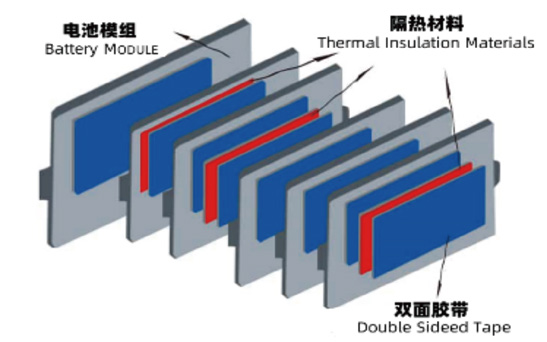
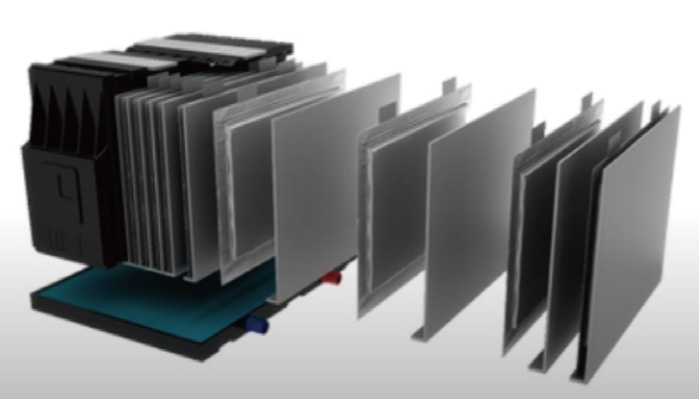
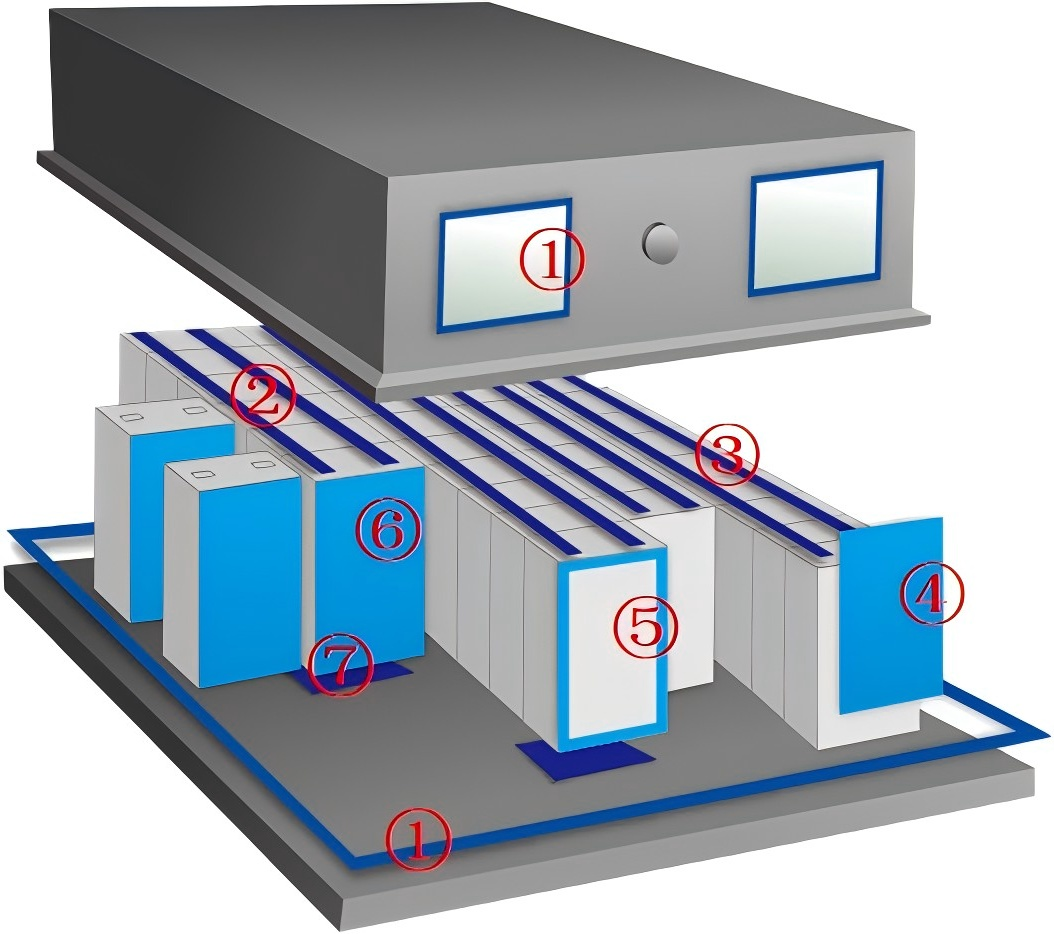
In battery pack design, thermal conductive silicone pads are mainly used in the following scenarios: between cells to form a dual barrier of heat conduction and electrical insulation; between battery modules and the casing to efficiently conduct heat to the external cooling system; and at the contact surface between the liquid cooling plate and the battery to enhance the thermal conduction effect and reduce interface thermal resistance. Its good flexibility can also absorb stress caused by thermal expansion and contraction, preventing structural damage during long-term operation of the battery pack. [11](@ref)
4 Core Parameter Requirements and Market Research
Energy storage and automotive battery packs have extremely strict performance requirements for thermal conductive silicone pads. The core indicators mainly include thermal conductivity, density and lightweight, electrical insulation performance, flame retardancy, and long-term reliability. [11](@ref)
In terms of lightweight, traditional thermal conductive silicone pads have a density generally between 3.0-3.2 g/cm³, while new generations of low-density products have achieved breakthroughs, reaching 2.6 g/cm³ or even 1.x g/cm³. Taking a battery pack that requires 5 kilograms of traditional thermal conductive silicone pad (density 3.0 g/cm³) as an example, if an ultra-lightweight product with a density of 1.5 g/cm³ is used, the weight can be reduced to about 2.5 kilograms, achieving a weight reduction effect of 2.5 kilograms per battery pack. This is of great significance for vehicle lightweight and improving range. [11](@ref)
| Brand Code | Thermal Conductivity (W/m·K) | Density (g/cm³) | Insulation Strength (kV/mm) | Characteristics |
|---|---|---|---|---|
| Brand A | 1.5-8.0 | 2.8-3.2 | >15 | Cost-effective, complete series |
| Brand B | 3.0-12.0 | 2.5-3.0 | >20 | High performance, suitable for high-end battery packs |
| Brand C | 5.2 (Phase Change Type) | 2.6-2.9 | >15 | Phase change characteristics, absorbs heat when temperature exceeds 45°C |
| Brand D | 2.0-5.0 | 2.2-2.6 | >10 | Economical and practical, suitable for energy storage cabinet battery clusters |
| TOUSEN | 6.0-15.0 | 1.8-2.4 | >25 | Ultra-high thermal conductivity, low density, mass production achieved |
5 Summary and Outlook: Synergistic Development and Innovation Trends
The rapid development of energy storage and new energy battery packs has greatly promoted the progress of the thermal conductive silicone pad industry. Breakthroughs in material technology are significant. Through the application of new fillers, such as nano-alumina, boron nitride, diamond, etc., the thermal conductivity of thermal conductive silicone pads has been increased to 15 W/m·K. The introduction of new materials has led to breakthroughs in the thermal efficiency, temperature resistance, and flexibility of thermal conductive silicone pads. [11](@ref)
In terms of lightweight, low-density thermal conductive silicone pads have become the focus of industry research and development. The density of new generation products has achieved breakthroughs of 2.6 g/cm³ or even 1.x g/cm³. This lightweight progress is of great significance for improving the range of new energy vehicles. The application of modified metal oxide fillers, resulting in smaller particle size and more uniform distribution, achieves the ideal combination of low density and high thermal conductivity. [11](@ref)
In the future, the thermal conductive silicone pad industry needs to continue to innovate in thermal performance, lightweight, and cost control to meet the continuously upgrading thermal management needs of energy storage and new energy battery packs. At the same time, the industry should strengthen standard construction, promote industrial chain collaborative innovation, and jointly promote the healthy development of the green energy cause. [10,11](@ref)
References:
[1] Journal-Publishing.com. "Writing Authoritative Formal English for Successful Publication."
[2] Linguavoyage. "Mastering Professional English: Essential Sentence Structures for Workplace Success." Published June 9, 2025.
[3] Learn Laugh Speak. "What Makes Your English Sound Professional and Smooth." Published July 19, 2025.
[4] Linguavoyage. "Mastering the Art of Communication: Essential English Skills for International Corporate Success." Published May 3, 2025.
[5] Erudmite. "How to Build Strong English Writing Skills for Academic & Professional Success." Published March 19, 2025.
[10] 新思界. "Thermal Conductive Silicone Pads Application Areas Are Wide, Industry Development Prospects Are Good." Published January 18, 2023.
[11] 原创力文档. "Thermal Conductive Silicone Pad Industry Analysis." Published December 27, 2024.
Thermal Runaway in EV Battery Packs: Causes, Mechanisms, and Material Solutions
TOUSEN Battery Pack Safety System Management (二) --Advanced Materials for Battery Thermal Runaway Management--
Related Article