Why Silicone Foam Is the Best Choice for Battery Pack Sealing
Engineering Perspective: Silicone Foam in Battery Pack Sealing (With Technical Specifications)
As electric vehicles (EVs) and energy storage systems continue to evolve, battery pack sealing has become a critical factor in ensuring safety, durability, and system reliability. Engineers are now required to meet increasingly stringent standards for ingress protection, thermal stability, and long-term performance.
Among available materials, Silicone Foam has emerged as a preferred solution for battery enclosure sealing due to its balanced mechanical, thermal, and environmental properties. This article provides a practical, engineering-driven overview of how Silicone Foam performs in real-world battery applications, along with key selection criteria and technical parameters.
1. Key Engineering Challenges in Battery Pack Sealing
Battery enclosure sealing must address several critical challenges:
- High ingress protection requirements (IP67/IP68)
- Dimensional tolerances and assembly variation
- Thermal cycling and environmental exposure
- Long-term compression reliability
- Flame resistance and safety compliance
Traditional rubber or polyurethane foams often struggle with compression set or environmental degradation. In contrast, Silicone Foam offers superior long-term sealing performance under demanding conditions.
2. Material Advantages of Silicone Foam
Low Compression Set for Long-Term Sealing
High-quality Silicone Foam demonstrates compression set values below 5% (at 100°C), ensuring consistent sealing force over time.
Wide Operating Temperature Range
Typical operating range spans from -55°C to 200°C, making Silicone Foam suitable for both extreme cold and high-temperature environments.
Mechanical Resilience and Flexibility
- Tensile strength: up to 350 kPa
- Elongation: 60% – 90%
- Compression stress: 7 – 80 kPa
These properties allow Silicone Foam to accommodate structural tolerances and absorb vibration effectively.
Flame Retardancy
Materials can achieve UL94 V-0 rating, meeting stringent EV safety standards.
Electrical Insulation
Volume resistivity typically exceeds 1013 Ω·cm, providing reliable electrical isolation within battery systems.
3. Typical Applications of Silicone Foam in Battery Packs
Battery Enclosure Lid Sealing
Silicone Foam is commonly used as a gasket between the lid and housing, with a recommended compression ratio of 20%–40%.
Connector and Cable Sealing
Its conformability allows effective sealing in complex geometries and irregular interfaces.
Shock Absorption and Cushioning
Silicone Foam helps mitigate vibration and mechanical stress during vehicle operation.
Thermal Management Support
With a thermal conductivity of approximately 0.05–0.07 W/m·K, Silicone Foam can assist in passive heat dissipation.
4. TOUSEN Silicone Foam – Technical Specifications
For engineers evaluating material options, the following specifications represent a typical high-performance Silicone Foam solution:
Physical Properties
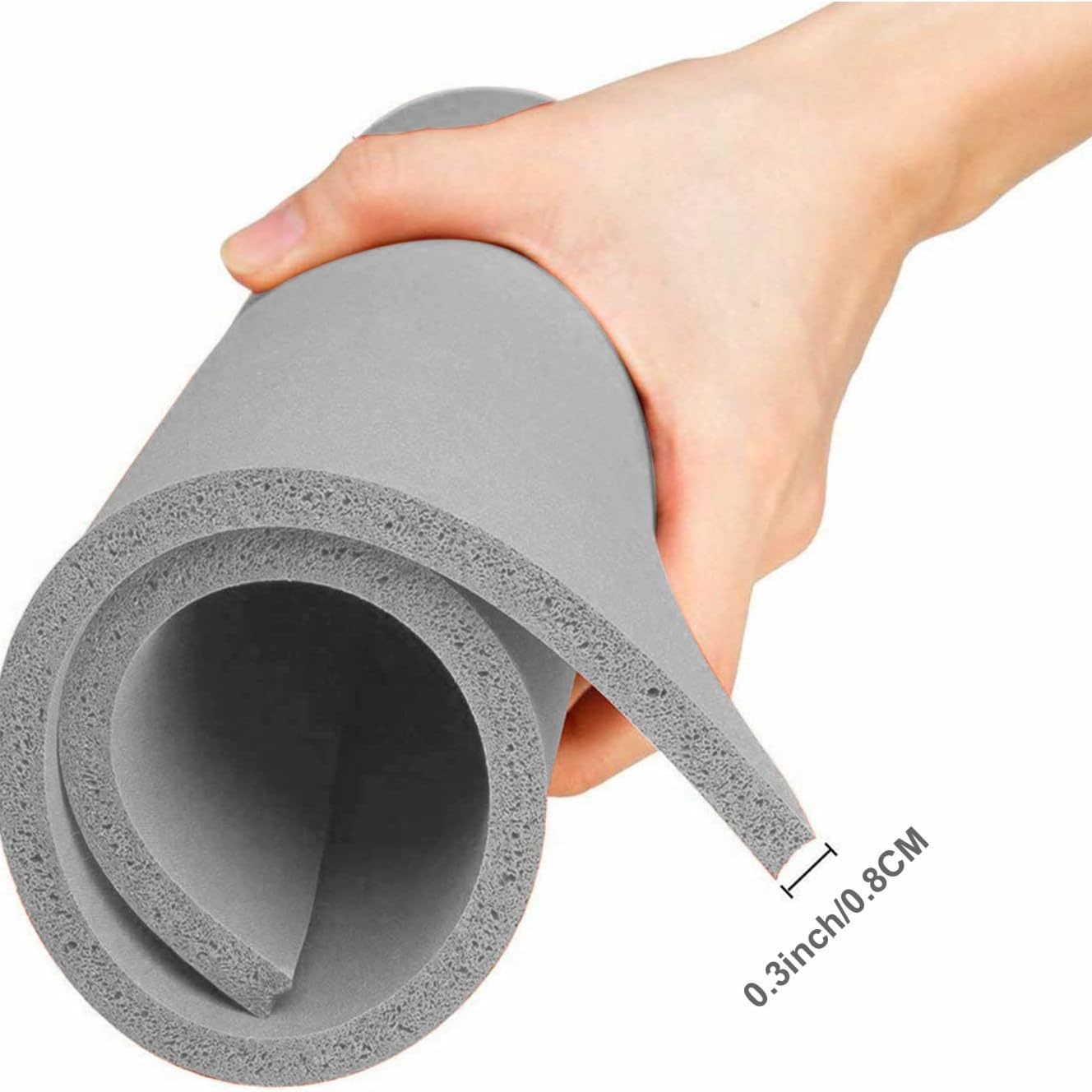
- Density: 200 – 400 kg/m³
- Thickness: 0.6 – 20 mm (customizable)
- Color options: Gray, Black, White
Mechanical Properties
- Compression set (100°C): < 5%
- Compression stress: 7 – 80 kPa
- Tensile strength: up to 350 kPa
- Elongation: 60% – 90%
Thermal & Electrical Properties
- Thermal conductivity: 0.05 – 0.071 W/m·K
- Operating temperature: -55°C to 200°C
- Volume resistivity: > 1013 Ω·cm
Safety & Compliance
- Flame rating: UL94 V-0 / HF-1
- Compliance: RoHS, REACH, Halogen-free
This Silicone Foam solution is validated through extended reliability testing, including thermal cycling, humidity exposure, and long-term aging simulations.
Product reference: https://www.itousen.com/TOUSEN-Silicone-Foam.html

5. Engineering Guidelines for Selecting Silicone Foam
- Match density and compression force to structural requirements
- Design appropriate compression ratio (20%–40%)
- Align thickness with groove geometry
- Validate under real-world conditions (IP, thermal cycling, vibration)
Proper selection of Silicone Foam is essential to achieving consistent sealing performance and long service life.
6. Practical Design Considerations
- Ensure uniform compression through optimized groove design
- Avoid localized over-compression
- Minimize material stretching during installation
- Account for long-term aging and performance degradation
7. Conclusion
Battery pack sealing is no longer a secondary design concern—it is a critical component of overall system safety and reliability. From an engineering standpoint, Silicone Foam provides a robust solution by combining low compression set, excellent environmental resistance, and broad operating temperature capability.
With well-defined material properties and proper design integration, Silicone Foam can significantly enhance sealing performance, reduce failure risks, and support the long-term durability of battery systems.
As battery technologies continue to advance, selecting high-performance Silicone Foam materials will remain a key factor in achieving reliable and scalable designs.
Waterproof Silicone Foam for Battery Sealing Applications
Silicone Foam for EV Battery Safety and Thermal Performance
Related Article