Thermal Paste and Thermal Grease in Home Appliances - Engineering Insight
Thermal Management in Modern Home Appliances: An Engineer’s Perspective
As home appliances continue to evolve toward higher power density, smarter control systems, and more compact designs, thermal management has become a critical factor influencing product reliability and service life. From inverter air conditioners and smart refrigerators to large-format smart TVs, electronic components are being pushed closer to their thermal limits.
From an engineering standpoint, effective heat transfer is no longer optional—it is a foundational design requirement. Among the most important yet often underestimated elements of thermal design are thermal paste and thermal grease, which serve as thermal interface materials (TIMs) between heat-generating components and heat sinks.
The Role of Thermal Interface Materials in Appliance Design
In theory, metal heat sinks offer excellent thermal conductivity. In practice, however, microscopic surface irregularities create air gaps at the interface between a semiconductor device and the cooling surface. Since air is a poor thermal conductor, these gaps significantly increase thermal resistance.
This is where thermal paste and thermal grease play a vital role. By filling these microscopic voids, they establish a continuous thermal pathway that allows heat to flow efficiently from the component into the heat dissipation system.
While the terms thermal paste and thermal grease are often used interchangeably, engineers typically distinguish them by formulation and application characteristics rather than function. Both are essential tools in professional thermal design.
Common Thermal Challenges in Home Appliance Electronics
Unlike consumer PCs or servers, home appliances operate under unique and sometimes harsher conditions. Based on field experience, the most common thermal challenges include:
- Continuous high-load operation in inverter-driven systems
- Limited internal airflow due to compact mechanical layouts
- Wide ambient temperature variations in real-world environments
- Long service life requirements, often exceeding 10 years
In such scenarios, relying solely on passive heat sinks is insufficient. A properly selected thermal interface material becomes essential to maintaining stable junction temperatures over the product’s lifetime.
Thermal Grizzly and the High-Performance Benchmark
Within the thermal interface material market, thermal grizzly has earned a strong reputation, particularly in high-performance computing and enthusiast-grade electronics. From an engineering perspective, thermal grizzly products are often recognized for:
- High thermal conductivity values
- Consistent material quality
- Good short-term thermal performance
However, when evaluating materials for large-scale home appliance manufacturing, engineers must consider more than peak performance. Cost efficiency, long-term stability, automated dispensing compatibility, and supply consistency are equally important. As a result, thermal grizzly products are often used as a reference point rather than a default choice in appliance-grade designs.
Key Engineering Criteria for Selecting Thermal Paste and Thermal Grease
When selecting a thermal paste or thermal grease for appliance applications, engineers typically evaluate the following parameters:
Thermal Conductivity
Higher thermal conductivity enables faster heat transfer, but real-world performance must be verified under application-specific conditions rather than relying solely on datasheet values.
Thermal Resistance
Low interface thermal resistance is often more meaningful than raw conductivity, as it directly reflects how efficiently heat crosses the interface under mounting pressure.
Dispensing and Assembly Behavior
For mass production, the material must maintain consistent viscosity, resist pump separation, and allow precise automated dispensing.
Long-Term Reliability
Thermal cycling stability is critical. Materials must resist dry-out, oil bleed, and performance degradation over years of operation.
Engineering Recommendation: TSAD66 Thermally Conductive Paste
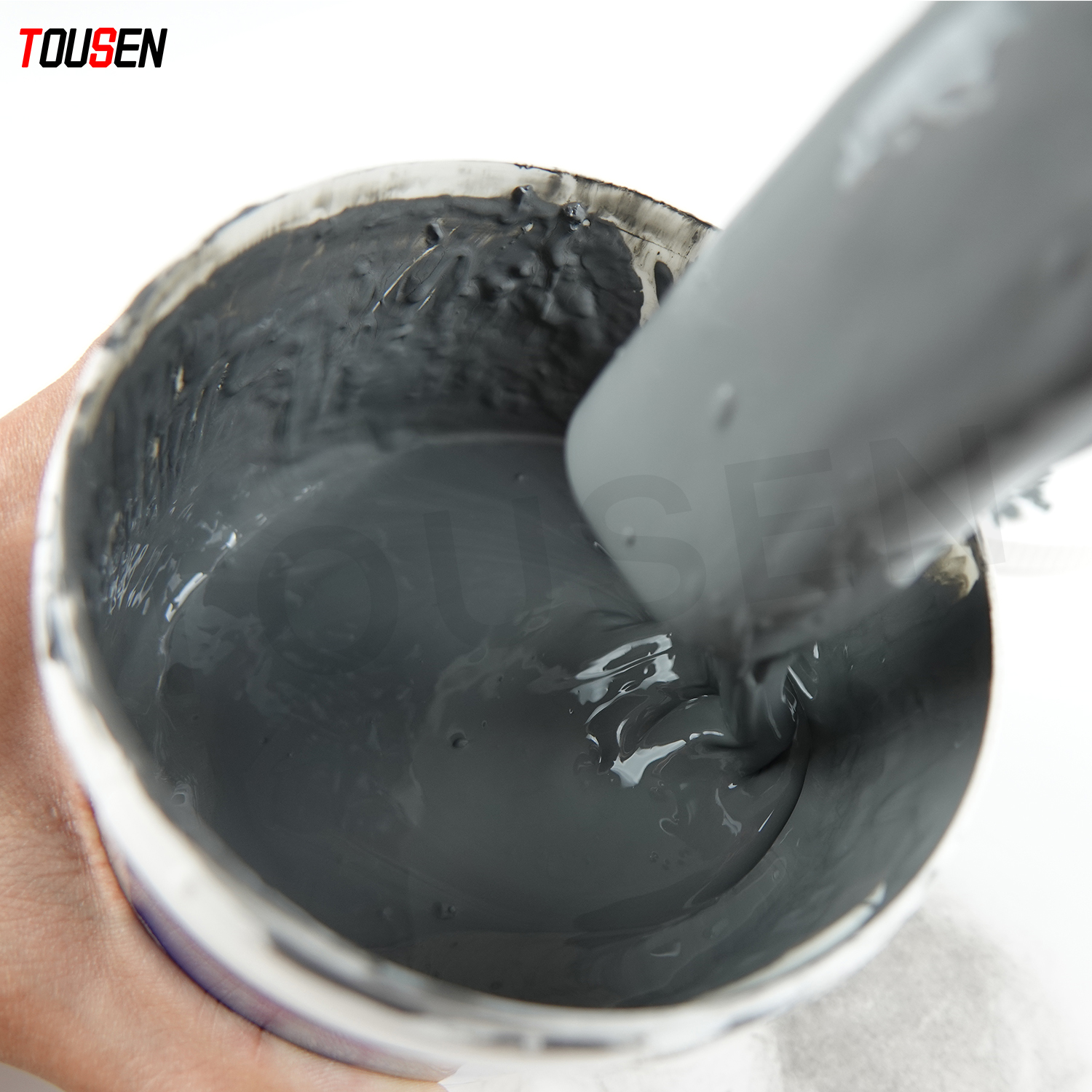
To address the specific needs of appliance-grade thermal management, ITousen has developed the TSAD66 thermally conductive paste. This material is engineered to balance performance, reliability, and manufacturability.
From an engineering evaluation standpoint, TSAD66 offers:
- High and stable thermal conductivity suitable for power electronics
- Low interface thermal resistance under practical mounting pressures
- Excellent application consistency for both manual and automated processes
- Reliable performance under extended thermal cycling conditions
TSAD66 has been successfully applied in control boards, power modules, and thermal management assemblies across a wide range of home appliance products.
For detailed specifications and application guidance, visit:
https://www.itousen.com/products/tsad66-p-thermally-conductive-paste.html
Proper Application: Performance Depends on Process
Even the most advanced thermal paste or thermal grease cannot deliver optimal results without proper application. From an engineering process perspective, best practices include:
- Applying a uniform, void-free layer
- Controlling bond line thickness
- Ensuring appropriate mounting pressure
- Validating performance through thermal imaging and life testing
Thermal interface materials should always be evaluated as part of the complete thermal system, not as isolated components.
Conclusion
As home appliances continue to integrate more powerful electronics into smaller spaces, effective thermal management is becoming a defining factor in product quality. From traditional thermal grease solutions to high-performance benchmarks such as thermal grizzly, and application-optimized materials like TSAD66, engineers have more options than ever.
The key lies not in selecting the most extreme material, but in choosing the right thermal paste for the specific application—balancing performance, reliability, and manufacturing practicality. Thoughtful material selection and disciplined engineering processes remain the foundation of long-lasting, reliable home appliance designs.
Thermal Paste and Thermal Grease Selection for Semiconductor Systems
Best Thermal Paste for CPU: Expert Guide to High-Performance Compounds
Related Article