Thermal Paste for Thermoelectric Cooling Module Thermal Management
The Role of Thermal Paste and Thermal Grease in Thermoelectric Cooling Modules
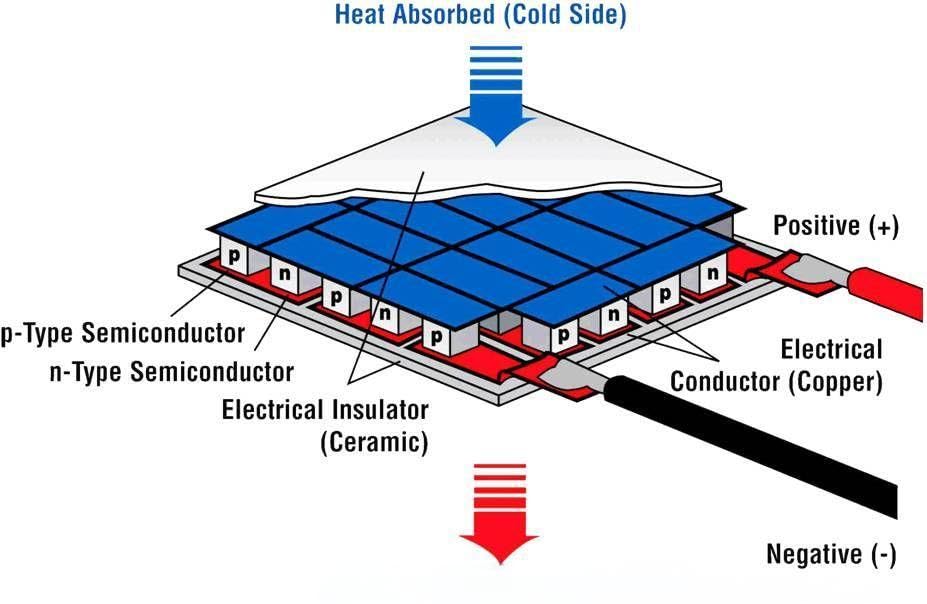
Thermoelectric cooling modules, commonly known as TECs or thermoelectric coolers, are widely used in applications where precise temperature control is required. Laser systems, optical devices, medical equipment, analytical instruments, industrial electronics, and precision temperature-control systems all rely on TEC technology to move heat from one side of a module to the other.
While the performance of a TEC is strongly influenced by its thermoelectric elements, operating current, and heat sink design, the thermal interfaces surrounding the module are equally important. A poorly controlled interface can introduce additional thermal resistance, reducing heat transfer efficiency and limiting the actual cooling performance of the system.
This is where thermal paste, thermal grease, and thermal gels become important engineering materials. The correct thermal interface material (TIM) helps fill microscopic surface irregularities between the TEC and adjacent heat-transfer components, improving thermal contact and reducing unnecessary thermal resistance.
Why Thermal Interface Materials Matter in TEC Applications
A typical thermoelectric cooling system contains several critical thermal paths:
Heat source → cold-side interface → TEC module → hot-side interface → heat sink or cold plate → environment
Every interface along this path can contribute thermal resistance. Even highly machined metal surfaces are not perfectly flat at the microscopic level. Surface roughness creates small air gaps when two solid surfaces are assembled together, and air has significantly lower thermal conductivity than most engineered thermal interface materials.
A properly selected thermal paste or thermal grease can flow into these microscopic gaps and establish a more continuous thermal path. This reduces the amount of trapped air between mating surfaces and improves heat transfer across the interface.
For TEC assemblies, this is particularly important because the hot side must reject both the heat transported from the cold side and the electrical power supplied to the thermoelectric module. If the hot-side thermal path is inefficient, the hot-side temperature can increase significantly, which may reduce the temperature differential available for cooling.
Therefore, thermal interface design should be considered as part of the complete TEC thermal system rather than as an isolated material-selection issue.
Thermal Resistance Is More Important Than Thermal Conductivity Alone
When selecting a thermal paste, engineers often begin by comparing thermal conductivity values. Thermal conductivity is an important material property, but it does not tell the entire story of actual interface performance.
The effective thermal resistance of a TIM depends on several factors, including material thickness, surface condition, applied pressure, contact area, viscosity, wetting behavior, and the consistency of the application process.
For example, applying an unnecessarily thick layer of thermal grease increases the distance heat must travel through the TIM. On the other hand, insufficient material coverage can leave localized air pockets and create areas of elevated contact resistance.
The engineering objective is therefore not to apply as much thermal material as possible. Instead, the goal is to create a continuous and uniform interface with an appropriate bond line thickness for the specific assembly.
This principle applies to both the cold and hot sides of a thermoelectric cooler. The interface between the TEC and the cooled component must provide an efficient path for heat entering the cold side, while the interface between the TEC and heat sink must allow heat to leave the hot side as efficiently as possible.
Thermal Paste vs Thermal Grease vs Thermal Gels
In the thermal management industry, the terms thermal paste and thermal grease are frequently used for closely related TIM technologies. These materials are generally designed to form relatively thin thermal interfaces and fill microscopic surface imperfections between mating components.
For a TEC mounted between relatively flat surfaces, thermal paste or thermal grease can be an appropriate solution when the primary objective is to minimize interface thickness while maintaining complete surface coverage.
Thermal gels, by contrast, are often considered when greater compliance or gap-filling capability is required. They can be useful where component tolerances, surface-height differences, or larger interface gaps make a conventional thin thermal grease layer less suitable.
This does not mean that thermal gels are inherently better than thermal paste or thermal grease. The appropriate material depends on the actual mechanical and thermal conditions of the interface.
For this reason, engineers evaluating TIMs for semiconductor cooling modules should consider interface geometry, thermal load, surface flatness, assembly pressure, target bond line thickness, operating temperature, and long-term reliability rather than selecting a material solely by its nominal thermal conductivity.
Evaluating TOUSEN TSAS50 for Thermoelectric Cooling Applications
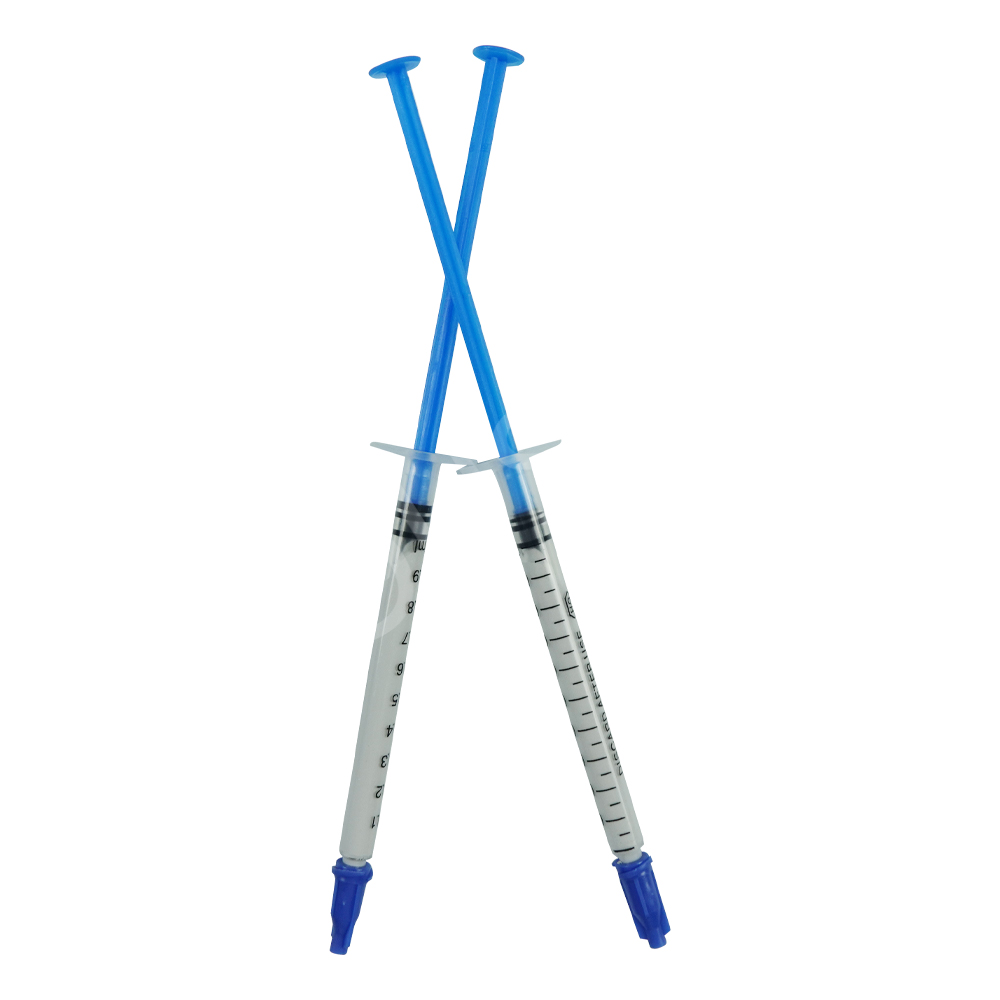
For applications requiring a high-performance, paste-type thermal interface material, TOUSEN TSAS50 can be considered for engineering evaluation in thermoelectric cooling assemblies.
According to the available product specifications, TSAS50 provides a thermal conductivity of 7.0 W/m·K. Its reported thermal resistance coefficient is approximately 0.025 °C·cm²/W at 60 psi, while viscosity is approximately 120 Pa·s at 22°C.
TSAS50 is formulated as a single-component, non-curing thermal interface material. This characteristic can be useful in applications where an additional curing process is undesirable or where the TIM needs to remain compliant during assembly and operation.
The material also supports screen-printing application, which can be advantageous for manufacturers seeking more consistent control of TIM deposition in volume production.
In a TEC assembly, TSAS50 may be evaluated at the interface between the thermoelectric module and a cold plate, heat spreader, or heat sink, depending on the specific mechanical configuration. The purpose of the material is to minimize microscopic air gaps and establish a consistent thermal path between the mating surfaces.
However, material selection should always be validated against the actual application. The suitability of TSAS50 for a particular thermoelectric cooling system depends on factors such as TEC dimensions, heat load, operating temperature, contact pressure, surface roughness, interface area, target bond line thickness, heat sink performance, and thermal cycling requirements.
Key Engineering Considerations When Selecting a TIM for TEC Modules
When a thermoelectric cooling system does not achieve its expected temperature or cooling capacity, the TEC module itself should not automatically be considered the cause. The complete thermal path should be evaluated systematically.
- Determine the actual thermal load: Calculate the heat that must be removed from the cooled component and evaluate the TEC under the expected operating conditions.
- Evaluate surface flatness: The contact surfaces between the TEC, cold plate, and heat sink should provide sufficient flatness and parallelism for effective thermal transfer.
- Control TIM thickness: Thermal paste and thermal grease should provide complete coverage without creating an unnecessarily thick thermal layer.
- Control assembly pressure: Insufficient or uneven pressure can increase contact resistance and may also affect mechanical reliability.
- Consider the application process: For production environments, repeatable dispensing, printing, or coating processes can be important for maintaining consistent thermal performance.
- Validate long-term reliability: Applications involving repeated startup and shutdown cycles or significant temperature changes should include thermal cycling and reliability testing of the complete interface system.
- Select the TIM according to the gap: Thin, relatively flat interfaces may favor thermal paste or thermal grease, while larger gaps and greater dimensional variation may justify evaluating thermal gels or other gap-filling materials.
Why Application Process Matters
The performance of a thermal interface material depends not only on the material itself but also on how it is applied. In high-volume manufacturing, variations in dispensing volume, coating area, pressure, and component alignment can produce measurable differences in interface performance.
For a TEC module, excessive TIM thickness can increase thermal resistance, while incomplete coverage can introduce air pockets. Both conditions may reduce the effectiveness of the thermal path.
For this reason, engineers should establish a controlled application process and verify the resulting bond line thickness during development. Where production consistency is important, a thermal material capable of controlled application methods such as screen printing may provide additional process flexibility.
TSAS50's screen-printing capability can therefore be considered when developing repeatable manufacturing processes for thermal management assemblies. The appropriate printing parameters, stencil design, deposited thickness, and process conditions should nevertheless be established through application-specific testing.
Thermal Management Should Be Designed as a Complete System
A thermoelectric cooler does not operate independently from its surrounding thermal structure. The performance of the TEC is closely connected to the thermal resistance of the cold-side interface, the thermal resistance of the hot-side interface, the heat sink or cold plate, and the surrounding operating environment.
For this reason, a higher thermal conductivity TIM does not automatically guarantee a better system-level cooling result. Engineers should evaluate the complete thermal path and determine whether the selected thermal paste, thermal grease, or thermal gels solution can provide the required interface performance under actual assembly conditions.
This system-level approach is particularly important for precision applications where temperature stability, energy efficiency, and long-term reliability are critical.
Conclusion
Thermal interface materials play an important role in the performance of semiconductor thermoelectric cooling modules. By filling microscopic surface irregularities and reducing contact-related thermal resistance, a properly selected TIM can help improve heat transfer between the TEC and its adjacent thermal components.
Thermal paste, thermal grease, and thermal gels each have different characteristics and should be selected according to the interface geometry, thermal load, mechanical conditions, manufacturing process, and reliability requirements of the application.
For TEC applications requiring a paste-type, non-curing thermal interface material, TOUSEN TSAS50 provides a potential engineering solution with a reported thermal conductivity of 7.0 W/m·K, approximately 0.025 °C·cm²/W thermal resistance coefficient at 60 psi, approximately 120 Pa·s viscosity at 22°C, and screen-printing capability.
Rather than selecting a TIM based solely on its headline thermal conductivity, engineers should evaluate the complete thermal interface, including material thickness, surface condition, assembly pressure, application consistency, and long-term reliability. This approach provides a more realistic basis for developing reliable and efficient thermoelectric cooling systems.
Thermal Paste for High Performance Computer Cooling
Related Article