Thermal Grease for High Performance Smartphone Cooling

Why Thermal Grease Matters in High Performance Smartphones
Modern smartphones are no longer simple communication devices. With the rapid adoption of 5G connectivity, on-device AI, high refresh rate displays, advanced mobile processors, and fast charging, the thermal load generated inside a smartphone continues to increase. At the same time, smartphone manufacturers are under constant pressure to reduce device thickness while integrating more functions into a smaller internal volume.
For thermal engineers, this creates a fundamental challenge: how can heat generated by high-power components be transferred away efficiently when available space is extremely limited? This is where thermal grease, thermal paste, and other thermal interface materials become important parts of the thermal management system.
Why Thermal Management Is Becoming More Challenging in Smartphones
Heat generation in a high-performance smartphone comes from several sources. The application processor and graphics processor can generate significant heat during gaming, AI workloads, image processing, and other computationally intensive tasks. The 5G modem and RF components can also contribute to localized heat generation during sustained high-speed data transmission.
Fast charging introduces another thermal challenge. Power management ICs, charging controllers, and related components can generate considerable heat during high-power charging. Because these heat sources are located within a compact enclosure, localized hotspots can quickly affect the temperature of surrounding components and the user's perceived device temperature.
Unlike larger computing systems, smartphones have limited opportunities to increase heatsink size. Engineers therefore need to optimize the complete thermal path, from the heat-generating semiconductor package to the heat spreader and ultimately to the larger surfaces of the device.
A properly selected thermal grease can contribute to this thermal path by filling microscopic air gaps between mating surfaces. Air is a relatively poor thermal conductor, so eliminating these gaps can significantly improve thermal contact compared with relying on direct mechanical contact between two imperfect surfaces.
How Thermal Paste and Thermal Grease Improve Heat Transfer
The terms thermal paste and thermal grease are commonly used in the electronics industry for paste-like thermal interface materials. Although terminology varies between manufacturers and applications, the engineering objective is similar: create a continuous thermal interface between a heat source and a heat-spreading structure while minimizing unnecessary thermal resistance.
Smartphone components present several specific challenges. Semiconductor packages and heat spreaders have microscopic surface irregularities, even when their surfaces appear smooth to the naked eye. When these surfaces are assembled together, microscopic voids can remain between them.
A suitable thermal interface material fills these irregularities and improves physical contact across the interface. For thin smartphone assemblies, the ability to form a controlled and uniform interface can be particularly important because excessive material thickness may increase the effective thermal resistance.
However, selecting a thermal paste should not be based solely on the highest advertised thermal conductivity. The actual thermal performance depends on multiple factors, including interface thickness, contact pressure, surface condition, material rheology, application uniformity, and long-term stability.
Key Factors Engineers Should Consider When Selecting Thermal Grease
1. Thermal Conductivity and Interface Resistance
Thermal conductivity is an important material parameter, but it should be evaluated together with thermal resistance under realistic application conditions. A high-conductivity thermal grease may not deliver the expected system-level improvement if the material is applied too thickly or does not establish consistent contact with the mating surfaces.
For smartphone applications, engineers should therefore consider both the material's nominal thermal conductivity and its expected performance at the target bond line thickness.
2. Viscosity and Application Process
Manufacturing requirements are another important consideration. Depending on the product architecture, thermal paste may be applied through dispensing, printing, stencil processes, or other controlled deposition methods.
Material viscosity and rheological behavior influence how consistently the material can be deposited. A formulation that works well in a laboratory demonstration may require additional process optimization before it can be implemented in high-volume smartphone manufacturing.
3. Long-Term Stability
Smartphones experience repeated thermal cycling during everyday use. A device may move from standby operation to intensive gaming, AI processing, video recording, or fast charging within a relatively short period of time.
Consequently, a thermal interface material should be evaluated for long-term stability under the expected temperature range and mechanical conditions. Engineers may need to examine characteristics such as pump-out resistance, separation, migration, evaporation, and changes in thermal performance after thermal cycling.
4. Compatibility With the Overall Thermal Architecture
A smartphone's thermal system normally includes several components, such as vapor chambers, graphite sheets, metal heat spreaders, structural frames, and semiconductor packages. The thermal grease must work as part of this complete thermal path rather than as an isolated component.
Material selection should therefore be based on the actual interface geometry, available assembly pressure, required thickness, operating temperature, and manufacturing process.
Thermal Grease vs Thermal Gels for Smartphone Applications
Not every thermal interface requires the same material form. Thermal grease is often considered when the application requires a thin, conformable interface between relatively close mating surfaces. Its ability to fill microscopic surface irregularities can make it suitable for compact semiconductor thermal paths.
In applications where there is a larger gap or greater component height variation, thermal gels may provide a different engineering approach. Their softer and more compliant characteristics can help accommodate certain mechanical tolerances and component geometries.
Therefore, thermal gels should not simply be regarded as a replacement for thermal grease. The appropriate material depends on the interface geometry and the specific thermal and mechanical requirements of the device.
For smartphone engineers, the selection process should begin with the physical structure and thermal load rather than with the material category itself.
TOUSEN TSAS50 for High Performance Electronics Thermal Management
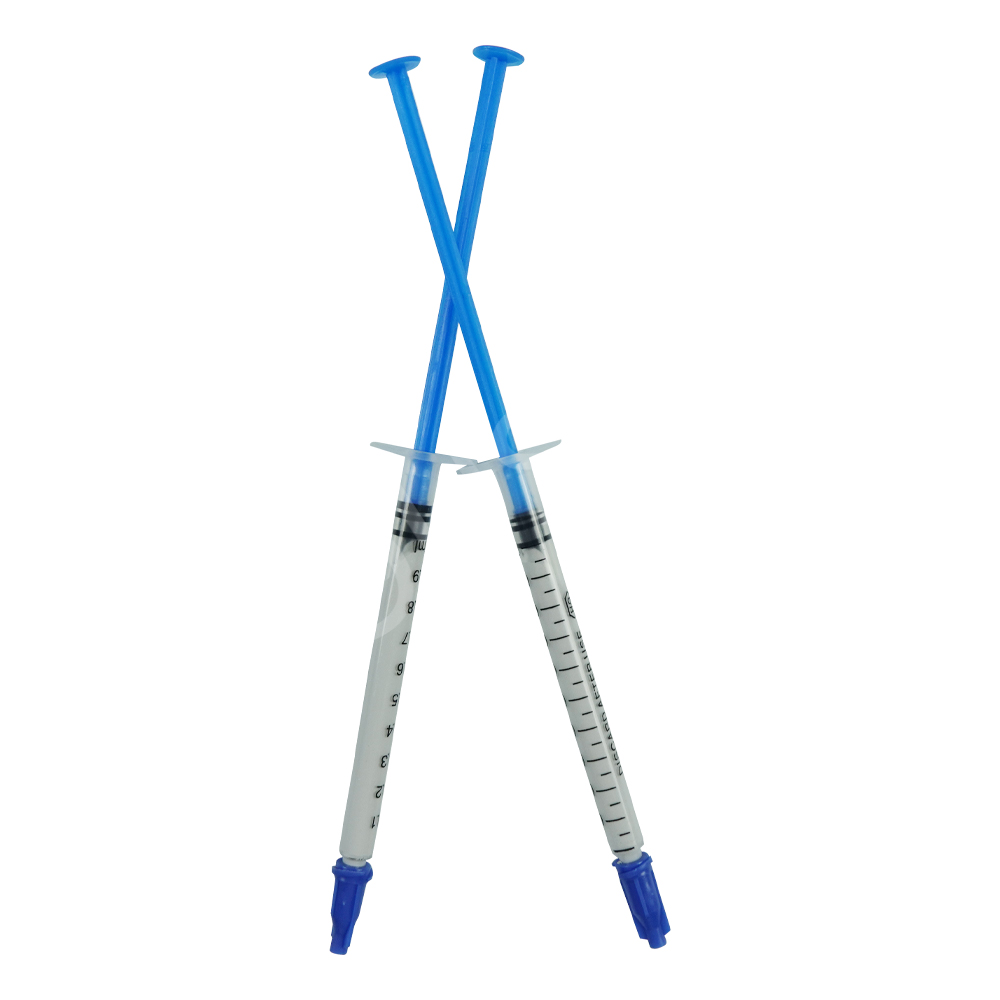
For applications requiring a paste-type thermal interface, TOUSEN TSAS50 can be considered as part of an engineering evaluation program. According to the manufacturer's published specifications, TSAS50 provides a thermal conductivity of 7.0 W/m·K and a thermal resistance coefficient of approximately 0.025 °C·cm²/W at 60 psi.
The material has a reported viscosity of approximately 120 Pa·s at 22°C and uses a single-component, non-curing formulation. These characteristics can be relevant when engineers are evaluating a thermal paste for applications where an additional curing process is undesirable.
TSAS50 also supports screen printing, providing an additional manufacturing option for applications that require controlled and repeatable material deposition. For compact electronics, process consistency can be just as important as the nominal thermal properties of the material.
In a smartphone thermal design, TSAS50 should be evaluated according to the actual interface conditions, including component power, contact pressure, target bond line thickness, surface characteristics, thermal cycling requirements, and the selected manufacturing process.
More technical information is available on the TOUSEN TSAS50 thermal paste product page.
Solving Real Smartphone Thermal Management Problems
From an engineering perspective, choosing a thermal interface material should begin with identifying the actual thermal problem.
If the primary issue is sustained SoC temperature during high-performance workloads, engineers should first analyze the heat source, heat flux, interface resistance, and downstream heat-spreading path. A suitable thermal grease can then be evaluated as one part of the solution.
If manufacturing consistency is the primary concern, the evaluation should include material viscosity, deposition behavior, process compatibility, coverage uniformity, and production repeatability. In this situation, the performance of a thermal paste cannot be separated from the manufacturing process used to apply it.
If the design contains relatively large gaps or significant component height variation, engineers may need to evaluate thermal gels or other gap-filling materials instead. The objective is not to select the material with the highest specification on paper, but to select the material that provides the most appropriate combination of thermal performance, mechanical compliance, processability, and reliability for the actual interface.
Conclusion
The continued development of 5G, mobile AI, advanced processors, high-refresh-rate displays, and high-power charging is increasing the thermal management requirements of high-performance smartphones. As device architectures become more compact, the thermal interface between a semiconductor package and its heat-spreading structure becomes increasingly important.
Thermal paste and thermal grease can help reduce interfacial thermal resistance by filling microscopic surface irregularities, while thermal gels can provide an alternative solution for applications requiring greater compliance and gap-filling capability.
For engineers developing compact high-performance electronics, the most reliable approach is to evaluate the complete thermal path rather than focusing on a single material specification. Thermal conductivity, interface thickness, rheology, application method, mechanical conditions, and long-term reliability should all be considered together.
With its 7.0 W/m·K thermal conductivity, non-curing single-component formulation, approximately 120 Pa·s viscosity at 22°C, and screen-printing capability, TOUSEN TSAS50 provides a practical option for engineering evaluation where a paste-type thermal interface is required. Final material selection should always be confirmed through application-specific testing and reliability validation.
Optical Module Thermal Management for High Density AI Computing
Related Article