Thermal Paste Thermal Grease and Thermal Gels for Heat Management
Why Thermal Resistance Matters in Thermal Paste Applications
As electronic devices continue to become more powerful, compact, and energy efficient, thermal management has become a critical part of product design. CPUs, GPUs, power semiconductors, LEDs, telecom equipment, automotive electronics, and power modules all generate heat that must be transferred efficiently away from the heat source.
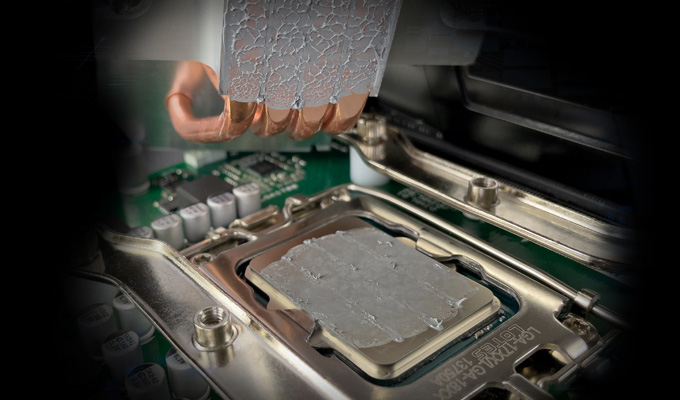
In many of these applications, the interface between the heat-generating component and the heat sink can become a significant thermal bottleneck. Even highly polished metal surfaces contain microscopic irregularities. When two surfaces are assembled, these irregularities create small air gaps that restrict heat transfer. This is where thermal paste and thermal grease play an important role.
By filling microscopic gaps between mating surfaces, a properly selected thermal interface material can reduce interfacial thermal resistance and improve the overall heat transfer path. From an engineering standpoint, however, thermal performance should never be evaluated by thermal conductivity alone. The actual thermal resistance of the interface, bond line thickness, application method, surface condition, and long-term stability all need to be considered.
What Is Thermal Resistance and Why Does It Matter?
Thermal resistance describes how strongly a material or interface resists heat flow. In an electronic assembly, heat typically travels through several stages:
Semiconductor junction → package → thermal interface material → heat sink → ambient environment
Every section of this thermal path contributes some level of resistance. If the interface between the component and heat sink is poorly designed, the temperature of the device can rise even when the heat sink itself has sufficient cooling capacity.
This is one of the main reasons thermal paste is used in electronic thermal management. Unlike a dry contact between two solid surfaces, thermal paste can flow into microscopic surface irregularities and replace air at the interface with a thermally conductive medium.
For engineers, the objective is not simply to select a material with the highest published thermal conductivity. The more practical goal is to minimize the effective thermal resistance of the assembled interface under actual operating conditions.
Thermal Conductivity Is Not the Same as Thermal Resistance
A common mistake when selecting a thermal paste is to compare products only by their nominal thermal conductivity. Thermal conductivity is an important material property, but it does not fully describe the thermal performance of a completed assembly.
In a simplified model, the thermal resistance of a uniform thermal interface can be related to material thickness, thermal conductivity, and effective contact area. As the bond line becomes thicker, the distance heat must travel through the interface increases. Conversely, improving the effective contact area and reducing unnecessary material thickness can help lower thermal resistance.
This explains why application quality matters. A high-conductivity thermal grease applied excessively thick may not deliver the expected system-level performance. A material with good wetting and spreading characteristics may produce a more efficient interface when it can form a thin, continuous thermal path.
Therefore, thermal conductivity, thermal resistance, bond line thickness, and application consistency should be evaluated together during material selection and validation.
Thermal Paste vs Thermal Grease: What Is the Difference?
In the North American electronics industry, the terms thermal paste and thermal grease are often used interchangeably. Both generally refer to thermally conductive compounds designed to improve heat transfer across a component-to-heat-sink interface.
Depending on the supplier and application, thermal grease may emphasize the material's grease-like rheology, while thermal paste is a broader term commonly used for thermally conductive interface compounds.
These materials are particularly useful when the required interface thickness is relatively small and the mating surfaces can be brought into close contact.
- Fills microscopic surface imperfections and air gaps
- Creates a continuous thermal path between the heat source and heat sink
- Can accommodate small variations in surface flatness
- Allows the bond line thickness to be controlled through the assembly process
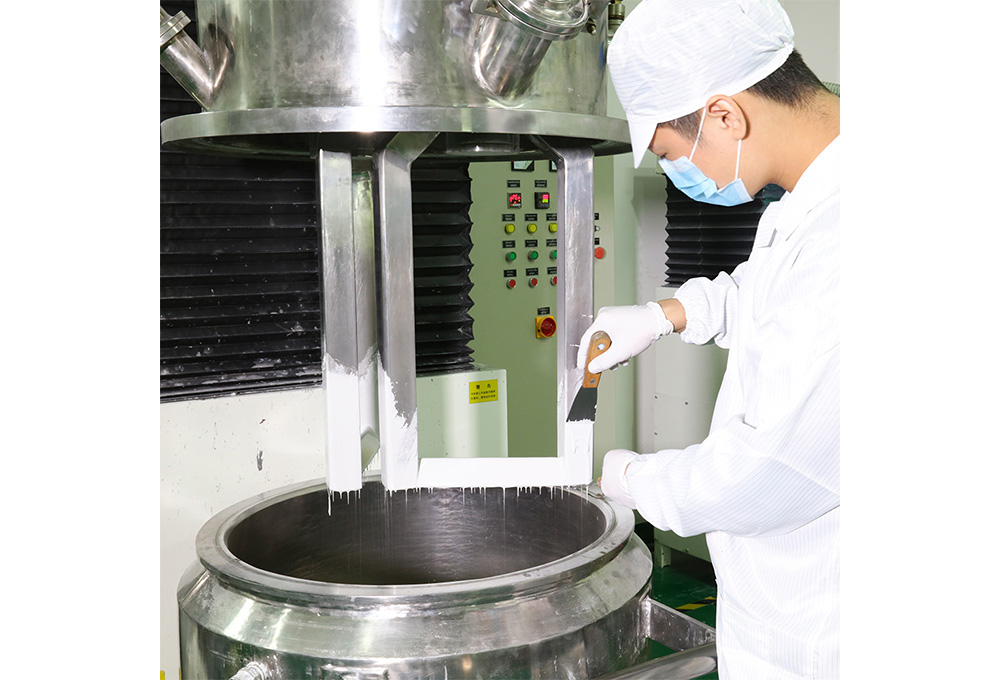
- Can be applied using manual or automated dispensing and coating processes
At the same time, thermal grease requires appropriate process control. Too little material may result in incomplete surface coverage, while excessive application can increase bond line thickness and potentially increase thermal resistance.
TSAS50 Thermal Paste for Electronic Thermal Management
For applications that require a reliable thermal interface compound, material selection should consider more than thermal conductivity. Engineers should evaluate thermal resistance, application behavior, operating temperature, interface geometry, assembly pressure, and long-term reliability according to the requirements of the specific application.
TOUSEN TSAS50 is a thermally conductive interface compound developed for electronic thermal management applications. It can be considered for applications where a thin, conformable thermal interface is required between heat-generating components and heat dissipation structures.
Depending on the system design, applications for thermal interface compounds may include CPUs, GPUs, power semiconductors, LED assemblies, communication equipment, power supplies, and other electronic systems where efficient heat transfer is required.
From an engineering perspective, TSAS50 should be evaluated under the actual assembly conditions of the target application. Important factors include the component surface condition, heat sink flatness, required bond line thickness, dispensing or coating process, operating temperature, and thermal cycling requirements.
Why Bond Line Thickness Matters
One of the most important factors affecting the performance of a thermal grease interface is the final bond line thickness. Because thermal resistance increases with the distance heat must travel through the interface, unnecessary material thickness should generally be avoided.
However, this does not mean that the thinnest possible application is always the best solution. The interface must contain enough material to compensate for microscopic surface irregularities and maintain consistent coverage across the required contact area.
The engineering objective is therefore to achieve an optimized and repeatable bond line rather than simply minimizing the amount of thermal compound.
In production environments, this requires controlling dispensing volume, surface preparation, assembly pressure, component tolerances, and process repeatability.
Thermal Paste and Thermal Gels Serve Different Design Needs
The growing diversity of electronic architectures has also increased the use of different thermal interface materials, including thermal gels.
Thermal gels are generally designed to provide high compliance and gap-filling capability. They can be useful when components have significant height variation, larger interface gaps, or when mechanical compliance is an important part of the design.
By comparison, thermal paste and thermal grease are often better suited to applications where the interface can be maintained at a relatively thin bond line.
For this reason, engineers should not treat thermal paste, thermal grease, and thermal gels as direct substitutes in every application. The appropriate material depends on the interface geometry, thermal load, assembly process, mechanical requirements, and reliability targets.
How Engineers Should Evaluate Thermal Resistance
In practical thermal design, the interface material should be evaluated as part of the complete thermal path rather than as an isolated material.
A simplified thermal model can be expressed as:
Total thermal resistance = sum of the thermal resistances along the heat path
This means that reducing resistance at one interface can contribute to lower overall thermal resistance and potentially reduce component operating temperature.
For high-power semiconductor devices, even a relatively small increase in interface resistance can become important because the temperature rise associated with a thermal interface is related to both heat generation and thermal resistance.
Consequently, thermal interface resistance should be incorporated into the thermal budget during the design stage rather than addressed only after prototype testing reveals an overheating problem.
Key Factors When Selecting Thermal Paste
A systematic material selection process can help engineers avoid relying on a single specification. The following factors should be evaluated together:
1. Heat Load
Determine the actual power dissipation of the component and establish the allowable junction or case temperature. This provides a practical target for the thermal path.
2. Interface Geometry
Determine the actual gap and surface conditions between the heat source and heat sink. Thin interfaces may favor thermal paste, while larger gaps may require thermal pads or thermal gels.
3. Thermal Resistance
Do not rely exclusively on the advertised thermal conductivity. Measure or estimate the effective thermal resistance under representative assembly conditions whenever possible.
4. Application Process
Evaluate dispensing, printing, coating, or manual application methods. Production consistency can have a significant impact on actual interface performance.
5. Long-Term Reliability
For automotive electronics, servers, industrial controls, power electronics, and other demanding systems, thermal cycling, operating temperature, aging, and material stability should be considered during validation.
Conclusion: Thermal Resistance Is a Critical Part of TIM Selection
From an engineering perspective, thermal paste, thermal grease, and thermal gels are not simply different names for the same solution. Each material category addresses different interface conditions and system requirements.
For thermal grease and thermal paste, the most meaningful evaluation should go beyond nominal thermal conductivity. Effective thermal resistance depends on the material, bond line thickness, contact area, surface condition, application process, and operating environment.
For high-performance electronics, a well-designed thermal interface can help establish a more efficient heat path between the heat source and heat sink. Selecting the appropriate material and controlling the final interface thickness are therefore important steps in achieving predictable thermal performance.
TOUSEN TSAS50 provides an option for engineers evaluating thermally conductive interface compounds for electronic thermal management. As with any thermal interface material, final suitability should be confirmed through application-specific testing under the intended operating and assembly conditions.
In modern high-density electronics, effective thermal management is no longer simply a question of choosing the material with the highest thermal conductivity. A more complete engineering approach considers thermal resistance, interface thickness, process control, reliability, and actual system conditions together.
Thermal Paste Thermal Conductivity and Thermal Management
Thermal Paste Thixotropy and Its Impact on Thermal Performance
Related Article