Thermal Gel Solutions for Advanced Electronic Thermal Management
Why Two-Part Thermal Gel Is Becoming the Preferred Thermal Interface Material for Modern Electronics
As electronic systems continue to deliver higher computing performance while becoming smaller, thinner, and more integrated, thermal management has evolved into one of the most critical aspects of electronic product design. Whether in AI servers, automotive control modules, renewable energy equipment, industrial automation, or high-performance consumer electronics, excessive heat directly affects reliability, operational efficiency, and product lifespan.
From an engineering standpoint, selecting the right Thermal Gel is no longer simply about achieving higher thermal conductivity. It requires balancing thermal performance, dispensing efficiency, long-term reliability, electrical insulation, manufacturability, and mechanical protection. Among today's advanced thermal interface materials, two-part Thermal Gel has become an increasingly attractive solution because it effectively addresses many of the limitations associated with conventional thermal greases and thermal pads.
This article provides an objective engineering comparison of different thermal interface materials while explaining why modern electronic manufacturers are increasingly adopting Thermal Gel for demanding thermal management applications.
Why Thermal Interface Materials Matter
No machined metal surface is perfectly flat. Even precision-manufactured heat sinks, integrated circuit packages, and aluminum cold plates contain microscopic surface irregularities. These microscopic imperfections create tiny air pockets whenever two solid surfaces come into contact.
Because air has an extremely low thermal conductivity—approximately 0.026 W/m·K—it becomes one of the largest contributors to interface thermal resistance. The primary role of a thermal interface material (TIM) is to eliminate these trapped air gaps and establish an efficient thermal pathway between the heat source and the heat sink.
Selecting an inappropriate TIM may lead to increased operating temperatures, thermal throttling, reduced component lifetime, or even premature device failure.
Today's most common thermal interface materials include:
- Thermal Grease
- Thermal Pads
- Phase Change Materials (PCM)
- Thermal Putty
- Thermal Gel
Each solution offers distinct advantages depending on application requirements. However, increasing power density has shifted industry preference toward materials that provide both excellent thermal transfer and long-term mechanical stability.
Engineering Challenges with Conventional Thermal Interface Materials
Thermal Grease: Excellent Initial Performance but Limited Long-Term Stability
Thermal grease has long been the standard choice for CPUs, GPUs, and power semiconductor devices due to its excellent surface wetting characteristics and low initial thermal resistance. However, engineers have recognized several limitations during long-term operation.
Repeated thermal cycling often causes grease migration, commonly referred to as pump-out. Over time, base oils may separate from filler particles, leading to dry-out, inconsistent interface thickness, and gradually increasing thermal resistance.
Although thermal grease remains suitable for many applications, products requiring maintenance-free operation over many years often demand a more stable alternative.
Thermal Pads: Process Friendly but Limited Conformability
Thermal pads simplify manufacturing because they offer predefined thickness, clean handling, and repeatable assembly. They are widely used throughout consumer electronics and industrial equipment.
Nevertheless, thermal pads depend primarily on compression to establish surface contact. When interfaces contain uneven component heights, warped substrates, or complex three-dimensional geometries, contact pressure may become inconsistent, resulting in localized air gaps and increased thermal resistance.
In applications with multiple components sharing a common heat sink, thermal pads may struggle to accommodate large variations in gap thickness without increasing mechanical stress.
Why Two-Part Thermal Gel Is Changing Modern Thermal Management
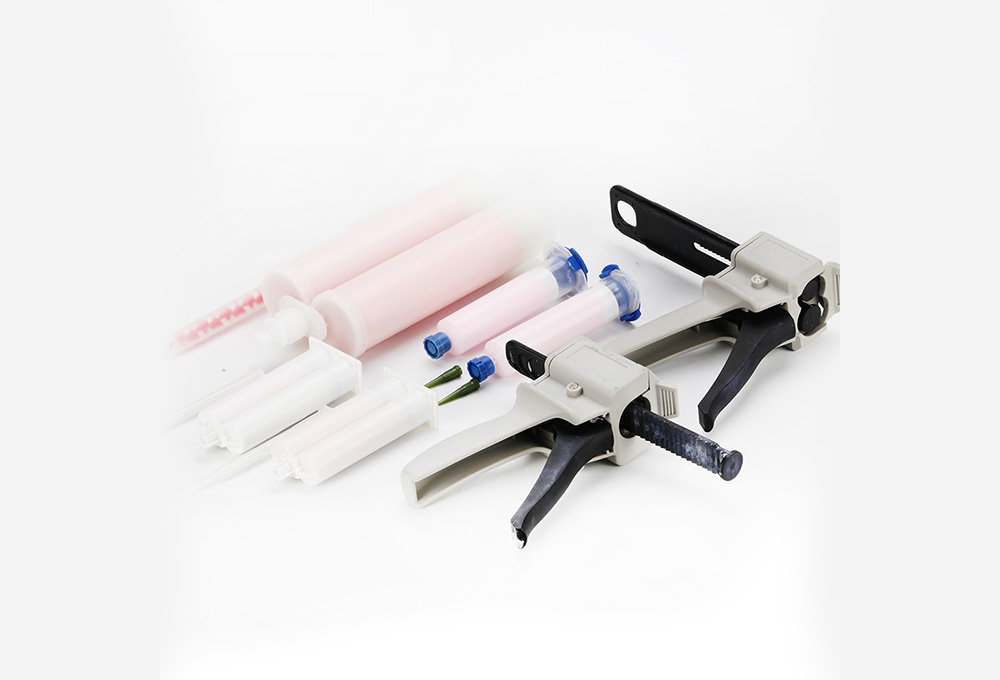
Unlike conventional thermal grease or pre-formed thermal pads, a two-part Thermal Gel consists of two separately packaged components that are automatically mixed immediately before dispensing. Once cured, the material forms a soft, compliant silicone elastomer capable of maintaining intimate contact with adjacent surfaces while delivering reliable thermal performance throughout the product's service life.
This unique curing mechanism combines the dispensing flexibility of thermal grease with the dimensional stability of a thermal pad, creating an optimized thermal interface solution for automated manufacturing.
Superior Gap Filling Capability
One of the most significant engineering advantages of Thermal Gel is its exceptional ability to conform to complex surface geometries. Before curing, the low-viscosity mixture flows into microscopic surface irregularities, filling voids that conventional thermal pads may leave behind.
By minimizing trapped air, Thermal Gel significantly reduces interface thermal resistance and enables more efficient heat transfer from semiconductor devices to cooling hardware.
This characteristic is especially beneficial for:
- AI accelerators
- High-performance GPUs
- CPUs
- Power MOSFET modules
- IGBT modules
- Battery management systems
- Automotive ECUs
- 5G communication equipment
Outstanding Long-Term Reliability
Unlike thermal grease, cured Thermal Gel maintains its position throughout repeated thermal cycling. The cured elastomer resists pump-out, minimizes material migration, and preserves stable interface thickness over extended operating periods.
For electronic systems expected to operate continuously for ten years or longer, maintaining consistent thermal resistance is often more important than achieving the highest initial thermal conductivity.
Lower Mechanical Stress
Modern semiconductor packages continue to become thinner and more mechanically sensitive. Excessive compression from rigid interface materials may damage solder joints, ceramic substrates, or delicate package structures.
The compliant nature of Thermal Gel allows it to absorb assembly tolerances and mechanical vibration while maintaining reliable thermal contact. This flexibility helps improve overall system durability, particularly in automotive electronics, industrial automation, energy storage systems, and transportation equipment operating under continuous vibration.
Comparison of Common Thermal Interface Materials
| Performance Attribute | Thermal Grease | Thermal Pad | Two-Part Thermal Gel |
|---|---|---|---|
| Gap Filling Ability | Excellent | Moderate | Excellent |
| Thickness Control | Limited | Excellent | Excellent |
| Pump-Out Resistance | Low | Excellent | Excellent |
| Complex Geometry Adaptation | Moderate | Limited | Excellent |
| Automated Dispensing | Good | Not Applicable | Excellent |
| Mechanical Stress Reduction | Moderate | Good | Excellent |
| Long-Term Reliability | Moderate | Good | Excellent |
Rather than replacing every existing TIM, Thermal Gel fills an important gap between conventional thermal grease and thermal pads, offering a balanced combination of thermal performance, process flexibility, and long-term reliability.
TOUSEN Two-Part Thermal Gel Series for High-Performance Thermal Management
For engineers seeking a reliable balance between thermal performance, dispensing efficiency, and long-term durability, the TOUSEN Thermal Gel Series provides a practical solution for today's high-power electronic assemblies. Designed for automated dispensing processes, TOUSEN's two-part Thermal Gel delivers excellent gap-filling capability while maintaining stable thermal performance throughout the product lifecycle.
Unlike conventional thermal grease that may experience pump-out or oil separation after prolonged thermal cycling, TOUSEN Thermal Gel cures into a soft silicone elastomer that maintains intimate contact with both the heat source and the heat sink. This cured structure improves mechanical reliability while reducing interface degradation caused by vibration, thermal expansion, and long-term operation.
Learn more about the complete product portfolio here:
Typical Technical Specifications
| Property | Typical Value |
|---|---|
| Product Type | Two-Part Silicone Thermal Gel |
| Mix Ratio | 1 : 1 |
| Thermal Conductivity | Up to 8.0 W/m·K |
| Hardness | Shore 00 55 ±10 |
| Minimum Bond Line | 0.17 mm |
| Dielectric Strength | >6 kV/mm |
| Operating Temperature | -50°C to +150°C |
| Flame Rating | UL 94 V-0 |
| Environmental Compliance | RoHS, REACH, Halogen-Free |
These properties enable Thermal Gel to satisfy the demanding thermal management requirements of high-density electronic assemblies while providing electrical insulation and mechanical protection.
Typical Applications of Thermal Gel
As electronic products continue to increase in power density, Thermal Gel has become an increasingly common thermal interface material across numerous industries.
AI Servers and High-Performance Computing
Modern AI processors generate significantly higher heat flux than previous generations. Their complex package structures often include multiple dies, HBM memory, and large heat spreaders with varying surface tolerances. Thermal Gel effectively fills these irregular gaps while maintaining stable thermal contact during continuous operation.
Power Electronics
Power converters, IGBT modules, MOSFET assemblies, and inverter systems frequently experience rapid thermal cycling. The compliant structure of cured Thermal Gel accommodates differential thermal expansion between substrates and heat sinks, helping reduce mechanical stress while maintaining efficient heat transfer.
Automotive Electronics
Electronic control units (ECUs), onboard chargers (OBCs), DC-DC converters, battery management systems (BMS), and advanced driver-assistance systems (ADAS) require thermal interface materials capable of withstanding vibration, humidity, and continuous temperature fluctuations. Two-part Thermal Gel provides long-term reliability under these demanding operating conditions.
Energy Storage Systems
Battery energy storage systems generate substantial heat during charging and discharging cycles. Proper thermal management improves battery efficiency, extends service life, and enhances overall system safety. Thermal Gel helps establish reliable thermal paths between cells, cooling plates, and structural components.
Industrial Automation and Telecommunications
Industrial controllers, communication base stations, optical networking equipment, and edge computing devices require maintenance-free thermal management solutions capable of operating continuously in harsh environments. The long-term stability of cured Thermal Gel makes it well suited for these applications.
Engineering Considerations When Selecting a Thermal Gel
Although thermal conductivity is often the first specification engineers review, it should not be the sole selection criterion. Overall system reliability depends on multiple material characteristics working together.
When evaluating a Thermal Gel, engineers should consider:
- Thermal conductivity
- Dispensing consistency
- Viscosity and flow behavior
- Cure profile
- Bond line thickness control
- Mechanical compliance
- Electrical insulation performance
- Thermal cycling reliability
- Pump-out resistance
- Long-term environmental stability
- Compatibility with automated dispensing equipment
- Compliance with RoHS and REACH requirements
Evaluating these parameters as a complete system rather than focusing solely on thermal conductivity helps engineers achieve a more reliable and manufacturable thermal management solution.
Frequently Asked Questions
Is Thermal Gel better than thermal grease?
Neither material is universally better. Thermal grease offers excellent initial thermal performance, while Thermal Gel provides superior dimensional stability, improved pump-out resistance, and better long-term reliability. For products expected to operate maintenance-free over many years, two-part Thermal Gel is often the preferred solution.
Can Thermal Gel replace thermal pads?
In many applications, yes. Because Thermal Gel conforms to irregular surfaces and accommodates varying gap heights, it can outperform thermal pads in assemblies with complex geometries or multiple component heights. However, thermal pads remain an excellent choice where predefined thickness and simple assembly are priorities.
Which industries benefit most from Thermal Gel?
Industries including AI computing, automotive electronics, renewable energy, telecommunications, industrial automation, power electronics, and energy storage commonly benefit from the combination of thermal performance and mechanical reliability provided by two-part Thermal Gel.
Conclusion
As power densities continue to increase across modern electronic systems, thermal interface materials must deliver more than high thermal conductivity alone. Long-term reliability, manufacturing efficiency, mechanical compliance, and stable thermal performance have become equally important design considerations.
Compared with conventional thermal grease and thermal pads, two-part Thermal Gel provides a balanced solution that combines excellent gap-filling capability, automated dispensing compatibility, low mechanical stress, and outstanding resistance to pump-out and thermal cycling. These characteristics make it an increasingly popular choice for advanced electronic applications where reliability and consistent thermal performance are critical.
The TOUSEN Thermal Gel Series has been developed to meet the demanding requirements of AI servers, automotive electronics, industrial equipment, power modules, communication systems, and energy storage applications. By combining high thermal conductivity with excellent processability and long-term stability, TOUSEN helps engineers build more reliable thermal management solutions for next-generation electronic products.
To explore the complete TOUSEN Thermal Gel portfolio or request technical support for your application, visit:
Thermal Paste Thixotropy and Its Impact on Thermal Performance
Single Component Thermal Gel for Advanced Electronic Cooling
Related Article