Why Thixotropy Matters in Thermal Paste for Long Term Thermal Management
Why Thixotropy Matters in Thermal Paste: An Engineer’s Perspective on Long-Term Thermal Interface Performance
As power densities continue to increase across AI servers, electric vehicles, telecommunications equipment, power electronics, and industrial automation systems, thermal management has become a critical factor in product reliability and operational lifespan. Among various thermal interface materials (TIMs), thermal paste remains one of the most widely used solutions for improving heat transfer between heat-generating components and cooling devices.
When evaluating a thermal interface material, engineers often focus on thermal conductivity as the primary performance indicator. While thermal conductivity is undoubtedly important, real-world performance depends on much more than a single specification. One frequently overlooked characteristic that significantly affects the long-term effectiveness of a thermal paste is its thixotropic behavior.
Understanding Thixotropy in Thermal Paste
From a rheological standpoint, thixotropy refers to the property of a material whose viscosity decreases under shear stress and gradually recovers once the stress is removed.
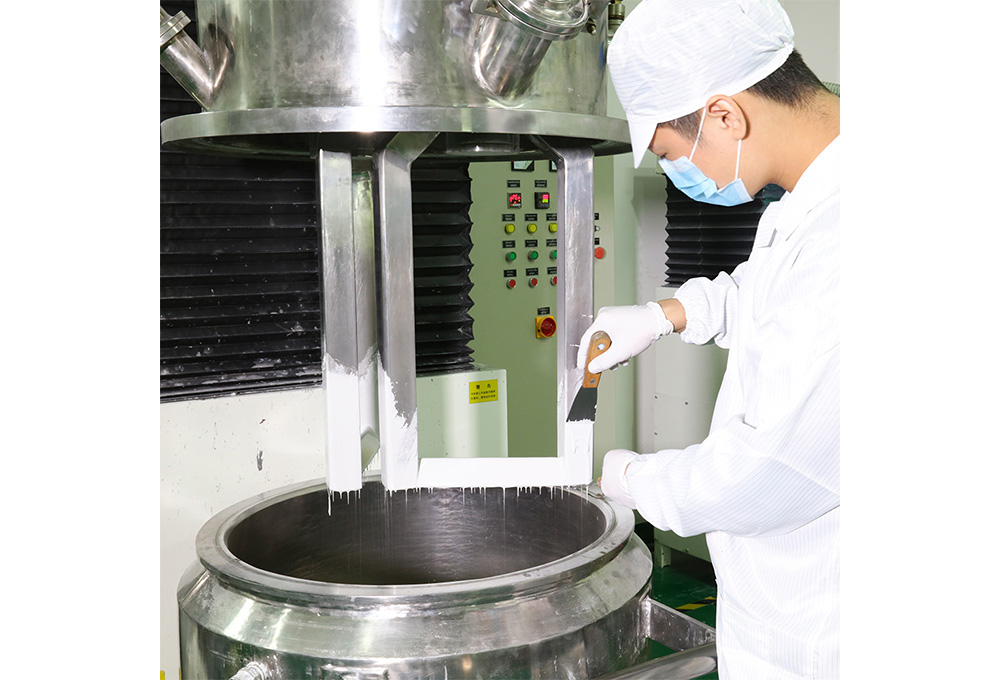
In practical applications, this characteristic enables a thermal paste to flow easily during dispensing, screen printing, or assembly while maintaining structural stability after installation.
An ideal thermal paste should:
- Flow efficiently during dispensing and application.
- Rapidly fill microscopic surface imperfections under mounting pressure.
- Maintain its position during operation without excessive migration.
- Resist pump-out and material separation during thermal cycling.
Therefore, thixotropy plays a vital role in balancing processability, thermal performance, and long-term reliability.
Why Thixotropy Directly Impacts Heat Dissipation Performance
Although semiconductor packages and heat sink surfaces appear smooth to the naked eye, microscopic examination reveals countless surface irregularities and air gaps. Since air is an extremely poor thermal conductor, these voids create additional thermal resistance that limits heat transfer efficiency.
The primary function of a thermal paste is to eliminate these air pockets by establishing a continuous thermal pathway between mating surfaces.
However, achieving effective gap filling requires more than simply having a high thermal conductivity value.
Insufficient Flowability
If a thermal paste exhibits excessive viscosity with inadequate shear-thinning behavior, it may not spread uniformly across the interface. Incomplete coverage can result in localized hot spots and increased thermal resistance.
Excessive Material Migration
Conversely, a thermal paste that becomes too fluid under pressure may be displaced from the interface during assembly, reducing the effective contact area and compromising thermal performance.
Reduced Long-Term Reliability
Over time, electronic devices experience repeated heating and cooling cycles. Poorly formulated thermal interface materials may gradually migrate away from the interface through a phenomenon known as pump-out. As the bond line degrades, thermal resistance increases, resulting in higher operating temperatures and reduced system reliability.
For these reasons, experienced thermal engineers often consider thixotropic performance just as important as thermal conductivity when selecting a thermal paste for demanding applications.
The Growing Importance of Thixotropic Thermal Paste in Modern Electronics
Today's high-performance electronic systems operate under increasingly challenging conditions. Applications such as AI computing hardware, EV power modules, energy storage systems, industrial controllers, and telecommunications infrastructure require thermal interface materials capable of maintaining stable performance over extended operating periods.
These environments commonly involve:
- Continuous high-power operation
- Frequent thermal cycling
- Mechanical vibration
- Wide temperature fluctuations
- Long service-life requirements
Under such conditions, a conventional thermal paste may experience filler sedimentation, oil separation, or loss of interface integrity. As a result, many engineers now evaluate thixotropic index and rheological stability as critical selection criteria.
A high-performance thermal paste should provide:
- Controlled viscosity during application
- Excellent anti-settling characteristics
- Strong pump-out resistance
- Stable thermal performance throughout product life
How Engineers Evaluate Thixotropic Performance
Assessing the quality of a thermal paste requires a comprehensive understanding of both material formulation and long-term reliability testing.
Filler System Design
Advanced thermal paste formulations typically utilize multi-modal particle distributions. By combining fillers of different particle sizes, manufacturers can achieve higher packing density while optimizing rheological behavior and thermal conductivity.
Base Fluid Optimization
The selection of silicone oils, synthetic fluids, and proprietary carrier systems significantly influences viscosity recovery, dispensing consistency, and long-term stability.
Thermal Cycling Reliability
Engineers often evaluate thermal interface materials through extensive thermal cycling tests to determine whether the material maintains interface integrity under repeated temperature fluctuations.
Storage Stability
A high-quality thermal paste should maintain a homogeneous composition during storage without significant oil bleed, filler separation, or viscosity drift.
These factors frequently provide a more accurate indication of real-world performance than thermal conductivity alone.
A Professional Thermal Paste Solution for Industrial Thermal Management
To address the increasing demands of modern thermal management applications, ITOUSEN offers a comprehensive range of thermally conductive paste solutions engineered for industrial and commercial electronics.
Product Information:
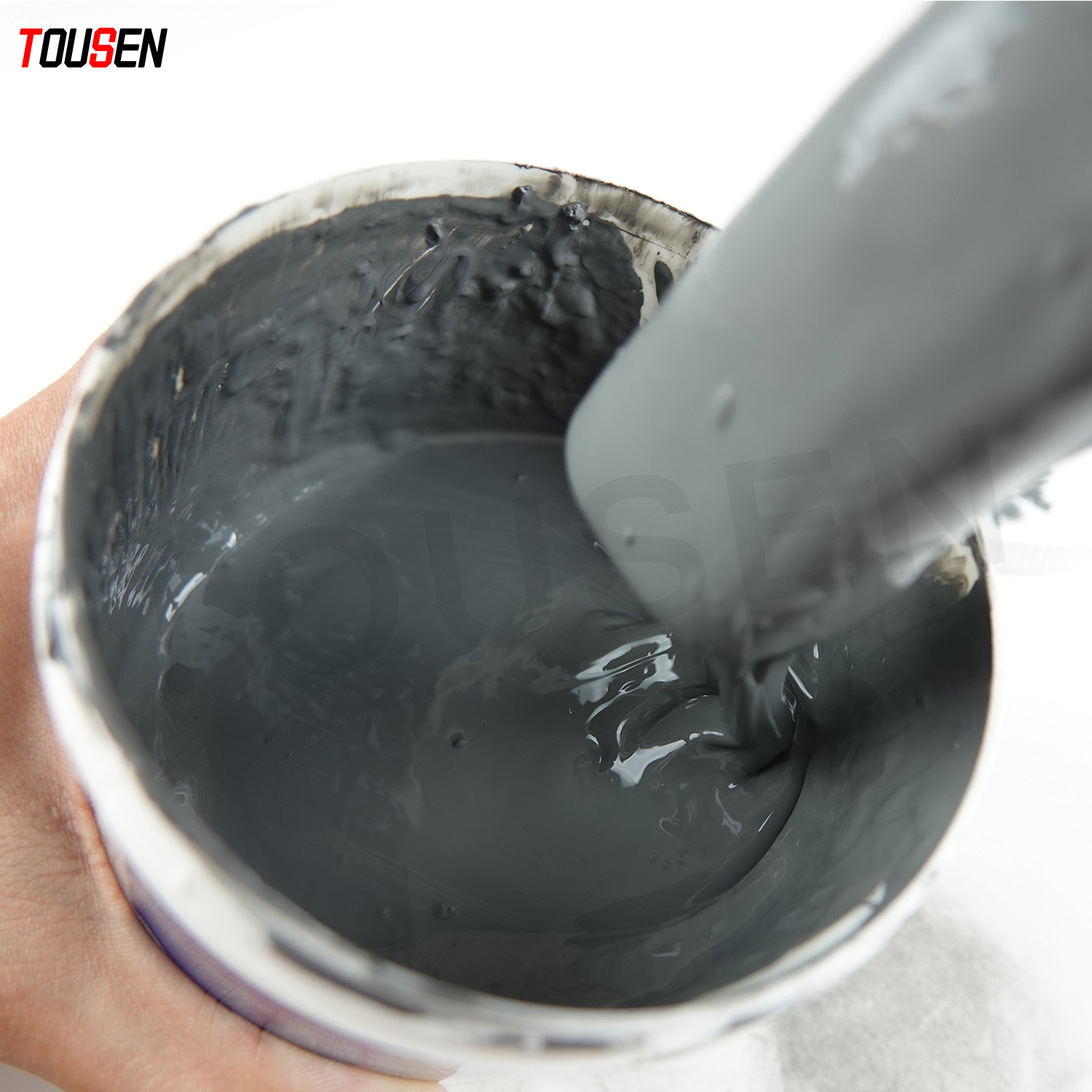
ITOUSEN Thermally Conductive Paste
Designed with optimized filler distribution and advanced rheological control, this thermal paste delivers an effective balance between thermal conductivity, application performance, and long-term reliability.
Typical applications include:
- CPU and GPU cooling systems
- AI servers and data centers
- LED lighting assemblies
- Power supply modules
- Industrial control equipment
- Telecommunications infrastructure
- Electric vehicle electronics
- Energy storage systems
Key features include:
- Customizable thermal conductivity options
- Optimized thixotropic performance
- Excellent wetting and gap-filling capability
- Strong resistance to pump-out
- Low volatility characteristics
- Reliable electrical insulation properties
- Support for customized thermal management solutions
For manufacturers utilizing automated dispensing systems, the material's carefully engineered rheology helps ensure consistent dispensing profiles, improved process control, and enhanced production yield.
Future Trends in Thermal Paste Development
As semiconductor devices continue to generate more heat within increasingly compact footprints, the thermal interface materials industry is shifting beyond the pursuit of higher thermal conductivity values alone.
Future development efforts are expected to focus on:
- Lower interface thermal resistance
- Enhanced thermal conductivity
- Improved thixotropic control
- Greater pump-out resistance
- Extended service life
- Better compatibility with automated manufacturing processes
For engineers and thermal designers, selecting the right thermal paste requires a comprehensive evaluation of material behavior rather than relying solely on datasheet conductivity figures.
Ultimately, the effectiveness of a thermal interface material depends on its ability to maintain a stable thermal pathway throughout the entire operational life of the device.
Conclusion
Thixotropy has become one of the most important performance characteristics in modern thermal paste design. A properly engineered thixotropic structure not only improves application efficiency but also helps maintain low thermal resistance and stable heat dissipation over time.
As thermal challenges continue to evolve across high-performance electronics, selecting a thermal paste with optimized rheological properties can significantly enhance system reliability and thermal management effectiveness.
ITOUSEN's thermally conductive paste solutions are designed to help engineers overcome complex thermal challenges by delivering a balanced combination of thermal conductivity, application performance, and long-term reliability for demanding industrial applications.
Single Component Thermal Gel for Advanced Electronic Cooling
Thermal Paste for Reliable Industrial Screen Printing Systems
Related Article