TOUSEN Battery Pack Safety System Management (二) --Advanced Materials for Battery Thermal Runaway Management--
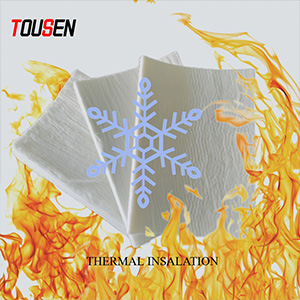
TOUSEN Battery Pack Safety System Management (二)
--Advanced Materials for Battery Thermal Runaway Management--
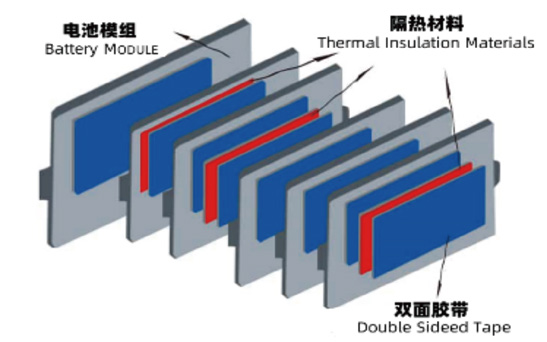
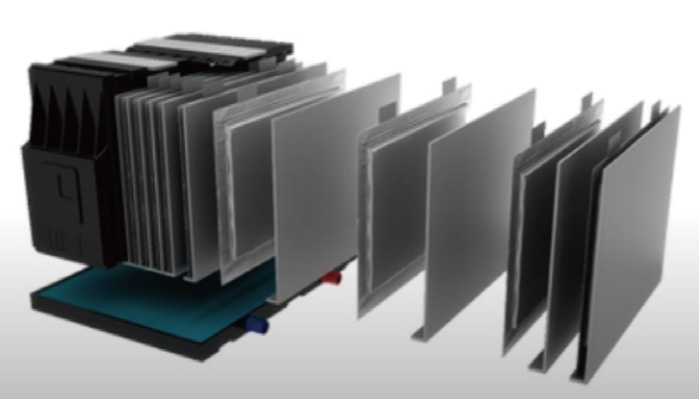
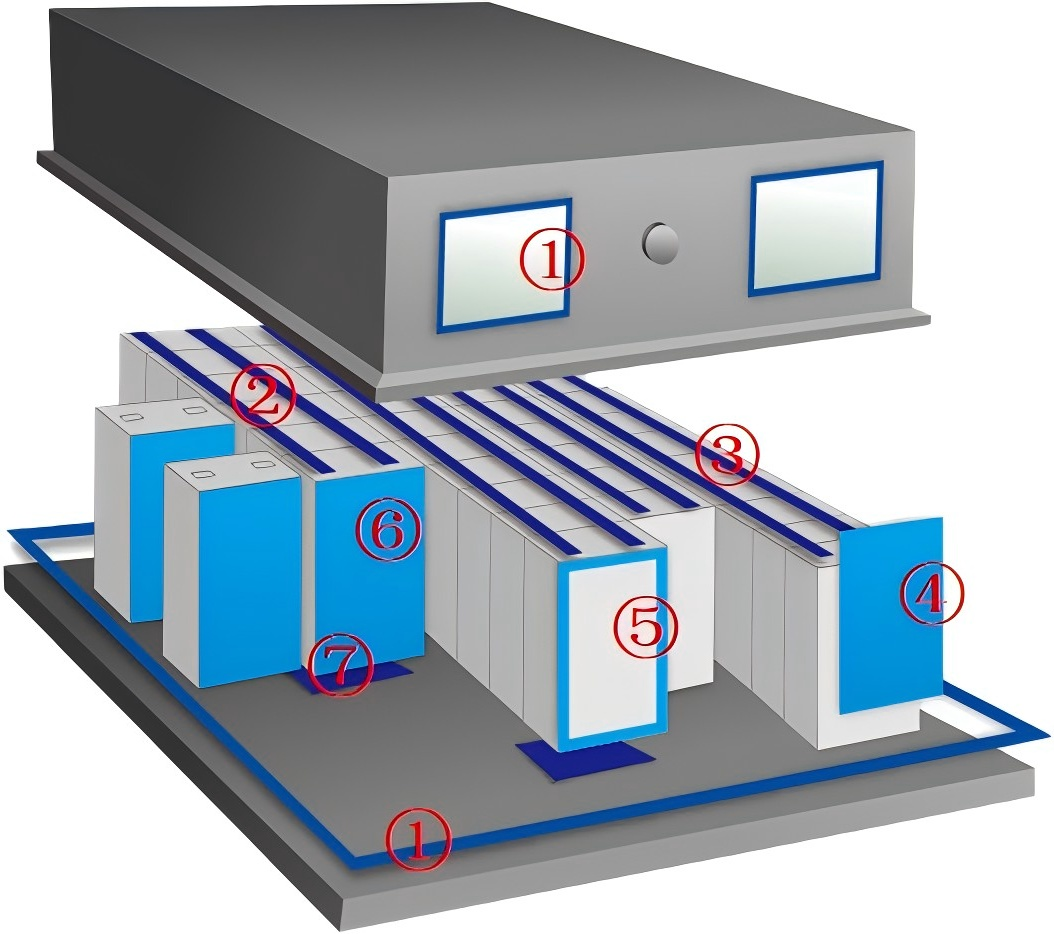
As a Thermal Management Engineer working on new energy battery systems, mitigating thermal runaway is a paramount design challenge. The selection of appropriate insulation and barrier materials is critical to containing cell-to-cell propagation and ensuring overall pack safety. In this technical review, we will examine three high-performance materials from TOUSEN that have undergone extensive validation for these critical applications: Aerogel Component GA-60, Ceramicized Silicone Foam TC-400, and Thermal Insulation Silicone Foam HI-370.
Each material offers a unique mechanism of action, making them suitable for specific roles within the battery pack's thermal management strategy. This analysis provides detailed technical specifications, performance metrics, and application scenarios from an engineering perspective.
Aerogel Component GA-60
Superior Insulation for Compact Spaces
Ultra-Low Thermal Conductivity
Product Overview & Application Context
Aerogel Component GA-60 is an aerogel composite insulation sheet engineered for applications demanding the highest level of thermal performance in limited spaces. Its core is a ceramic fiber aerogel insulation felt, created by compositing nanoporous silica aerogel with an aluminum silicate ceramic fiber base. This core is then encapsulated with a PET cover film using a hot melt adhesive, resulting in a flat, dust-free, and robust sheet.
Engineering Perspective: GA-60 is the go-to material when the primary objective is to minimize heat transfer through conduction in tightly packed modules. It is ideally deployed as an inter-cell or inter-module barrier, in battery box liners, or under covers where space is at a premium.
Key Technical Features & Advantages
- Exceptional Thermal Insulation: The nanoporous structure of the silica aerogel core gives GA-60 an extremely low thermal conductivity, creating a highly effective barrier against heat flow. This is crucial for slowing down thermal propagation during a runaway event.
- High-Temperature Resilience: It maintains structural integrity and insulating properties across a wide temperature range, from cryogenic conditions to high temperatures, ensuring reliable performance under normal and fault conditions.
- Lightweight and Robust: The composite design offers low density, adding minimal weight to the battery pack, while the encapsulation provides excellent resistance to shock, moisture, and dust.
- Flame Retardancy: The material is inherently flame-retardant, contributing to the overall fire safety of the battery system.
Typical Parameters

| Parameter | Specification |
|---|---|
| Core Material | Ceramic Fiber Aerogel Insulation Felt |
| Encapsulation | PET Cover Film with Hot Melt Adhesive |
| Key Property | Ultra-low thermal conductivity |
| Processing Parameters | Fast pressing (Temp: 80-100°C, Pressure: 10kg/m²) for easy integration |
Ceramicized Silicone Foam TC-400
Active Fire Barrier and Intumescent Seal
High-Temperature Ceramicization
Product Overview & Application Context
Ceramicized Silicone Foam TC-400 represents a smart material technology for passive fire protection. At room temperature, it behaves like a standard silicone foam—soft, compressible, and excellent for sealing and compensating for tolerances. However, its critical function activates under extreme heat. When exposed to temperatures such as those from a flame (up to 800°C), it undergoes a ceramicization process, transforming from a soft foam into a rigid, hard ceramic char layer.
Engineering Perspective: TC-400 is an ideal active fire barrier. It is perfect for sealing gaps, busbar passages, and module vents. Under normal operation, it provides sealing and low-level insulation. During a thermal runaway event, it forms an insulating, fire-resistant ceramic barrier that prevents flames and hot gases from propagating, effectively creating a fire compartment.
Key Technical Features & Advantages
- Formation of Ceramic Barrier: The key differentiator. The resulting ceramic layer provides excellent insulation and fire separation, resisting burn-through for extended periods.
- Conformability and Sealing: Its initial foam state ensures it can fill irregular gaps, providing both environmental sealing and tolerance compensation.
- High-Temperature Endurance: Resistant to direct flame impingement, making it suitable for the most critical fire-risk areas within the pack.
- Environmental Stability: Offers excellent resistance to UV, ozone, and temperature cycling, ensuring long-term reliability. It carries a UL94 V-0 flame retardancy rating.
Typical Parameters

| Parameter | Specification |
|---|---|
| Base Material | Silicone Rubber Foam |
| Key Transformation | Ceramicizes at high temperature to form an insulating char |
| Flame Resistance | Withstands up to 800°C flame temperature without burn-through |
| Flame Retardancy | UL94 V-0 |
Thermal Insulation Silicone Foam HI-370
Consistent Performance Under Extreme Heat
Stable Thermal Conductivity
Product Overview & Application Context
Thermal Insulation Silicone Foam HI-370 is designed for applications requiring stable and resilient thermal insulation under continuous high-temperature exposure. Unlike TC-400, HI-370 does not ceramicize. Instead, it is engineered to maintain its elastomeric foam properties and, most importantly, its low thermal conductivity, even at temperatures as high as 500°C.
Engineering Perspective: HI-370 is exceptionally valuable for thermal engineers needing a durable, long-term insulation solution in hot zones within the battery pack. It can be used as a thermal barrier around constantly hot components, as a filler in cell spacing for buffering and insulation, or in areas where maintaining flexibility and resilience at elevated temperatures is necessary to accommodate mechanical stress or vibration.
Key Technical Features & Advantages
- Stable Thermal Conductivity: A standout feature is that its thermal conductivity (~0.07 W/(m·K)) remains virtually constant from room temperature up to 500°C. This predictable performance is vital for accurate thermal modeling and design.
- High-Temperature Resilience: It retains excellent compression set resistance and rubber-like properties, preventing it from becoming brittle or degrading under thermal cycling.
- Flame Retardancy and Safety: Meets UL94 V-0 standards, and combustion products comply with low smoke and toxicity requirements.
- Environmental Resistance: Performs stably in harsh conditions, including exposure to UV radiation and ozone.
Typical Parameters

| Parameter | Specification |
|---|---|
| Base Material | Silicone Rubber Foam |
| Key Property | Stable low thermal conductivity (0.07 W/(m·K)) from RT to 500°C |
| Temperature Resistance | Maintains properties at up to 500°C |
| Flame Retardancy | UL94 V-0 |
Material Comparison Analysis
| Characteristic | Aerogel GA-60 | Ceramicized Silicone TC-400 | Thermal Insulation Silicone HI-370 |
|---|---|---|---|
| Primary Mechanism | Ultra-low heat conduction via nanoporous structure | Ceramicization at high temperature forms rigid fire barrier | Maintains elasticity & stable thermal conductivity at high temperatures |
| Optimal Application | Space-constrained inter-cell/module barriers | Active fire barriers in gaps, channels, and vents | Long-term stable insulation in continuously hot areas |
| Temperature Range | Wide range from cryogenic to high temperatures | Room temperature to 800°C (direct flame impingement) | Room temperature to 500°C (continuous exposure) |
| Mechanical Properties | Rigid sheet, impact resistant | Soft and compressible (RT), hardens after ceramicization | Maintains elasticity and flexibility |
| Flame Retardancy | Excellent flame retardant properties | UL94 V-0 | UL94 V-0 |
Conclusion: Selecting the Right Material for the Application
The choice between GA-60, TC-400, and HI-370 depends on the specific functional requirements within the battery pack's thermal management system. By understanding the distinct properties and mechanisms of these advanced materials, thermal management engineers can make informed decisions to design safer, more reliable, and more robust battery packs for the future of electric mobility.
Choose Aerogel GA-60
When the design priority is achieving the maximum possible thermal insulation in the thinnest possible space between high-risk cells or modules.
Choose Ceramicized Silicone TC-400
When you need an active fire barrier that provides sealing under normal conditions and transforms into a rigid, insulating ceramic shield to block fire and plasma during a thermal runaway event, particularly in gaps and vents.
Choose Thermal Insulation Silicone HI-370
For applications requiring long-term, stable thermal insulation in areas that are consistently hot, where flexibility and resilience must be maintained at high temperatures to cope with mechanical demands.
Thermal Conductive Silicone Pads: Application Analysis in New Energy Fields
Related Article