Thermal Paste Technology: Arctic MX-4, MX-6, Thermal Grizzly, TOUSEN TSAD100
Engineering Insights into High-Performance Thermal Paste
Material Perspectives on Arctic MX-4, Arctic MX-6, Thermal Grizzly, and TOUSEN TSAD100
As power density in modern electronic systems continues to increase, thermal management has evolved from a secondary design consideration into a core engineering challenge. From high-performance CPUs and GPUs to power modules and data-center hardware, effective heat dissipation is essential for maintaining performance, reliability, and service life.
Within this context, thermal interface materials (TIMs) play a decisive role. Well-known products such as arctic mx-4, arctic mx-6, and thermal grizzly have achieved significant market recognition through consistent performance and strong brand communication. At the same time, TOUSEN has introduced its own thermally conductive paste, TOUSEN TSAD100, developed from a materials manufacturing perspective to address long-term and industrial-grade thermal management requirements.
This article examines these high-profile thermal pastes from a strictly technical and material-engineering standpoint, focusing on thermal resistance reduction, material stability, and interface reliability rather than consumer-oriented comparisons.
The Fundamental Role of Thermal Paste in Heat Transfer
In any thermal system, the dominant bottleneck for heat transfer is often not the bulk thermal conductivity of metals, but the thermal resistance at the interface. Even highly polished metal surfaces exhibit microscopic roughness that traps air when two surfaces are mated. Since air has extremely low thermal conductivity, these voids severely impede heat flow.
Thermal paste functions by:
- Filling microscopic surface irregularities
- Displacing trapped air at the interface
- Creating a continuous and stable thermal conduction path
- Maintaining interface integrity under long-term thermal cycling
As a result, evaluating a thermal paste requires more than a nominal thermal conductivity value. Practical performance depends on a combination of thermal resistance, viscosity, electrical insulation, pump-out resistance, and long-term material stability.
Arctic MX-4 and Arctic MX-6: Evolution of Mature TIM Formulations
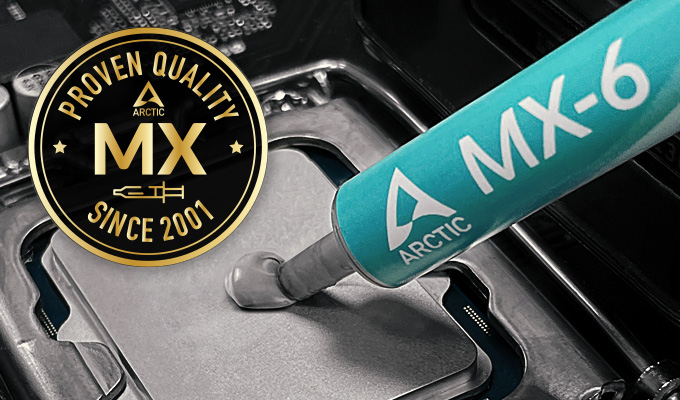
Within the thermal paste market, Arctic has established a strong reputation for consistency and reliability. Arctic MX-4 represents a mature generation of non-metallic, silicone-based thermal paste designed to balance thermal performance with ease of application and electrical safety.
From a materials perspective, MX-4 emphasizes:
- Stable thermal conductivity across standard operating temperatures
- Non-electrically conductive formulation for reduced risk
- Controlled viscosity to ensure uniform interface coverage
Building on this foundation, Arctic MX-6 reflects an optimization strategy focused on lowering interface thermal resistance. By refining filler composition and matrix behavior, MX-6 is engineered to enhance heat transfer efficiency under higher and sustained thermal loads.
Rather than replacing MX-4 outright, MX-6 illustrates how thermal paste development increasingly targets incremental gains in thermal resistance reduction while preserving long-term reliability .

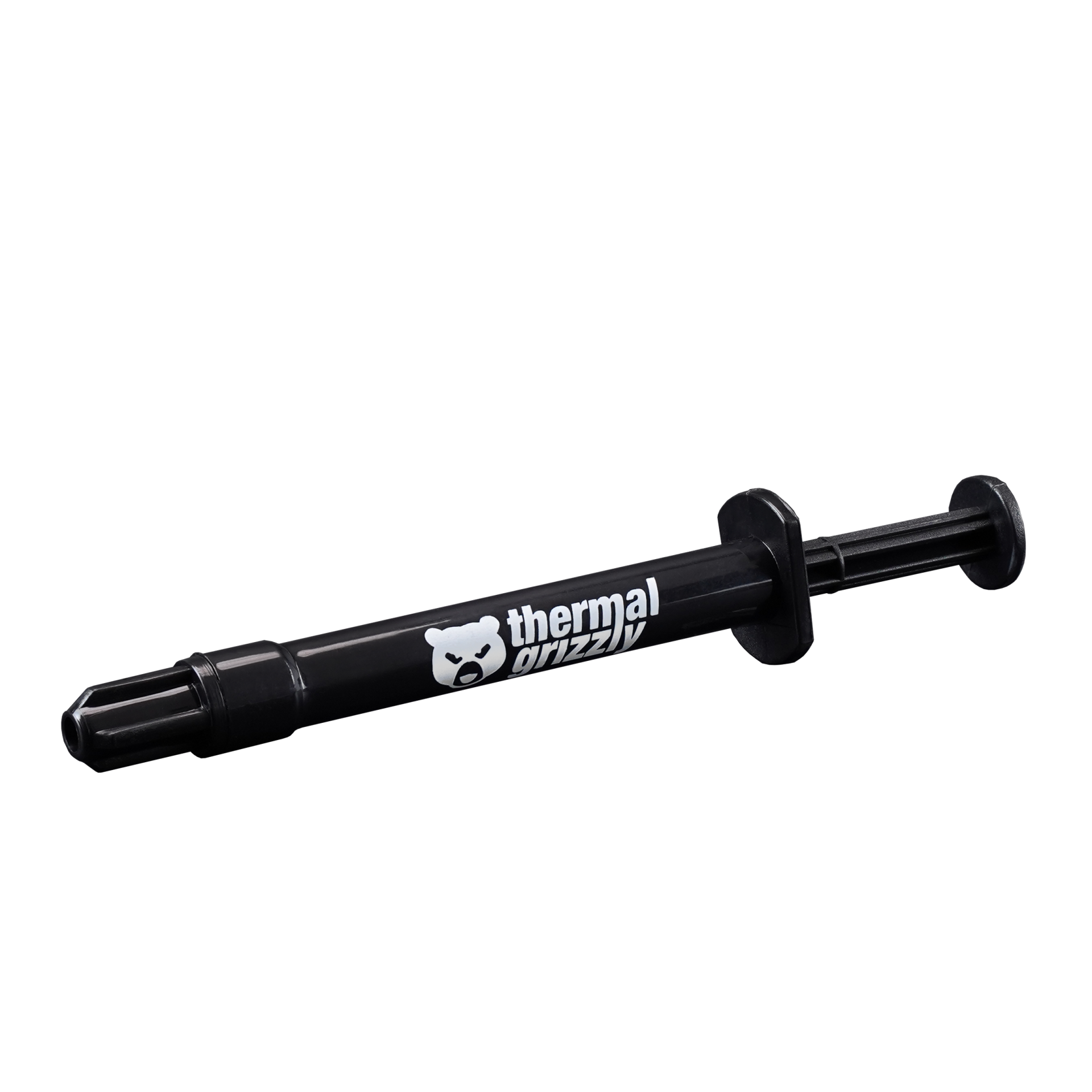
Thermal Grizzly: Performance-Oriented TIM Design
Thermal Grizzly products are frequently associated with performance-driven thermal solutions. Their design philosophy emphasizes maximizing heat transfer capability under demanding thermal conditions.
From a material science viewpoint, this approach typically involves:
- Higher concentrations of thermally conductive fillers
- Formulations optimized for high heat flux densities
- Greater sensitivity to surface flatness and mounting pressure
Such products demonstrate how thermal paste design can be tuned toward peak performance within specific system constraints. In properly engineered assemblies, these materials can effectively minimize interface losses and support extreme thermal loads.

TOUSEN TSAD100: An Engineering-Grade Thermally Conductive Paste
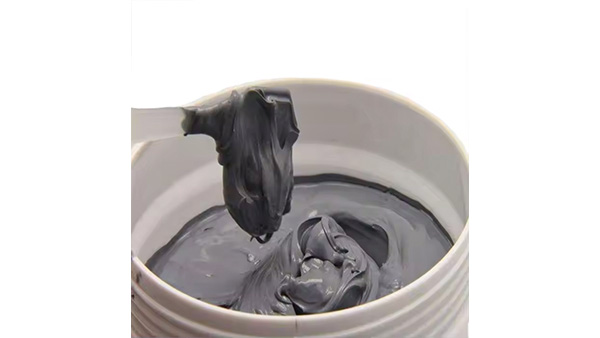
In contrast to consumer-focused positioning, TOUSEN TSAD100 was developed from the standpoint of a thermal materials manufacturer, with emphasis on process compatibility, stability, and long-term performance.
Material Performance Characteristics
According to product specifications, TOUSEN TSAD100 exhibits the following key properties:
- Thermal Conductivity: 6.5 W/m·K, providing efficient heat transfer within non-metallic TIM systems
- Low Thermal Resistance: approximately 0.03 °C·cm²/W under standard mounting pressure
- Excellent Electrical Insulation: volume resistivity of 1.7 × 10¹² Ω
- Long-Term Stability: low oil separation and low volatilization under thermal cycling、
Detailed technical information is available on the official product page:
https://www.itousen.com/products/tsad100-thermally-conductive-paste.html

Designed for Manufacturing and Industrial Integration
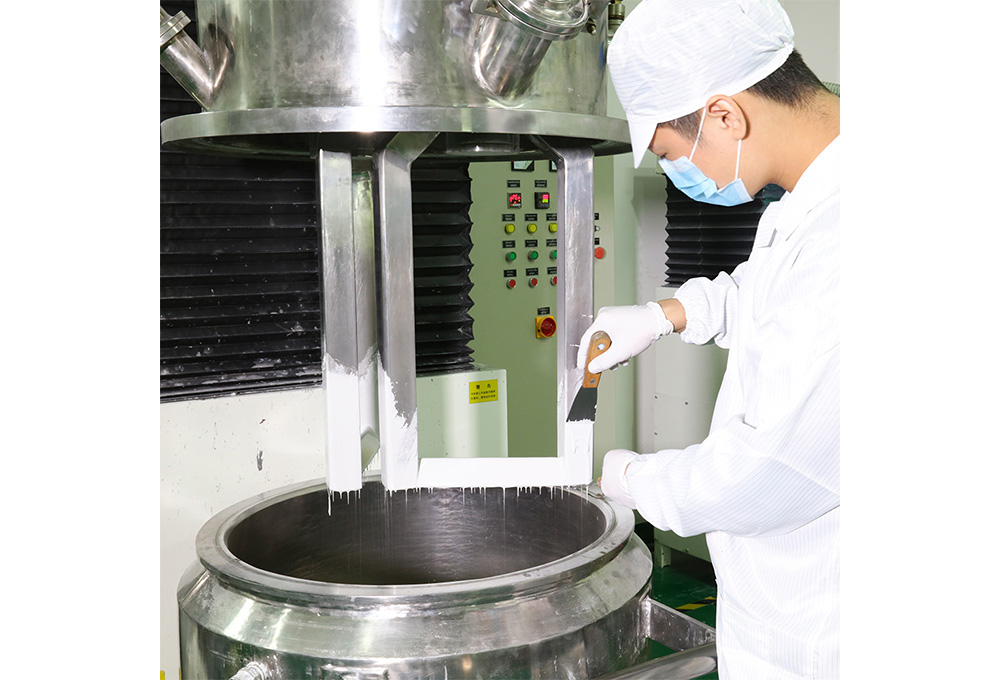
TOUSEN TSAD100 is a single-component, non-curing thermal paste, enabling immediate use without secondary curing steps. This characteristic is particularly advantageous in:
- Automated dispensing and screen-printing processes
- High-volume production environments
- Assemblies requiring rework or long-term serviceability
From an engineering perspective, the material is optimized not solely for peak laboratory performance, but for repeatability, process control, and durability in real-world operating conditions.
From Market Recognition to Material Fundamentals
The popularity of arctic mx-4, arctic mx-6, and thermal grizzly, alongside the growing adoption of TOUSEN TSAD100, reflects a broader industry trend: thermal interface materials are no longer auxiliary components, but critical functional materials in electronic system design.
As device architectures continue to evolve, successful thermal pastes will increasingly be defined by:
- Stable performance across long operational lifetimes
- Compatibility with advanced manufacturing processes
- Consistent interface behavior under thermal and mechanical stress
TOUSEN remains committed to advancing thermal interface material technology through material science innovation and manufacturing expertise, supporting reliable heat management solutions across diverse application domains.
Conclusion
While products such as arctic mx-4, arctic mx-6, and thermal grizzly have significantly shaped market awareness of high-performance thermal paste, TOUSEN TSAD100 represents a complementary perspective—one rooted in materials engineering, process reliability, and long-term thermal stability.
As thermal demands continue to rise, thermal paste will remain a decisive factor in electronic reliability, transforming from a simple interface filler into a cornerstone of modern thermal management design.
Best Thermal Paste for CPU: Engineering Guide to CPU Thermal Paste
Thermal Paste Testing: Dual-Track Analysis of Lab and Bench Data
Related Article