
High Thermal Conductivity Insulation Sheet | Boron Nitride Pad
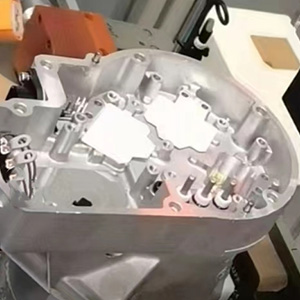
Enhancing Thermal Reliability with Boron Nitride Thermal Pad
Whitepaper — Technical Analysis
Topic: performance and applications of a boron nitride thermal pad as a high thermal conductivity insulation sheet, focused on electric vehicle battery module thermal management.
Abstract
This technical whitepaper evaluates a high-performance boron nitride thermal pad designed as a high thermal conductivity insulation sheet. The objective is to present a concise, evidence-based analysis of material physics, key performance metrics, and practical application guidance for system engineers, particularly in electric vehicle battery module thermal management. The document includes a data-driven summary of thermal, electrical and mechanical indicators and proposes validation tests required for deployment in stringent automotive and industrial environments.
1. Introduction — Thermal Management Challenges
Increasing power density in modern power electronics and battery systems creates concentrated heat sources that require low-impedance thermal paths while preserving electrical isolation. A material that simultaneously offers elevated thermal conductivity and robust dielectric performance is therefore of strategic importance. A boron nitride thermal pad used as a high thermal conductivity insulation sheet offers a means to reduce thermal resistance at interfaces while providing safe electrical isolation for modules and cells.
This whitepaper focuses on the engineering trade-offs and benefits of a boron nitride thermal pad in the context of module-level heat extraction and system-level safety, especially for electric vehicle battery module thermal management.
2. Materials Science: Why Boron Nitride?
Hexagonal boron nitride (h-BN) is a layered two-dimensional crystal whose intrinsic in-plane lattice thermal conductivity is high due to strong covalent bonds forming efficient phonon transport channels. When h-BN is dispersed and aligned in a polymeric matrix, the resulting composite can achieve elevated effective thermal conductivity while maintaining electrical insulation because h-BN is an electrical insulator.
A well-engineered boron nitride thermal pad uses (1) high volume fraction of h-BN flakes or nanosheets, (2) surface treatments that enhance thermal coupling between filler and matrix, and (3) processing routes that favor alignment to optimize through-plane or in-plane conduction depending on application needs. The composite approach yields a flexible high thermal conductivity insulation sheet that fits constrained geometries such as cell-to-cooler interfaces in battery modules.
3. Key Performance Parameters (Product Data)--TOUSEN SPA-SP300
The table below summarizes the representative technical parameters for the evaluated boron nitride thermal pad when used as a high thermal conductivity insulation sheet.
| Parameter | Value | Notes / Test Standard |
|---|---|---|
| Thermal conductivity | 15 W·m⁻¹·K⁻¹ | ASTM D5470 (face-to-face steady-state method) |
| Available thicknesses | 0.20 mm / 0.30 mm / 0.50 mm | Precision caliper tolerances typical ±0.02 mm |
| Thermal impedance (example) | 0.05 °C·in²/W @ 0.20 mm, 15 psi | Measured under specified interfacial pressure |
| Dielectric breakdown | > 10 kV / mm | ASTM D149 equivalent test |
| Dielectric constant | ≤ 3.5 @ 5 GHz | Low-K behavior useful for RF proximity |
| Dielectric loss tangent | ≤ 0.02 @ 5 GHz | Low dissipation at high frequency |
| Density | ≈ 1.50 g·cm⁻³ | Indicative of high filler load |
| Operating temperature range | -40 °C to +120 °C | Short-term excursions beyond this range require validation |
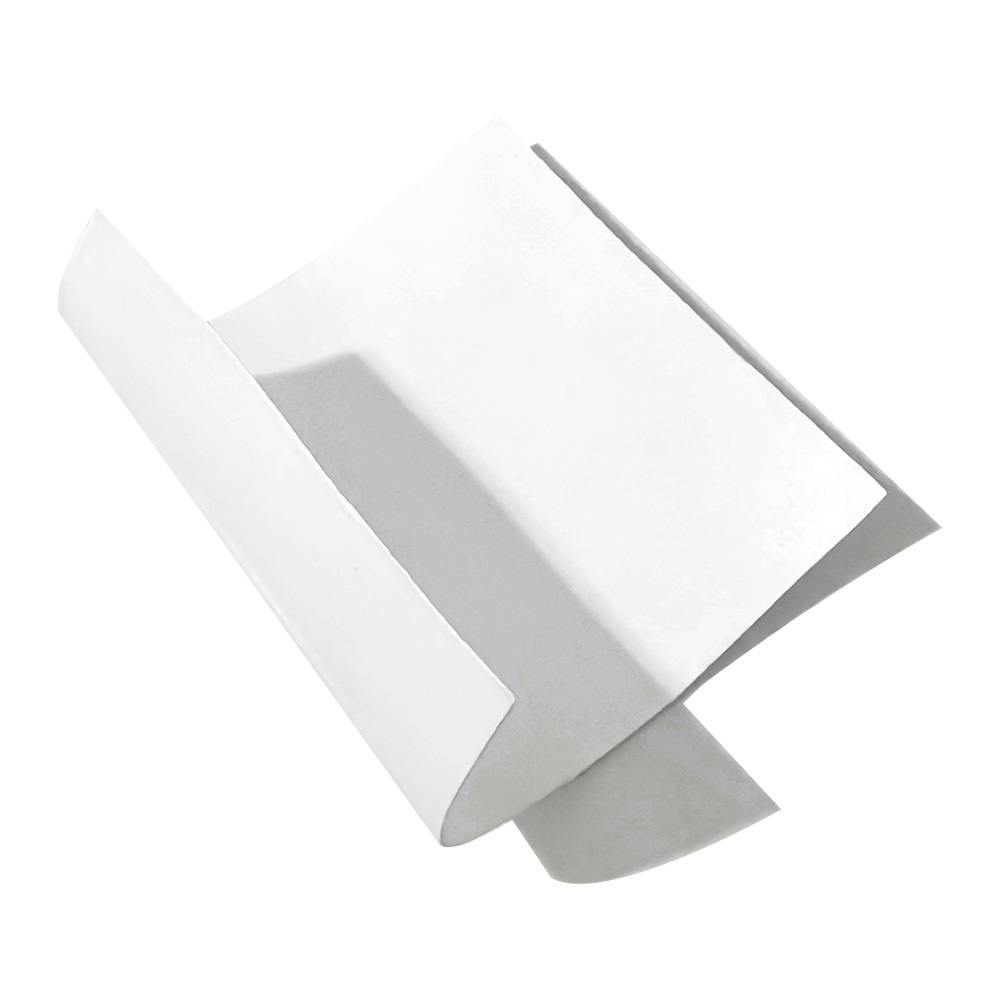

4. Comparative Technical Analysis (Generic Market Context)
When compared to low-fill polymer pads, a high-fill boron nitride thermal pad shows substantially higher thermal conductivity at comparable thickness. This enables a thinner insulation stack or a lower junction temperature for the same heat dissipation target.
Compared to rigid ceramic plates, the boron nitride-based sheet retains compliance, allowing it to conform to non-ideal contact surfaces and accommodate micro-scale roughness without introducing brittle failure modes. For many module-level implementations where mechanical tolerance compensation and electrical isolation are required simultaneously, the high thermal conductivity insulation sheet represents a balanced engineering solution.
5. Application Focus: Electric Vehicle Battery Module Thermal Management
In electric vehicle battery module thermal management, critical requirements include low thermal resistance across the cell-to-cooler interface, stable dielectric isolation under pack voltages, and resilience to vibration and thermal cycling. A well-formulated boron nitride thermal pad as a high thermal conductivity insulation sheet can be deployed as a cell-to-plate interface, stripe between module busbars and cooling plates, or as an intermediate thermal bridge in stacked assemblies.
The combination of 15 W·m⁻¹·K⁻¹ thermal conductivity and a dielectric breakdown value in excess of 10 kV/mm enables simultaneous mitigation of temperature rise and preservation of safety margins in high-voltage packs. The low dielectric constant and low loss tangent are additional benefits where sensors, monitoring electronics, or RF systems are integrated in proximity to battery modules.
Practically, design engineers should specify the required thermal impedance at the expected clamp pressure typical for the module assembly. For example, the thermal impedance value of 0.05 °C·in²/W at 0.20 mm and 15 psi provides a starting point for thermal simulations and correlation to measured cell temperature reduction.
6. Design and Engineering Guidance
6.1 Interface pressure and thermal impedance
Thermal impedance decreases with higher interface pressure due to improved microscopic contact area. When using a boron nitride thermal pad as a high thermal conductivity insulation sheet, document Rth vs. pressure curves (e.g., 5, 15, 50, 100 psi). Engineering models should apply the appropriate Rth value for the expected assembly clamping to estimate junction temperature accurately.
6.2 Thickness selection
Thinner sections reduce bulk thermal resistance but are less tolerant of surface non-flatness. Available thicknesses (0.20 / 0.30 / 0.50 mm) provide options to balance interface conformity and absolute thermal path resistance. Where gap filling is required, thicker or more compliant materials may be necessary.
6.3 Reliability testing
Recommended validation includes thermal cycling (e.g., -40 °C → +125 °C, 1000 cycles), high-temperature life (e.g., 120–150 °C for 1000 hours), humidity bias tests (85 °C / 85% RH), and dc breakdown tests after aging. These tests ensure that the boron nitride thermal pad retains both thermal and dielectric performance under automotive-grade stresses.
7. Representative Implementation Cases
The following are example deployment patterns for a boron nitride thermal pad used as a high thermal conductivity insulation sheet:
- Cell-to-cooler interface: thin pad (0.20 mm) used under a mechanically clamped busbar or pressure plate to minimize ΔT between cell and coolant channel.
- Module internal thermal bridging: strips inserted at module junctions to equalize temperature distribution across the pack, improving cell-to-cell consistency.
- Power module isolation: between semiconductor package and heat spreader where electrical isolation is required but low thermal impedance is critical.
8. Risks, Limitations and Mitigations
Key limitations include the operating temperature ceiling (typical stated upper limit ~120 °C for the representative product) and long-term material stability under aggressive chemical exposure. If system conditions may exceed stated temperature limits, validate the material under worst-case excursions and consider alternative resin chemistries or hybrid solutions.
To mitigate interface-related risk, adopt proper surface preparation, controlled torque or clamp specifications, and specify thermal impedance at the assembly pressure in procurement documentation. For electrical safety, include post-aging dielectric testing in the qualification plan.
9. Conclusion
A boron nitride thermal pad employed as a high thermal conductivity insulation sheet provides a compelling combination of elevated thermal conductivity, dielectric strength, and mechanical compliance. For electric vehicle battery module thermal management, this material class enables lower junction temperatures, improved pack uniformity, and preserved electrical isolation under normal operating conditions. The documented metrics — 15 W·m⁻¹·K⁻¹ thermal conductivity, thermal impedance values at specified pressures, and >10 kV/mm dielectric breakdown — support its use in demanding module and power electronic applications provided that appropriate reliability testing is performed.
System integrators should treat thermal impedance vs. pressure, long-term aging, and chemical compatibility as primary validation axes. With appropriate qualification, a boron nitride thermal pad as a high thermal conductivity insulation sheet can materially improve thermal control without sacrificing safety in next-generation electric vehicle battery systems.
Advanced Silicone Thermal Pad Solutions for Automation | TOUSEN
AI Data Center Cooling with Graphene & Carbon Thermal Pads | TOUSEN®
Related Article