
Thermally Conductive Silicone Pads in TIM: Applications and Challenges
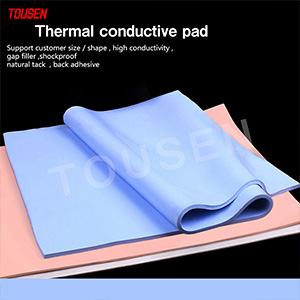
Thermally Conductive Silicone Pads in TIM Materials: Position, Product Examples, Applications, and Challenges
1. Position and Role of Thermally Conductive Silicone Pads in TIM
Thermally conductive silicone pads are a typical "gap-filling" type of TIM, used to bridge air gaps between chips, power devices, and heat sinks to reduce interface thermal resistance. According to Wikipedia, thermally conductive pads fill gaps between components and heatsinks to improve heat transfer efficiency.
In the TIM material system, silicone pads are categorized as pre-formed, structured, and assembly-friendly options, suitable for automated production and modular design rather than on-site applied greases or liquid metals.
Key Features and Advantages
- Thermal conductivity: 1.5–15 W/m·K
- Thickness: 0.15–10 mm or more
- Hardness: Shore 00 10–90, customizable
- Supports die-cutting, adhesive backing, and self-adhesive designs
- Excellent electrical insulation and UL94 V-0 flame retardant compliance
Compared to grease or liquid TIMs, silicone pads offer superior manufacturability, stability, and suitability for automated and large-scale assembly.
Comparison with Other TIM Types
- Compared to thermal grease: easier to assemble, more stable thermal resistance.
- Compared to liquid metals, graphite sheets, or phase change materials: slightly lower thermal conductivity but better electrical insulation, safety, reliability, and cost-effectiveness.
2. Product Examples
Examples from ITOUSEN products illustrate how these pads reflect their role in TIM:
| Product | Thermal Conductivity | Thickness | Hardness | Other Features |
|---|---|---|---|---|
| SF400 Balanced Performance Silicone Thermal Pad | 2.5 W/m·K | 0.3–10 mm | Shore 00 40/60 | Thermal resistance 0.50 °C·in²/W @1 mm, 30psi |
| SF500G Silicone Thermal Pad | 3.5 W/m·K | 0.3–10 mm | Shore 00 40/60 | Density ~3.0 g/cm³, Operating temperature -50~200 ℃ |
| SF128 Series | High thermal conductivity | Customizable | Customizable | Suitable for high-power devices and modular design |
3. Applications and Market Prospects
- High-power electronic modules: For CPU/GPU, power modules, EV battery management systems, silicone pads provide controllable thickness, low interface resistance, and good mechanical adaptability. (TOUSEN)
- Automated assembly and customization: Backing adhesives, tape rolls, die-cut shapes, thin-sheet designs, and size customization enhance their value in consumer electronics, laptops, and communication modules. (TOUSEN)
- Automotive and EV electronics: BMS, inverters, and onboard power modules require electrical insulation, high-temperature resistance, and reliability. Silicone pads operate from -50 to 200 ℃ and meet UL94 V-0, dielectric strength >8 kV/mm.
4. Challenges
- Limited thermal conductivity: Maximum ~15 W/m·K, lower than liquid metals, graphite, or graphene-based TIMs. (TOUSEN)
- Mechanical compression and fatigue: Thickness tolerance, compression ratio, and long-term thermal cycling may cause permanent deformation or increased interface thermal resistance.
- Long-term reliability and aging: Vibrations, thermal cycling, humidity, and other harsh conditions may lead to filler settlement or interface delamination.
- Cost-performance balance: Higher thermal conductivity requires higher filler content and materials cost, requiring trade-offs between performance, reliability, and economics.
5. Summary
Thermally conductive silicone pads occupy a critical niche in the TIM material system as reliable, pre-formed, and assembly-friendly gap fillers. Example products such as the SF series cover thermal conductivity from 1.5 to 15 W/m·K, thickness from 0.15 to 10 mm, hardness Shore 00 10–90, and operating temperatures from -50 to 200 ℃.
They are applicable across consumer electronics, power modules, automotive electronics, and EV battery management systems. While the market prospects are positive due to automation and modular assembly trends, challenges remain in thermal conductivity, mechanical fatigue, aging, and cost-performance optimization.
Technical Insights Into Phase Change Materials for Thermal Management
Thermal Interface Materials in 5G/6G | TOUSEN SF & BN Pads
Related Article