Advanced Thermal Interface Solutions for High Power Electronics
Why Engineers Are Choosing Thermal Pad Solutions for High-Power Electronics
As power density continues to increase across consumer electronics, AI servers, and telecommunications equipment, thermal management has become one of the most critical aspects of electronic system design. Modern processors, power modules, and high-speed communication components generate significantly more heat than previous generations, while product form factors continue to shrink.
For thermal engineers and hardware designers, effective heat dissipation is no longer simply about lowering temperatures. It directly impacts system reliability, component lifespan, signal stability, and long-term operational performance. In this context, the thermal pad has become an essential thermal interface material widely used throughout the electronics industry.
The Growing Thermal Challenges in Modern Electronics
High-performance CPUs, GPUs, MOSFETs, VRMs, and networking chips can generate substantial localized heat during operation. Excessive junction temperatures may lead to:
- Thermal throttling
- Reduced processing efficiency
- Solder joint fatigue
- Accelerated material aging
- Premature component failure
In servers and telecom infrastructure, continuous high-load operation places even greater demands on thermal interface materials. Engineers therefore require thermal solutions capable of maintaining stable thermal conductivity over long operating cycles.
This is where a high-quality thermal pad plays a critical role in thermal system optimization.
How a Thermal Pad Improves Heat Transfer Efficiency
Even precision-machined heatsinks and semiconductor packages contain microscopic surface irregularities. When two solid surfaces come into contact, air gaps inevitably remain between them. Since air has extremely poor thermal conductivity, these gaps create unwanted thermal resistance.
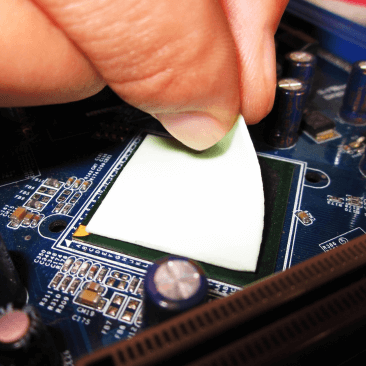
A thermal pad is designed to fill those microscopic gaps and establish a more efficient thermal transfer path between heat-generating components and cooling structures.
By conforming to uneven surfaces under compression, a thermal pad minimizes interface resistance and allows heat to transfer more effectively from:
- Processors
- Power modules
- Memory modules
- Power supplies
- PCB hot spots
Compared with traditional thermal grease, a thermal pad offers several manufacturing and reliability advantages:
- Consistent thickness control
- Cleaner assembly process
- Simplified automation compatibility
- Reduced maintenance requirements
- Improved long-term stability
Key Factors Engineers Consider When Selecting a Thermal Pad
1. Thermal Conductivity
Thermal conductivity is one of the primary parameters when evaluating a thermal pad. It is typically measured in W/m·K and determines how efficiently heat can transfer through the material.
Typical application ranges include:
- 1–3 W/m·K for standard consumer electronics
- 3–6 W/m·K for laptops and power modules
- 6–12 W/m·K for servers and telecom systems
- 10+ W/m·K for high-power or high-density applications
Higher conductivity materials generally improve heat dissipation, but engineers must also balance cost, compressibility, and mechanical performance.
2. Thickness Optimization
Selecting the proper thermal pad thickness is equally important. Common thicknesses range from 0.5 mm to 3.0 mm or greater, depending on gap tolerance requirements.
If the material is too thin, surface gaps may not be fully filled. If too thick, thermal resistance may increase due to the extended heat transfer path.
Thermal engineers therefore evaluate stack-up tolerances, mounting pressure, and component height variation before specifying the optimal thermal pad.
3. Compressibility and Mechanical Stability
Modern electronics often include uneven component heights and limited mounting pressure. A reliable thermal pad should provide sufficient softness to conform to surfaces while maintaining structural integrity over time.
Good compressibility helps distribute contact pressure evenly and reduces mechanical stress on sensitive PCBs and semiconductor packages.
4. Long-Term Reliability
For servers, networking equipment, and industrial electronics, long-term stability is critical.
Engineers typically evaluate:
- Thermal aging resistance
- Compression set performance
- Material outgassing
- Electrical insulation properties
- Thermal cycling durability
These factors often determine whether a thermal pad can maintain reliable thermal performance throughout the product lifecycle.
Why Silicone-Free Thermal Pad Materials Are Gaining Attention
Traditional silicone-based thermal interface materials remain widely used across the electronics industry. However, certain high-reliability applications require lower volatile content and reduced silicone migration risk.
As a result, the silicone-free thermal pad has become increasingly important for engineers designing advanced electronic systems.
Compared with conventional silicone materials, a silicone-free thermal pad may provide:
- Reduced siloxane contamination risk
- Lower volatile outgassing
- Improved compatibility with optical systems
- Enhanced cleanliness for sensitive electronics
- Better suitability for sealed environments
These advantages are particularly valuable in:
- AI servers
- Optical modules
- 5G communication systems
- Automotive electronics
- High-end consumer electronics
Typical Thermal Pad Applications in Consumer Electronics and Telecom Equipment
CPU and GPU Thermal Management
High-performance processors remain one of the primary heat sources in modern electronics. A thermal pad is commonly used around processor assemblies to improve heat transfer to heatsinks or chassis structures.
VRM and MOSFET Cooling
Voltage regulation modules and MOSFETs generate continuous thermal loads during operation. Properly selected thermal pad materials help transfer heat away from these components and reduce localized thermal accumulation.
SSD and Memory Module Cooling
High-speed PCIe SSDs often experience elevated operating temperatures under sustained workloads. A thermal pad can help improve heat dissipation between storage controllers and metal shielding structures.
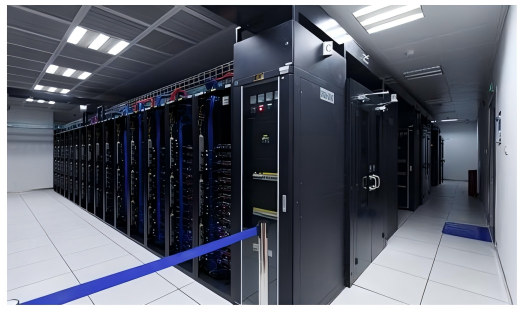
Server and Data Center Applications
Within server environments, thermal density is significantly higher due to compact system architecture and continuous processing demands.
A thermal pad is frequently used for:
- Power modules
- FPGA devices
- Network switch chips
- Memory assemblies
- Auxiliary cooling structures
5G Telecommunications Equipment
5G base stations and RF systems require highly stable thermal management solutions. A high-performance thermal pad helps create reliable thermal pathways between power amplifiers, RF modules, shielding covers, and cooling assemblies.
Silicone-Free Thermal Pad Solutions for High-Reliability Electronics
As electronic systems continue evolving toward higher performance and greater integration, engineers are increasingly focused on both thermal efficiency and material reliability.
TOUSEN’s silicone-free thermal pad solutions are designed for applications requiring low contamination risk, stable thermal performance, and customized thermal interface configurations.
These materials can support various:
- Thermal conductivity levels
- Thickness options
- Die-cut configurations
- Electrical insulation requirements
- High-volume manufacturing processes
For engineers working in consumer electronics, servers, and telecommunications systems, selecting the right thermal pad is not simply a component decision — it is an essential part of overall system reliability engineering.
Product Reference:
TOUSEN Silicone-Free Thermal Pads

Conclusion
Thermal management has become a defining factor in modern electronic system performance. As power densities continue increasing, the role of the thermal pad within thermal architecture becomes even more important.
For applications where cleanliness, stability, and long-term reliability are critical, the silicone-free thermal pad is emerging as a preferred solution among thermal engineers and hardware designers.
As consumer electronics, AI computing, and telecommunications infrastructure continue to advance, thermal interface materials will remain central to achieving stable and efficient electronic system operation.
Thermal Pads for GPU and Thermal Pad vs Paste Explained
High Performance Thermal Pad for Reliable Heat Management
Related Article