Learn how thermal paste improves CPU heat transfer, reduces interface thermal resistance, and supports reliable cooling performance in high power computing systems.
Why Thermal Paste Matters for CPU Cooling Performance
As modern CPUs continue to deliver higher computing performance, thermal management has become a critical consideration in desktop PCs, workstations, servers, gaming systems, and AI computing platforms. Higher processing power typically means higher heat generation, making efficient heat transfer from the CPU to the cooling solution essential for maintaining stable operating temperatures and long-term reliability.
From an engineering perspective, the heatsink itself is only one part of the thermal management system. The interface between the CPU and heatsink can have a significant impact on overall thermal performance. Even precision-machined metal surfaces contain microscopic imperfections. When two surfaces are placed together, these irregularities prevent complete physical contact and leave small air gaps between them. Because air has relatively low thermal conductivity, these gaps can create additional thermal resistance.
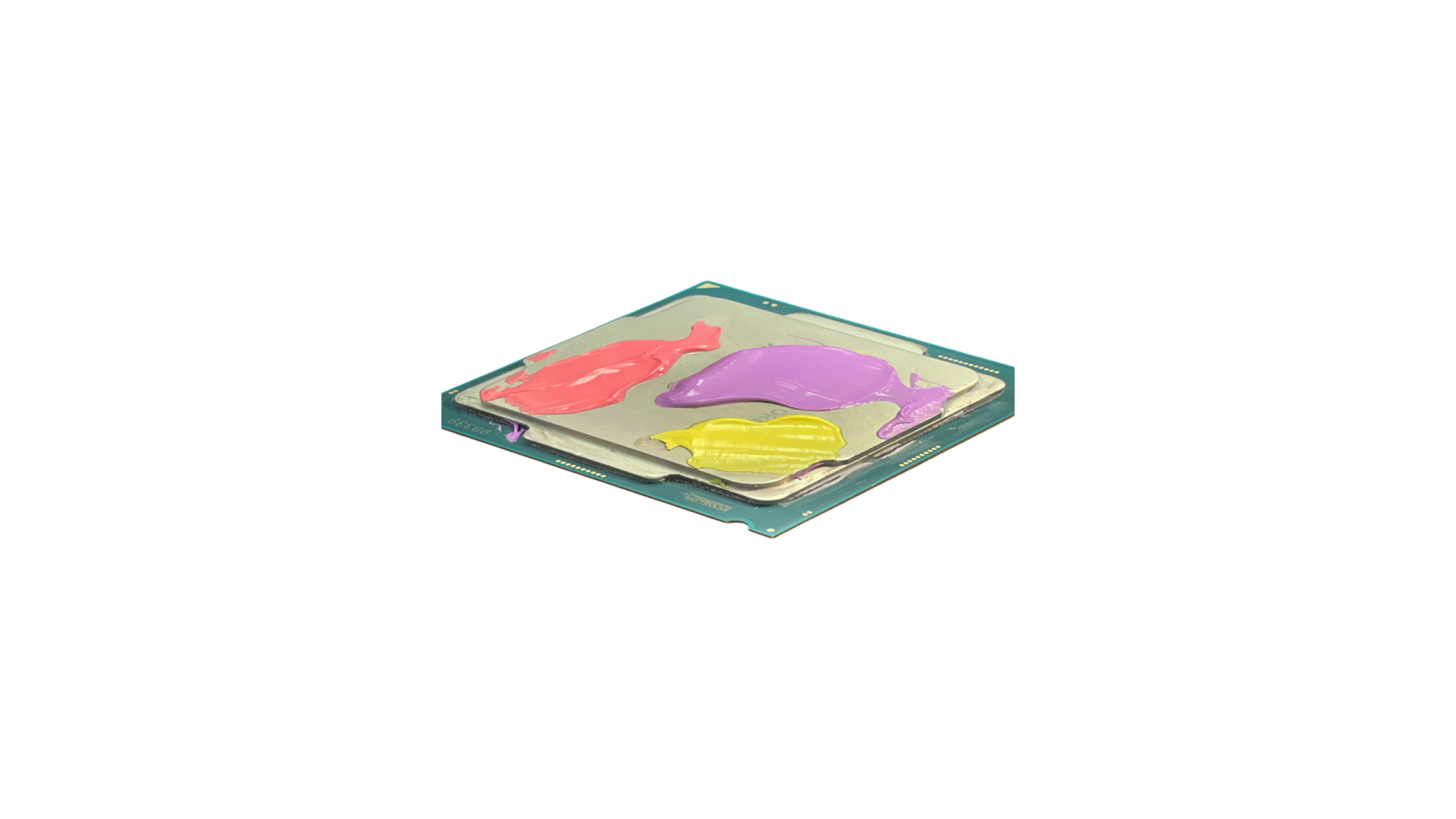
This is where thermal paste plays an important role. A properly formulated thermal paste fills microscopic surface irregularities between the CPU heat spreader and heatsink, replacing air gaps with a thermally conductive interface. The result is a more continuous heat-transfer path from the processor to the cooling system.
What Does Thermal Paste Actually Do in a CPU Cooling System?
It is common to describe thermal paste simply as a material placed between a CPU and heatsink. From an engineering standpoint, however, its function is more specific: it is designed to minimize thermal resistance at the interface between two solid surfaces.
During operation, heat generated by the CPU must travel through several layers before it can be dissipated into the surrounding environment. Heat moves from the semiconductor die through the package and integrated heat spreader, across the thermal interface layer, into the heatsink, and finally into the air or liquid cooling system.
Any unnecessary resistance within this thermal path can increase the temperature difference required to transfer a given amount of heat. A well-designed CPU thermal paste helps reduce interface resistance by improving surface conformity and filling microscopic voids.
For this reason, choosing a CPU thermal paste should not be based solely on its advertised thermal conductivity. Engineers also need to evaluate viscosity, wetting behavior, application thickness, thermal stability, pump-out resistance, evaporation characteristics, and long-term reliability.
Thermal Paste vs Thermal Grease: Are They the Same?
The terms thermal paste and thermal grease are frequently used interchangeably in the electronics cooling industry. In many CPU cooling applications, both terms refer to thermally conductive compounds designed to improve heat transfer between two surfaces.
However, product terminology can vary between manufacturers. The term thermal grease often emphasizes the grease-like physical form and rheological behavior of the material, while thermal paste is commonly used as a broader term for a thermally conductive interface compound.
From an engineering standpoint, the name alone is not enough to determine suitability. The more important considerations are actual thermal performance, application characteristics, operating temperature range, mechanical stability, and compatibility with the intended assembly process.
For CPU applications, an effective thermal grease should spread consistently across the contact area and maintain a stable thermal interface without excessive migration. Viscosity is particularly important because a compound that is too thick may be difficult to dispense or spread, while a material with insufficient structural stability may be more susceptible to movement during thermal cycling.
Why High-Performance CPUs Require Better Thermal Interface Materials
Increasing CPU power density has changed the way engineers approach thermal management. Simply installing a larger heatsink does not necessarily solve every thermal challenge. Heat must first be transferred efficiently from the processor package into the cooling structure.
If the thermal interface between the CPU and heatsink introduces excessive resistance, the cooling system may not be able to utilize its full capacity. In other words, a high-performance heatsink cannot compensate indefinitely for an inefficient interface layer.
This makes thermal paste a functional component of the overall cooling architecture rather than merely an accessory used during CPU installation.
The importance becomes even more apparent in high-performance desktops, servers, workstations, and AI computing systems where processors may operate under sustained loads. Under these conditions, the thermal interface material must provide consistent performance not only during initial assembly but also throughout repeated heating and cooling cycles.
Can Thermal Gels Replace Thermal Paste?
Thermal gels are another category of thermal interface materials used throughout the electronics industry. However, they should not automatically be considered direct replacements for thermal paste or thermal grease.
Thermal gels are generally designed for applications where flexibility, conformability, and gap-filling capability are important. They can be particularly useful when components have uneven surfaces, larger interface gaps, or complex mechanical tolerances.
By comparison, the interface between a conventional CPU heat spreader and heatsink is typically a relatively thin contact interface. A suitable thermal paste can conform to microscopic surface irregularities while maintaining a thin thermal path.
Therefore, engineers should select between thermal paste, thermal grease, and thermal gels according to the actual interface geometry, bond-line thickness, mechanical pressure, thermal load, dispensing requirements, and long-term reliability requirements rather than simply choosing a material based on its product name.
Key Factors When Selecting CPU Thermal Paste
1. Thermal Performance
Thermal conductivity is an important starting point when evaluating a CPU thermal paste, but it should not be treated as the only performance indicator. Actual thermal resistance is also affected by bond-line thickness, surface condition, mounting pressure, material coverage, and the interface geometry.
2. Viscosity and Application Process
Different CPU manufacturing and assembly environments may use manual application, automated dispensing, stencil printing, or other controlled processes. The rheological characteristics of a thermal paste or thermal grease therefore need to match the production method.
For high-volume manufacturing, consistent dispensing behavior can be just as important as nominal thermal conductivity. Stable viscosity and repeatable application help maintain a consistent thermal interface from unit to unit.
3. Long-Term Thermal Stability
CPU operating temperatures can fluctuate significantly during normal use. Repeated thermal cycling may place mechanical stress on the interface material. Over time, some compounds may experience drying, migration, or pump-out effects, potentially increasing interface resistance.
For demanding applications, engineers should therefore evaluate long-term thermal stability rather than relying only on initial laboratory measurements.
4. Electrical Properties and Material Compatibility
Electrical properties should also be considered when selecting a thermal interface material. Depending on the system architecture, an electrically insulating formulation may be preferred to reduce the risk of unintended electrical interaction with nearby components.
Material compatibility with the CPU package, heatsink surface, coatings, adhesives, and surrounding components should also be verified during product qualification.
TOUSEN TSAS50 Thermal Paste for Electronic Cooling Applications
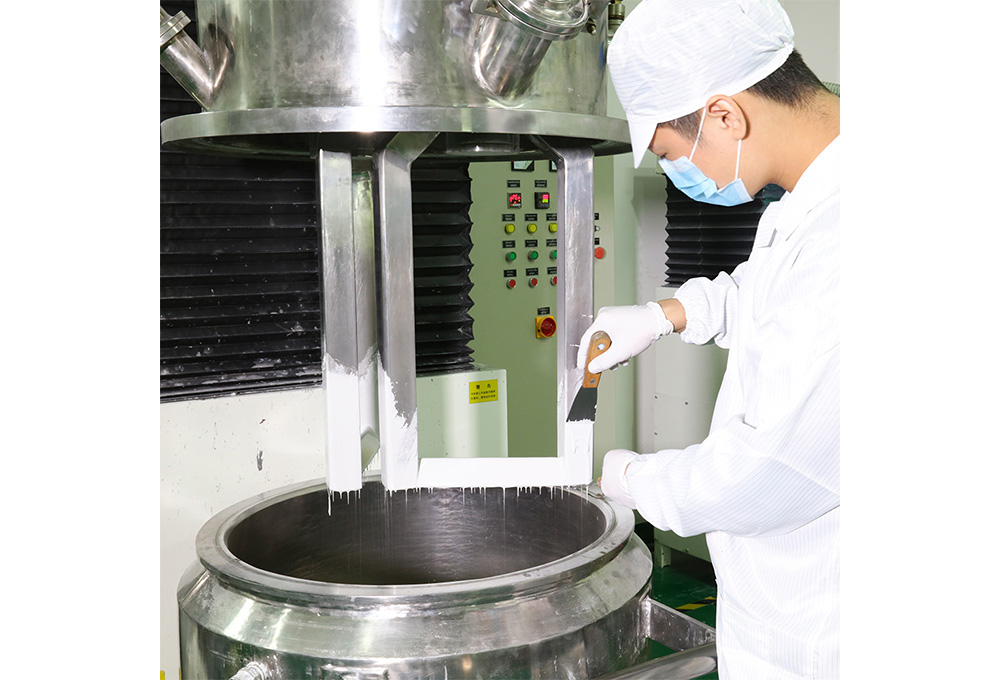
For electronic thermal management applications, TOUSEN offers the TSAS50 Thermal Paste as an option for applications requiring a thermally conductive interface compound.
When evaluating a thermal paste for CPU cooling, engineers should consider the complete system rather than focusing on a single material specification. CPU power, heatsink design, interface thickness, mounting pressure, application method, and expected operating conditions all contribute to final thermal performance.
TSAS50 can be considered as part of an engineering evaluation for electronic cooling applications where a thermal paste interface is required. Product specifications, including thermal performance, viscosity, operating characteristics, and other technical parameters, should be verified against the latest official TOUSEN technical documentation before final material selection.
For detailed product information, please visit:
An Engineer's Perspective: Do Not Select Thermal Paste by Thermal Conductivity Alone
One of the most common mistakes when selecting a thermal paste is comparing products solely by their published thermal conductivity values. In real CPU cooling systems, two compounds with similar nominal conductivity can produce different results under actual assembly and operating conditions.
This difference can result from several factors, including applied thickness, surface roughness, mounting pressure, wetting behavior, rheological properties, thermal cycling, and heatsink design.
A more reliable engineering approach is to begin with the CPU's thermal design requirements and target operating temperature. The next step is to characterize the interface geometry and assembly process. Engineers can then select an appropriate thermal paste or thermal grease and validate the material through controlled testing.
For applications involving larger gaps or significant mechanical variation, thermal gels and other gap-filling thermal interface materials may also be evaluated as alternatives, depending on the system requirements.
Conclusion
CPU thermal management is a system-level engineering challenge, and the thermal interface between the processor and heatsink is an important part of that system. Thermal paste, thermal grease, and thermal gels each have different material characteristics and application advantages.
For a conventional CPU-to-heatsink interface, a properly selected thermal paste can fill microscopic surface gaps, reduce interface thermal resistance, and help the cooling system transfer heat more efficiently. As computing power continues to increase across PCs, servers, workstations, and AI platforms, the performance and reliability of thermal interface materials will become increasingly important.
Ultimately, the right material should be selected based on the complete application rather than a single specification. Engineers should consider thermal load, bond-line thickness, mounting pressure, application process, material stability, and long-term reliability. For specific CPU cooling designs, products such as TOUSEN TSAS50 can be evaluated through application testing to determine whether the material meets the project's thermal and manufacturing requirements.
Thermal Paste for AI Servers CPUs GPUs and Thermal Management
Why Regular Thermal Paste Replacement Matters for Thermal Management
Related Article