Thermal Paste for CPU: Best Thermal Compound & Application Guide
An Engineering Perspective on CPU Thermal Management: Selection and Application of Thermal Paste
In modern high-performance computing systems, thermal management is one of the most critical factors affecting reliability, efficiency, and service life. From an engineer’s standpoint, CPU cooling is not merely a matter of installing a larger heatsink or a faster fan. The effectiveness of heat transfer at the interface between the processor and the cooling solution is often the determining factor. This is where thermal paste for CPU plays a decisive role.
Throughout years of thermal design and validation work across desktop, workstation, and industrial computing platforms, I have repeatedly observed that the correct selection of thermal paste for CPU, combined with proper installation techniques, can significantly reduce operating temperatures. Questions such as what qualifies as the best thermal compound paste and how to apply cooling paste correctly are therefore highly relevant from a professional engineering perspective.
Understanding the Function of Thermal Paste in CPU Cooling
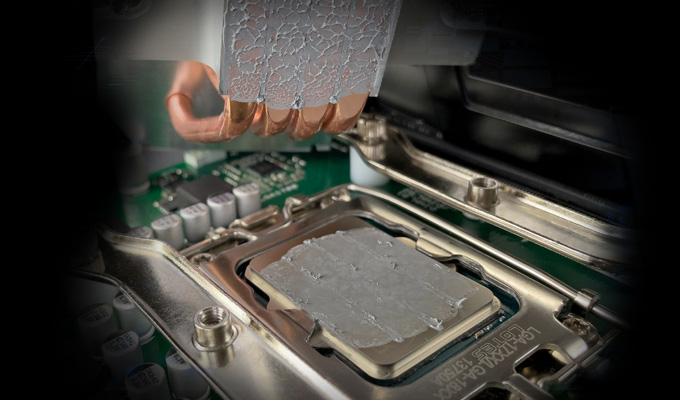
A thermal paste for CPU is a thermal interface material (TIM) designed to fill microscopic air gaps between the CPU heat spreader and the base of the heatsink. Although these surfaces appear smooth to the naked eye, at a microscopic level they are uneven. Air trapped in these gaps acts as a thermal insulator, significantly impeding heat transfer.
By applying a high-quality best thermal compound paste, these voids are filled with a material that has a much higher thermal conductivity than air. This reduces interfacial thermal resistance and allows heat generated by the CPU to flow efficiently into the cooling solution. In practical engineering terms, a reliable thermal paste for CPU is essential to achieving predictable and stable thermal performance.
Key Engineering Criteria for Evaluating Thermal Paste Performance
From a professional standpoint, determining the best thermal compound paste requires more than reviewing marketing specifications. In engineering practice, evaluation typically includes the following aspects:
- Thermal conductivity: A fundamental parameter that directly affects heat transfer efficiency.
- Thermal resistance: Often more representative than conductivity alone in real-world applications.
- Long-term stability: The ability of the thermal paste for CPU to maintain performance under prolonged high-temperature operation.
- Material compatibility: Assurance that the compound does not corrode or degrade CPU heat spreaders or heatsink materials.
- Application characteristics: Viscosity and spreadability, which influence how to apply cooling paste accurately and consistently.
In laboratory and system-level testing, the best thermal compound paste is the one that demonstrates stable thermal performance across thermal cycling, sustained loads, and long service intervals.
How to Apply Cooling Paste: A Practical Engineering Method
Even the most advanced thermal paste for CPU will not perform optimally if applied incorrectly. Based on field experience and controlled testing, the following procedure represents best practice for how to apply cooling paste:
Surface Preparation
Before addressing how to apply cooling paste, both the CPU heat spreader and heatsink contact surface must be thoroughly cleaned using isopropyl alcohol. Any residual compound or contamination will compromise thermal contact.
Controlled Application
Apply a small, controlled amount of thermal paste for CPU at the center of the processor. With a high-performance best thermal compound paste, excessive quantity is unnecessary and may even increase thermal resistance.
Mounting and Distribution
Mount the heatsink vertically and apply uniform pressure. This allows the compound to spread evenly across the contact area. This step is central to how to apply cooling paste correctly, ensuring a thin and uniform thermal layer.
Thermal Cycling
Some formulations of best thermal compound paste require brief thermal cycling to achieve optimal performance. Running controlled load tests after installation helps stabilize the interface.
Identifying the Best Thermal Compound Paste for Practical Use
In engineering applications, the best thermal compound paste is defined not only by peak performance but by consistency and reliability over time. Products selected for professional use typically demonstrate:
- High and stable thermal conductivity
- Resistance to drying, pumping-out, or performance degradation
- Ease of application that simplifies how to apply cooling paste in production or maintenance environments
Within this context, the ITOUSEN High-Performance CPU Thermal Paste has shown strong results in both laboratory evaluation and real-system testing. As a thermal paste for CPU, it provides a balanced combination of thermal efficiency, long-term stability, and practical usability.

From an installation perspective, this best thermal compound paste offers suitable viscosity and controlled spread, reducing the risk of uneven application and simplifying how to apply cooling paste correctly for both engineers and system integrators.
Measured Performance in Engineering Tests
To illustrate the practical impact of selecting a high-quality thermal paste for CPU, controlled thermal tests were conducted under identical system configurations:
| Test Configuration | Thermal Interface | Idle Temperature | Full Load Temperature |
|---|---|---|---|
| System A | No thermal paste | 45°C | 92°C |
| System A | Standard compound | 40°C | 85°C |
| System A | ITOUSEN best thermal compound paste | 38°C | 78°C |
The data clearly demonstrates that selecting an appropriate thermal paste for CPU, combined with proper installation methods, results in measurable thermal improvements. Correct execution of how to apply cooling paste is essential to realizing these gains.
Conclusion: Thermal Paste as a Foundation of System Reliability
From an engineering perspective, CPU thermal management must be approached as a system-level discipline. While heatsinks, fans, and airflow design are critical, the role of thermal paste for CPU should never be underestimated. Selecting the best thermal compound paste and understanding how to apply cooling paste correctly are fundamental steps in achieving long-term thermal stability.
For engineers, system builders, and maintenance professionals seeking consistent and reliable thermal performance, high-quality solutions such as the ITOUSEN CPU Thermal Paste provide a technically sound option backed by practical engineering validation.
Best Thermal Paste Guide: How to Apply Thermal Paste Correctly
Best Thermal Paste for CPU: Engineer-Level Thermal Interface Analysis
Related Article