Thermal Paste for AI Rail Transit and Railway Electronics

AI Powered Rail Transit and the Growing Role of Thermal Grease
Artificial intelligence is rapidly changing the design of modern rail transit systems. Advanced onboard computing, intelligent control, machine vision, predictive maintenance, and high-speed communications are becoming increasingly common in electric rail vehicles. As computing performance and electronic power density continue to increase, thermal management has become an increasingly important engineering consideration.
In these applications, thermal paste, thermal grease, and thermal gels can serve different functions within a thermal interface material strategy. For rail vehicle engineers, however, material selection should not be based solely on thermal conductivity. Interface resistance, mechanical stability, electrical requirements, temperature cycling, application method, and long-term reliability all need to be evaluated together.
How AI Is Increasing Thermal Management Requirements in Rail Vehicles
Traditional rail vehicles already contain a significant number of electronic systems, including traction inverters, power converters, control units, communication modules, and monitoring equipment. The introduction of AI is adding another layer of computational demand.
AI-based vision systems, obstacle detection, intelligent driver assistance, equipment condition monitoring, and onboard data processing all require increasingly capable processors and computing platforms. Higher processing performance generally results in greater power consumption and higher heat generation at the component level.
At the same time, onboard electronic systems are often installed in compact enclosures where available airflow and installation space are limited. This creates a practical thermal challenge: heat generated by high-power semiconductor devices and processors must be transferred efficiently to a heat spreader, heatsink, cold plate, or other cooling structure.
This is where thermal paste and thermal grease can become important. These materials are designed to fill microscopic surface irregularities between mating surfaces, reducing the amount of trapped air and creating a more effective thermal transfer path.
Why Thermal Grease Matters in Electric Rail Applications
Rail vehicles operate under considerably different conditions from consumer electronics. Electronic assemblies can experience continuous vibration, mechanical shock, repeated acceleration and braking cycles, and significant temperature fluctuations throughout their service life.
For this reason, selecting a thermal grease for rail applications requires more than comparing advertised thermal conductivity values. Engineers need to consider how the material behaves under repeated thermal cycling and mechanical stress, as well as how it interacts with the device package and cooling hardware.
A poorly controlled thermal interface can increase thermal resistance and create localized hot spots. In power electronics, excessive junction or case temperature can accelerate component degradation and potentially reduce system reliability.
Properly applied thermal paste can help improve contact between a heat-generating component and its cooling structure. However, the final thermal performance depends on the entire interface design, including surface flatness, mounting pressure, bond line thickness, material rheology, and assembly consistency.
Thermal Paste vs Thermal Gels: Choosing the Right Interface Material
There is no single thermal interface material that is optimal for every rail transit application. Thermal paste, thermal grease, and thermal gels each have different characteristics and should be selected according to the mechanical and thermal requirements of the assembly.
Thermal paste and thermal grease are commonly considered when the primary requirement is to minimize thermal resistance across a relatively thin interface. Their ability to conform to microscopic surface irregularities can be particularly useful between semiconductor packages and metal cooling surfaces.
Thermal gels, by comparison, can be advantageous in applications that require a more compliant thermal interface or greater tolerance for certain gap conditions. Depending on the formulation and design, thermal gels may also provide useful mechanical stress-relief characteristics.
Therefore, an engineer should not assume that thermal grease is automatically superior to thermal gels, or vice versa. The appropriate material depends on the size of the interface gap, heat load, component geometry, assembly process, vibration environment, and required service life.
Applying TSAS50 Thermal Paste to Rail Electronics
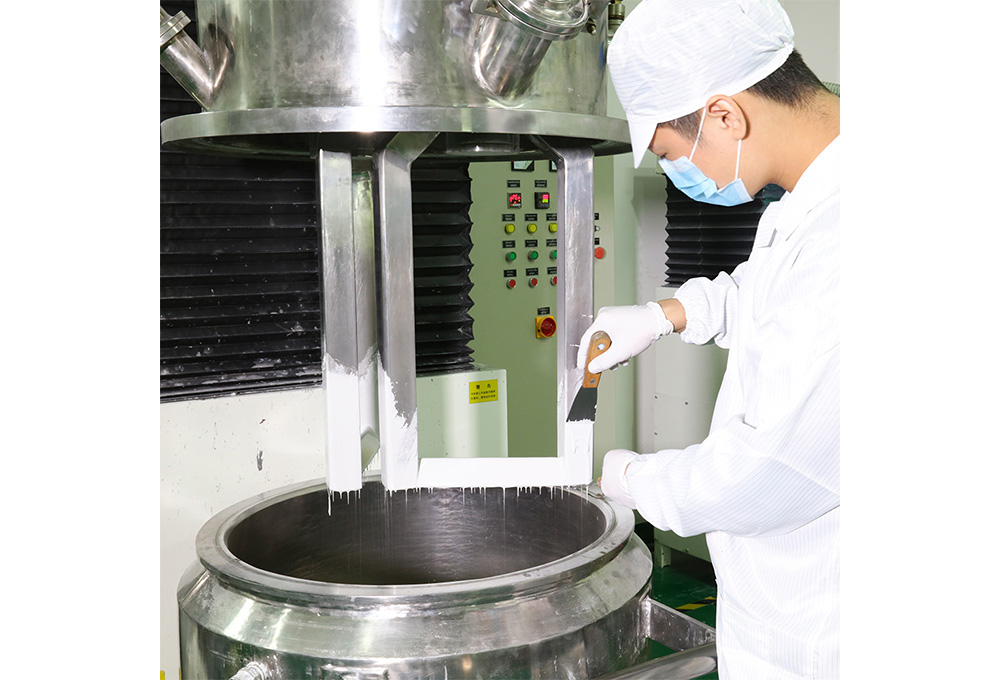
TOUSEN's TSAS50 Thermal Paste is designed for thermal interface applications where efficient heat transfer between electronic components and cooling structures is required.
In a rail transit system, a thermal paste such as TSAS50 can be evaluated for applications involving power electronics, control modules, computing hardware, and other heat-generating electronic assemblies. Depending on the mechanical design, engineers can optimize the material application thickness and coverage to establish a consistent thermal interface.
For product information and technical details, visit the official TSAS50 product page:
As with any thermal interface material, actual system performance should be verified under the intended operating conditions. Thermal resistance testing, temperature-rise measurements, thermal cycling, vibration testing, and long-term reliability evaluation can provide more meaningful engineering data than relying on a single material specification.
Thermal Management Is Becoming a System Level Engineering Issue
The integration of AI into rail transportation is changing the way engineers approach thermal design. Instead of dealing with isolated heat sources, future rail vehicles may contain multiple high-performance computing platforms, power electronics, communication systems, sensors, and control modules operating simultaneously.
This creates the possibility of more complex thermal interactions between electronic subsystems. A thermal solution that performs well at the individual component level may not necessarily deliver the same results at the system level.
For this reason, thermal grease should be considered as one part of a complete thermal management architecture rather than as an independent solution. Heat source characteristics, interface materials, heatsink or cold plate design, airflow, enclosure configuration, and vehicle operating conditions should all be evaluated together.
What Engineers Should Consider When Selecting Thermal Interface Materials
From an engineering perspective, selecting a thermal interface material for rail transit equipment involves balancing several performance requirements.
- Thermal performance: The material should provide an effective path for transferring heat away from the component.
- Interface stability: The material should maintain reliable contact during temperature cycling and normal mechanical operation.
- Mechanical compatibility: The interface should accommodate the relevant assembly tolerances and mechanical stresses.
- Electrical requirements: Where necessary, electrical insulation and dielectric characteristics should be considered alongside thermal performance.
- Manufacturing consistency: Application thickness, dispensing method, and assembly pressure can significantly affect real-world thermal performance.
- Reliability validation: The final material should be evaluated under the actual environmental and operating conditions expected during service.
These considerations are particularly important for rail vehicles because maintenance intervals can be long and electronic systems are expected to operate reliably over extended service periods.
The Future of Thermal Management in AI Enabled Rail Transit
AI will continue to increase the computational capabilities of rail vehicles, while also increasing the thermal challenges associated with high-performance electronics. As a result, thermal interface materials will remain an important part of the overall reliability strategy.
Thermal paste and thermal grease can provide effective solutions for thin interface applications, while thermal gels may be appropriate where compliance and gap accommodation are more important design considerations.
The key engineering principle is not to select a material simply because it has the highest published thermal conductivity. Instead, engineers should evaluate the complete thermal path and determine how the material performs within the actual mechanical, electrical, thermal, and manufacturing environment.
Conclusion
The expansion of AI, edge computing, and intelligent electronics is accelerating the transformation of electric rail vehicles. Higher computing performance brings higher heat loads, making effective thermal management increasingly important for system reliability.
By properly evaluating thermal paste, thermal grease, and thermal gels according to application requirements, rail system manufacturers and electronics engineers can develop more reliable thermal interfaces for next-generation onboard electronics.
For projects requiring a thermal interface material for electronic cooling applications, TOUSEN TSAS50 Thermal Paste can be considered as part of the engineering evaluation process. Ultimately, the best thermal solution is one that combines material performance with appropriate interface design, controlled assembly, and application-specific reliability testing.
How to Choose Thermal Paste for AI Server Cooling Systems
Thermal Paste for AI Automotive Electronics Thermal Management
Related Article