Thermal Paste for AI Servers CPUs GPUs and Thermal Management
Why Thermal Paste Still Matters in AI Era Thermal Management
As artificial intelligence continues to reshape computing, thermal management has become a critical engineering challenge for high-performance electronics. AI servers, GPUs, CPUs, accelerators, power electronics, and edge computing platforms are operating at increasingly higher power densities. As a result, removing heat efficiently is no longer simply a matter of installing a larger heatsink or increasing fan speed.
For thermal engineers, the interface between a heat-generating component and its cooling structure can have a significant impact on overall thermal performance. This is where thermal paste and other thermal interface materials play an important role. Depending on the application, engineers may evaluate thermal grease, thermal gel, thermal pads, or other interface solutions based on thermal resistance, gap size, mechanical conditions, processing requirements, and long-term reliability.
From an engineering perspective, selecting the right thermal interface material requires more than comparing thermal conductivity values. Material rheology, wetting behavior, bond-line thickness, pump-out resistance, application process, operating temperature, and long-term stability can all affect actual system performance.
How AI Is Raising the Requirements for Thermal Management
The rapid adoption of AI is driving higher computational performance across data centers, workstations, servers, and embedded platforms. Modern GPUs and AI accelerators can generate substantial amounts of heat within very small areas, creating increasingly demanding thermal design conditions.
Even precision-machined semiconductor packages and heatsinks are not perfectly flat at the microscopic level. When two solid surfaces are brought together, microscopic air gaps can remain between them. Because air has relatively poor thermal conductivity, these gaps can create additional thermal resistance.
A properly selected thermal paste helps address this problem by filling microscopic surface irregularities and improving thermal contact between the heat source and heatsink. Its purpose is therefore not simply to provide a highly conductive layer, but to create a more effective thermal path across the interface.
Thermal Paste vs Thermal Grease vs Thermal Gel
In the thermal management industry, the terms thermal paste and thermal grease are sometimes used interchangeably. However, individual products can differ considerably in formulation, filler technology, viscosity, rheological behavior, application method, and long-term performance.
For relatively thin interfaces between a semiconductor device and a heatsink, thermal paste can provide an effective solution when the material is properly selected and applied. Depending on the formulation and production environment, it may be compatible with dispensing, stencil printing, automated coating, or other controlled application processes.
Thermal grease represents another mature category of thermal interface material. Its ability to wet and conform to microscopic surface irregularities makes it suitable for a wide range of electronics applications, including CPUs, GPUs, power semiconductors, and electronic modules.
By comparison, thermal gel is generally designed with greater compliance and gap-filling capability in mind. When component height variation, mechanical tolerance, or an irregular interface creates a larger gap, a thermal gel may provide advantages over a conventional paste-based interface.
For this reason, engineers should not treat thermal paste, thermal grease, and thermal gel as direct substitutes. The appropriate material depends on the actual interface geometry, thermal requirements, assembly process, mechanical conditions, and reliability targets of the application.
Why Thermal Grease Remains Relevant in the AI Era
The emergence of AI hardware has led to growing interest in advanced thermal interface technologies. However, this does not mean that conventional thermal grease or thermal paste has become obsolete.
For interfaces with relatively small and well-controlled gaps, a properly formulated thermal interface paste can still provide several engineering advantages. Its flow characteristics allow the material to conform to microscopic surface irregularities, while controlled application can help maintain an appropriate bond-line thickness.
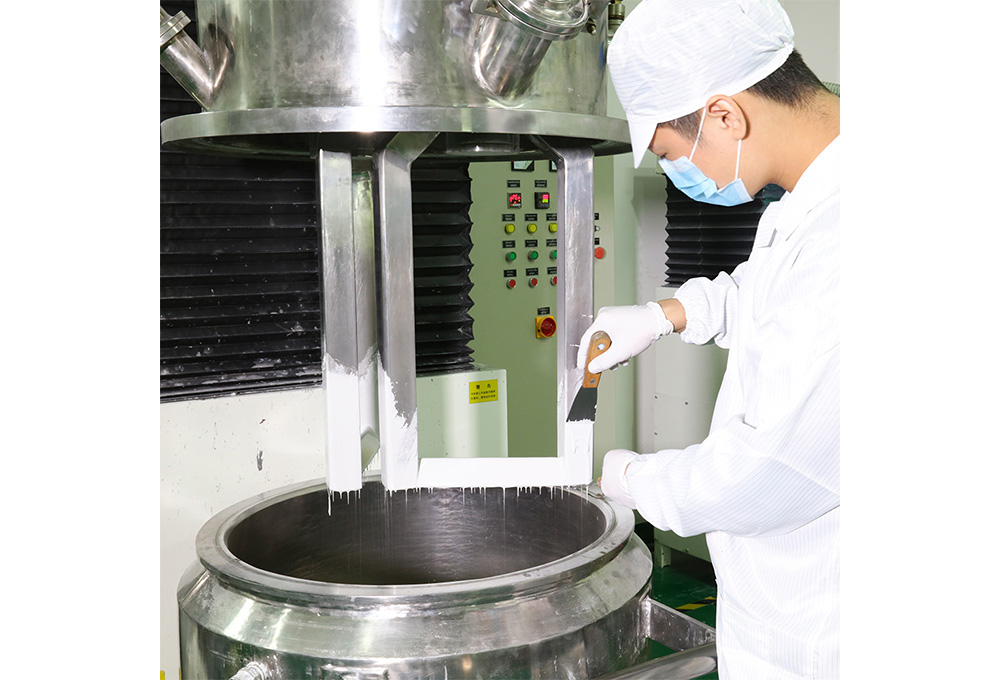
Another important consideration is manufacturing scalability. AI servers and high-performance computing systems are increasingly produced using highly controlled assembly processes. Thermal interface materials therefore need to work consistently with dispensing equipment, automated production lines, and defined process windows.
In addition, long-term stability is particularly important for systems that operate continuously. A thermal material that performs well during initial testing may not necessarily provide the same performance after extended exposure to elevated temperatures and repeated thermal cycling.
Thermal Conductivity Is Not the Only Selection Criterion
One of the most common mistakes in thermal material selection is focusing exclusively on nominal thermal conductivity. While thermal conductivity is an important material property, it does not by itself determine the thermal performance of a finished assembly.
The effective thermal path is influenced by several factors, including material thickness, contact conditions, surface roughness, application amount, material rheology, and the construction of the surrounding cooling system.
For example, applying too much thermal paste can increase the thickness of the interface layer and potentially increase thermal resistance. Applying too little material may leave portions of the interface insufficiently filled. The engineering objective is therefore to establish an appropriate and repeatable bond-line rather than simply maximizing the amount of material.
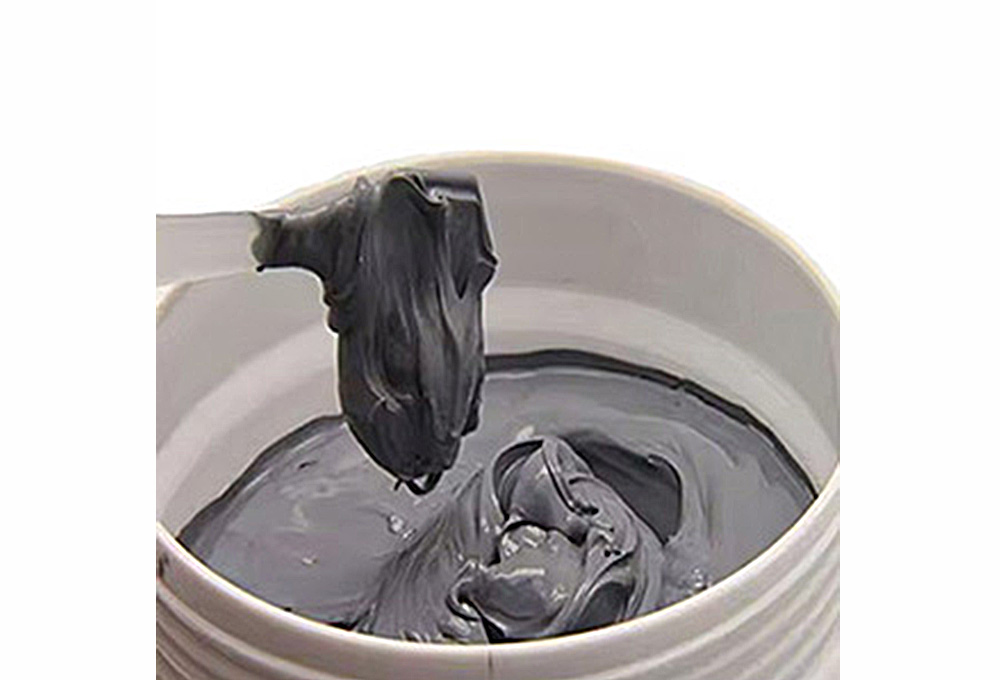
The rheological characteristics of thermal grease are also important during manufacturing and operation. A suitable viscosity and flow profile can support controlled dispensing and spreading while helping the material remain stable under the mechanical and thermal conditions of the application.
TSAS50 Thermal Paste for Electronics Thermal Management
For electronics applications where an efficient thermal interface is required between a heat-generating component and a cooling structure, TOUSEN offers TSAS50 Thermal Paste as part of its thermal management material portfolio.
TSAS50 can be evaluated for applications where controlled thermal interface performance and practical manufacturing requirements need to be considered together. Potential applications include CPUs, GPUs, power electronics, electronic modules, and other components where minimizing interface resistance is important to the overall thermal design.
Rather than selecting a thermal paste based on a single specification, engineers should evaluate the material against the actual requirements of the system, including operating temperature, interface dimensions, target thermal resistance, application method, assembly conditions, and expected service life.
For technical information and product details, visit the TSAS50 Thermal Paste product page.
How Engineers Should Select a Thermal Interface Material
The selection process should begin with the physical and thermal characteristics of the interface.
For a thin, relatively uniform interface between a semiconductor package and heatsink, thermal paste or thermal grease may be appropriate starting points. When the application involves larger gaps, significant component-height variation, or irregular geometries, engineers may also consider a thermal gel or another compliant gap-filling material.
For AI servers and other high-performance computing platforms, reliability testing should go beyond initial thermal measurements. Depending on the application, engineers may need to evaluate thermal cycling, prolonged high-temperature operation, mechanical stress, material migration, and aging behavior.
Manufacturing consistency should also be considered for production applications. A material that performs well in a laboratory environment may not deliver the same results if dispensing volume, application thickness, curing or processing conditions, or material batch consistency are not properly controlled.
Conclusion: Choose the Right Thermal Material, Not Just the Highest Conductivity
AI is changing the architecture and performance requirements of modern electronic systems, but the fundamental challenge remains the same: heat must be transferred efficiently away from the heat-generating component and into the cooling system.
Thermal paste, thermal grease, and thermal gel each serve different engineering requirements. They should not be viewed simply as competing materials, but as different approaches to managing thermal interfaces under specific mechanical, thermal, and manufacturing conditions.
For applications involving CPUs, GPUs, AI accelerators, servers, and power electronics, a well-designed thermal interface can contribute significantly to system reliability and thermal performance. In many applications, the most effective solution is not the material with the highest advertised thermal conductivity, but the material that provides the right combination of thermal performance, interface behavior, process compatibility, and long-term stability.
As AI hardware continues to move toward higher power density, thermal interface engineering will become increasingly important. A systematic evaluation of thermal resistance, bond-line thickness, rheology, application process, reliability, and operating environment can help engineers develop more robust and practical thermal management solutions.
Thermal Paste for AI Automotive Electronics Thermal Management
Learn how thermal paste improves CPU heat transfer, reduces interface thermal resistance, and supports reliable cooling performance in high power computing systems.
Related Article