Battery Pack Thermal Runaway Mitigation Series (四) – Engineering Implementation
Battery Pack Thermal Runaway Mitigation Series (IV): Engineering Implementation of Thermal Runaway Mitigation in Battery Packs
In previous articles of this series, we discussed the overall framework of battery pack safety system management, the mechanisms of thermal runaway, and the role of materials and structural design. This fourth part focuses on how thermal runaway mitigation strategies are practically implemented in real battery pack engineering.
Engineering Background
Thermal runaway mitigation in battery packs is not a single-material problem nor a standalone safety feature. In electric vehicles (EVs) and energy storage systems (ESS), mitigation strategies must be integrated across thermal, mechanical, and electrical domains.
While thermal runaway mechanisms are well studied at the cell level, engineering challenges arise when these principles are translated into pack-level designs that must remain manufacturable, reliable, and cost-effective.
System-Level Design Considerations
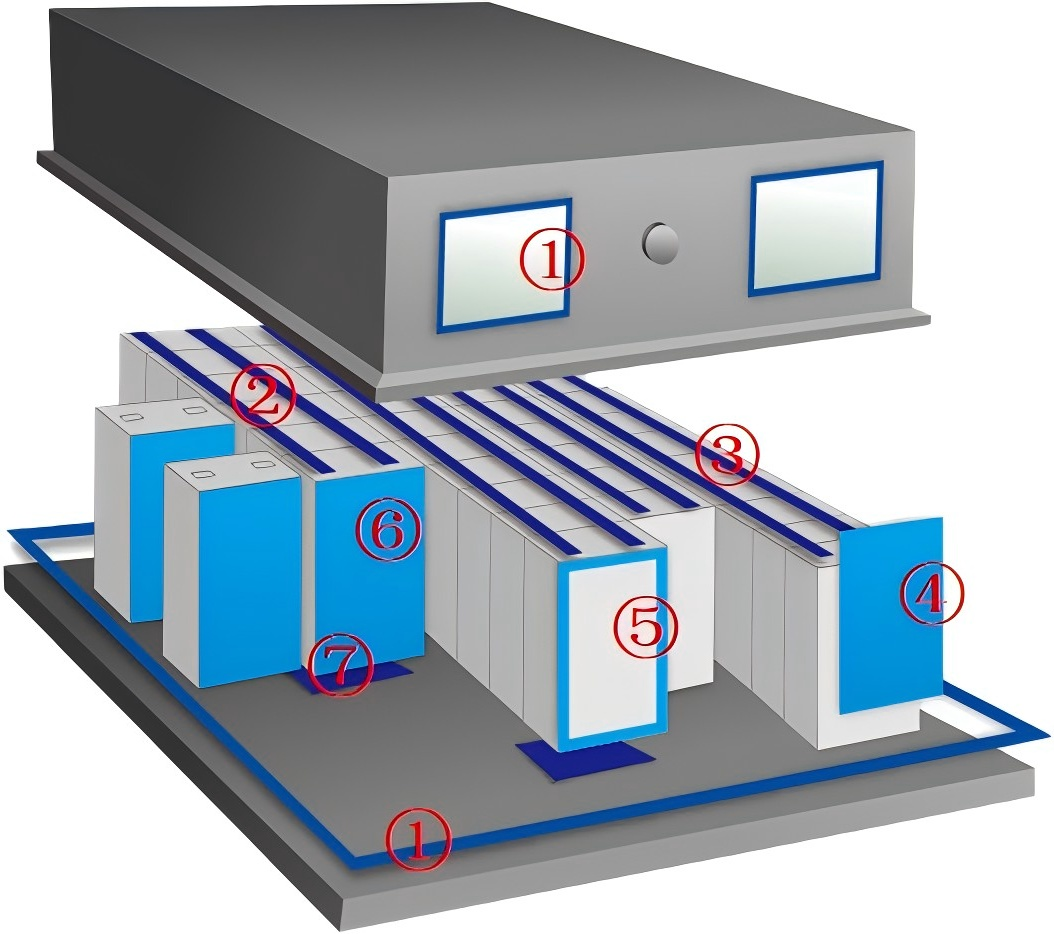
At the pack level, thermal runaway mitigation must be approached as a system engineering problem. Battery packs consist of cells, modules, cooling systems, structural components, and safety devices that interact both thermally and mechanically.
Effective mitigation strategies aim to achieve three objectives:
- Delay or suppress the onset of thermal runaway
- Limit heat and flame propagation between adjacent cells or modules
- Maintain structural integrity long enough to enable protective responses
These objectives are often in partial conflict. For example, high thermal conductivity paths that improve heat dissipation during normal operation may also accelerate heat transfer during failure events. As a result, balanced thermal pathway design is essential.
Thermal Interface Design in Real Battery Packs
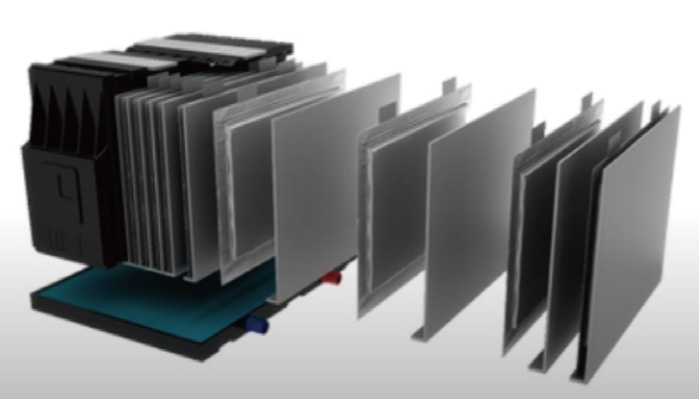
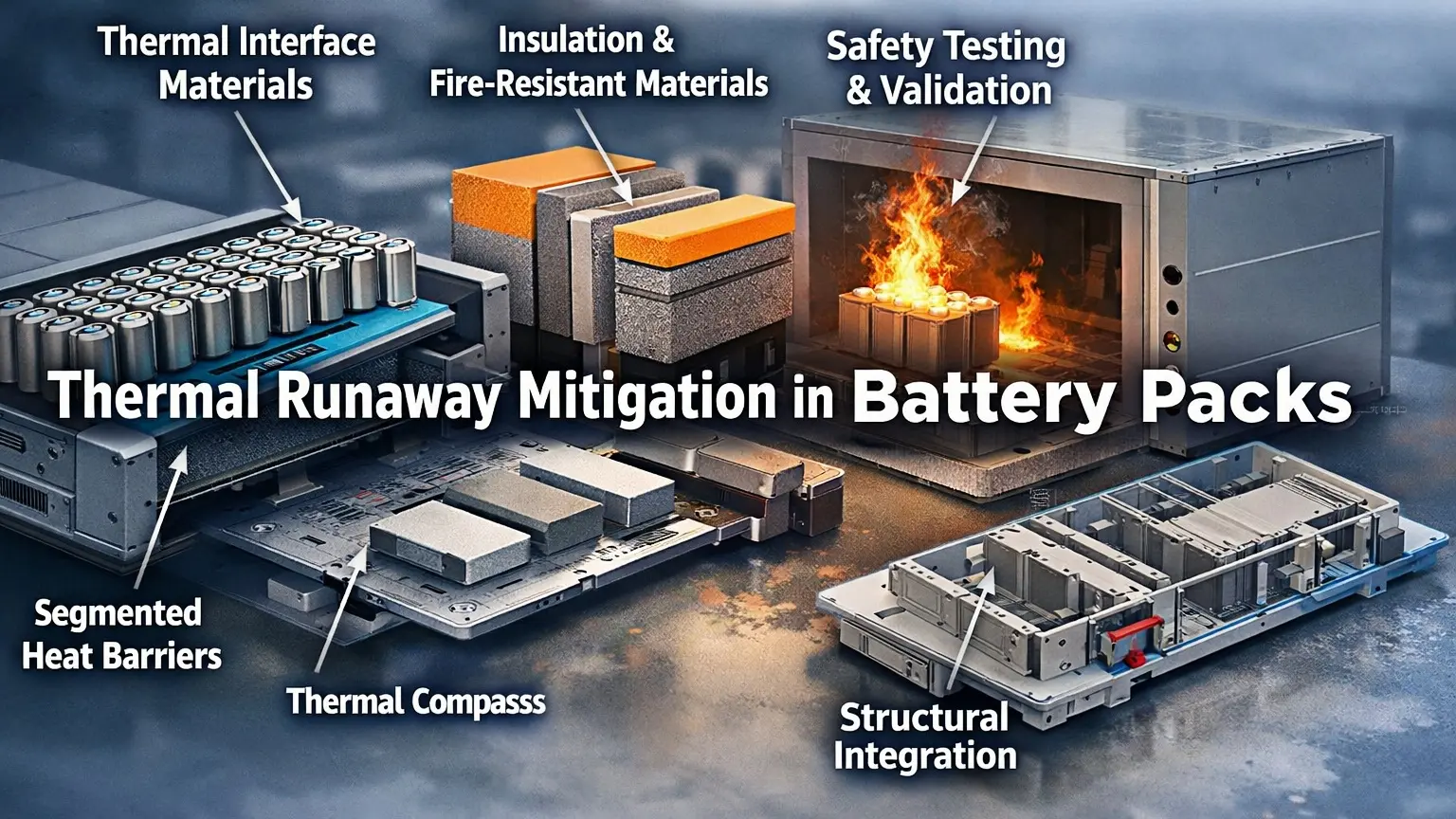
Thermal interface materials (TIMs) are widely used to improve heat transfer between cells, cooling plates, and structural components. In battery packs, interfaces exist at multiple levels, including cell-to-cell, cell-to-cooling plate, and module-to-pack interfaces.
In practice, TIM selection depends on more than nominal thermal conductivity. Compression behavior, thickness tolerance, pump-out resistance, and long-term stability under thermal cycling all influence real-world performance.
During thermal runaway events, continuous thermal interfaces can unintentionally act as heat propagation pathways. To address this risk, engineers often segment interfaces or introduce controlled discontinuities that reduce lateral heat spread without significantly compromising normal thermal management efficiency.
Insulation and Fire-Resistant Material Placement
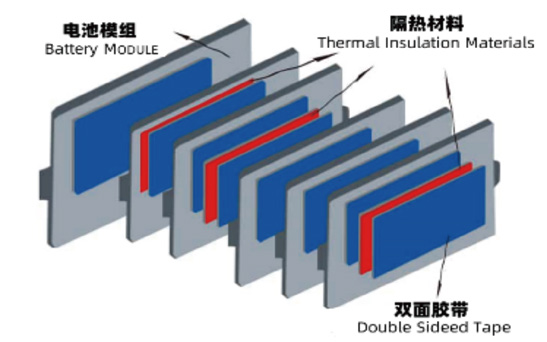
Unlike thermal interface materials, insulation and fire-resistant materials are designed to block, delay, or redirect heat and combustion byproducts during failure events. Their effectiveness depends heavily on placement strategy.
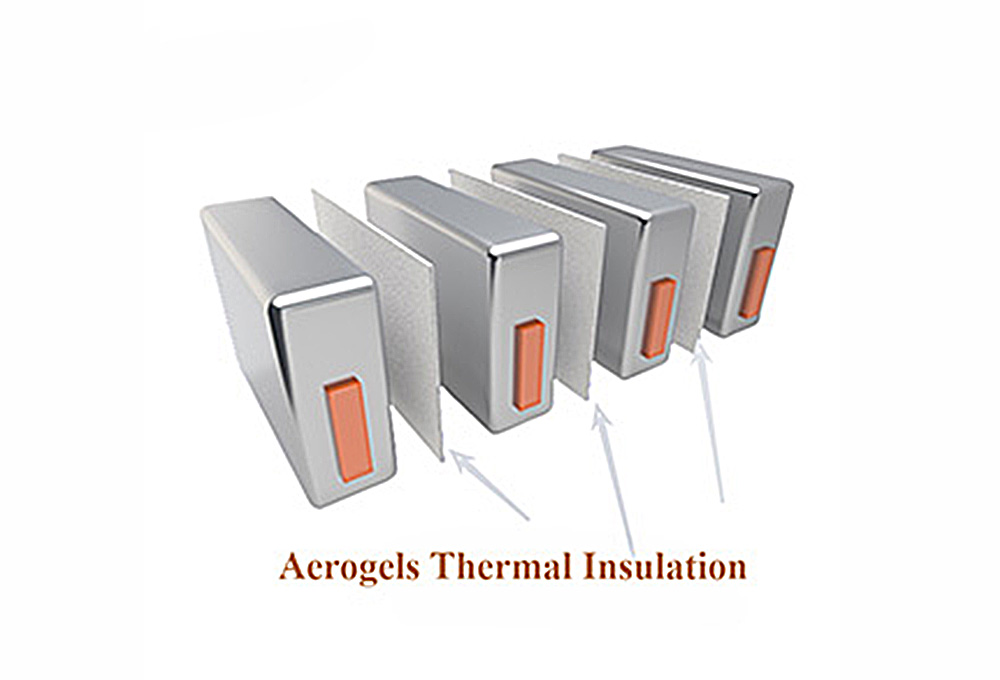
In many battery pack designs, insulation materials are introduced between cell rows, around module enclosures, or at interfaces between modules and pack housings. These locations are selected based on expected thermal propagation paths identified through analysis and testing.
Excessive insulation, however, can negatively impact heat dissipation during normal operation. Engineering best practice therefore favors targeted, localized insulation rather than uniform application throughout the pack.
Structural Integration and Mechanical Constraints
Thermal runaway mitigation materials do not function independently of the battery pack’s mechanical structure. Structural components influence heat flow, gas venting behavior, and mechanical containment during failure events.
In advanced designs, mitigation materials are integrated into load-bearing structures, reducing part count while improving reliability. Controlled deformation or venting paths are sometimes incorporated to guide heat and gas away from sensitive regions of the pack.
This integrated approach reflects a shift from additive safety features to system-level safety architecture.
Manufacturing and Assembly Considerations
Mitigation strategies must be compatible with high-volume manufacturing. Material properties such as thickness consistency, compressibility, and surface conformity directly affect assembly repeatability and interface performance.
Automated assembly processes impose strict requirements on material handling and placement accuracy. Variations in material behavior across production batches can lead to uneven performance and increased safety risk.
As a result, engineering validation increasingly includes process capability assessment in addition to performance testing.
Validation and Safety Testing Path
Validation of thermal runaway mitigation strategies relies on both simulation and physical testing. While computational models support early-stage design, empirical testing remains essential for understanding real failure behavior.
Common validation methods include thermal propagation tests, abuse tests, and controlled ignition experiments. These tests evaluate how effectively mitigation measures delay or contain failure under worst-case conditions.
Rather than focusing solely on standard compliance, engineers increasingly emphasize understanding failure margins and system robustness.
Engineering Takeaways
From an engineering perspective, effective thermal runaway mitigation in battery packs depends on system-level integration rather than isolated material performance.
- Thermal interfaces must balance normal heat dissipation with controlled heat transfer during failure events.
- Insulation and fire-resistant materials should be placed strategically based on propagation risk analysis.
- Structural integration improves reliability by reducing interfaces and enhancing mechanical stability.
- Manufacturing consistency is essential to achieving real-world safety performance.
Thermal runaway mitigation remains an evolving engineering discipline that must adapt as battery technologies, operating conditions, and regulatory expectations continue to change.
For a broader application perspective, please refer to our EV Battery Thermal Management application overview and the earlier articles in this series: Thermal Runaway Management.
EV Battery Thermal Management (V): Thermal Insulation, Fire Protection & Safety Standards
Battery Pack Thermal Runaway Mitigation Materials & Design Guide
Related Article