Best Thermal Paste for CPU: Expert Guide to High-Performance Compounds
Best Thermal Paste for CPU: An Engineering-Based Evaluation
As CPU power density continues to increase, effective thermal management has become a critical factor in system performance and long-term reliability. While cooling hardware often receives the most attention, selecting the best thermal paste for CPU applications plays an equally important role in heat dissipation efficiency.
From an engineering perspective, thermal paste is not a consumable accessory—it is a functional thermal interface material that directly affects operating temperatures, system stability, and component lifespan. This article provides an objective, technically grounded analysis of what defines the best thermal compound, how to evaluate real-world performance, and why convenience-driven searches such as thermal paste near me often lead to suboptimal choices.
Why Thermal Paste Matters in CPU Cooling Systems
Even precision-machined CPU heat spreaders and heatsinks contain microscopic surface irregularities. These gaps trap air, which significantly increases thermal resistance. Thermal paste is designed to eliminate these voids and create a continuous thermal pathway.
In engineering practice, the best thermal paste for CPU must consistently deliver the following:
- Effective filling of microscopic surface imperfections
- Low thermal resistance under sustained workloads
- Long-term mechanical and thermal stability
A properly selected best thermal compound can reduce peak CPU temperatures, improve boost stability, and extend system service life.
Engineering Criteria for Identifying the Best Thermal Compound
Thermal Conductivity
Thermal conductivity, expressed in W/m·K, is a primary indicator of performance. Entry-level materials typically fall between 1–3 W/m·K, while products considered the best thermal paste for CPU commonly exceed 4 W/m·K. High-performance formulations may reach or surpass 8 W/m·K.
Thermal Resistance and Operating Stability
Low thermal resistance ensures efficient heat transfer during sustained high-load conditions such as gaming, content creation, or workstation use. The best thermal compound must maintain consistent performance without drying, cracking, or pump-out over repeated thermal cycles.
Application Consistency
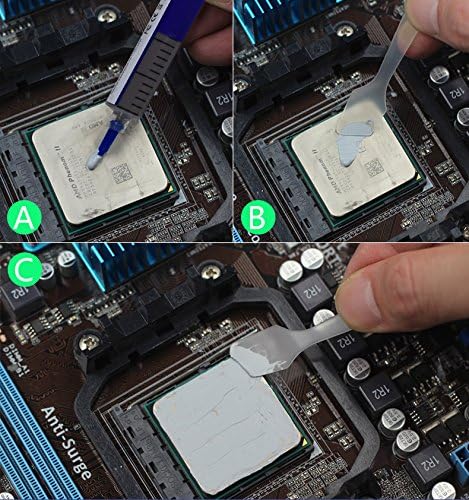
From a system integrator’s standpoint, consistent viscosity and spreadability are critical. Even the best thermal paste for CPU can underperform if it cannot be applied evenly and predictably.
The Limitations of Searching “Thermal Paste Near Me”
In the U.S. market, users frequently search for thermal paste near me to find local availability. While accessibility is convenient, engineers prioritize performance validation over geographic proximity.
Professional evaluation of the best thermal compound focuses on:
- Verified technical specifications
- Repeatable test data under controlled conditions
- Proven long-term reliability
As a result, products identified solely through thermal paste near me searches often fail to meet the thermal performance requirements of modern CPUs.
Comparison of Common Thermal Interface Materials
| Material Type | Typical Thermal Conductivity | Recommended Use |
|---|---|---|
| Silicone-based compounds | 1–3 W/m·K | Entry-level or office systems |
| Metal oxide-based compounds | 4–10 W/m·K | High-performance desktop CPUs |
| Carbon or graphite-based compounds | 8–15 W/m·K | Workstations and long-term high-load systems |
From an engineering standpoint, materials with thermal conductivity above 8 W/m·K are typically categorized as the best thermal compound for demanding CPU environments.
Recommended High-Performance Thermal Paste Solution
Based on internal testing and application-based evaluation, we developed a high-performance thermal paste designed to meet professional engineering standards.
Product reference:
High-Performance Thermal Paste for CPU Applications
Key performance characteristics include:
- Optimized thermal conductivity for rapid heat transfer
- Excellent spreadability for consistent application results
- Stable performance under long-term thermal cycling
This formulation is well-suited for gaming PCs, professional workstations, and performance-oriented desktop systems, making it a strong candidate for users seeking the best thermal paste for CPU without compromising reliability.
Common Engineering Mistakes in Thermal Paste Selection
Overemphasis on Price
Lower-cost materials may deliver acceptable short-term results but often degrade under sustained thermal stress. Engineers define the best thermal compound by lifecycle performance, not initial cost.
Incorrect Application Volume
Applying excessive compound increases thermal resistance. Even when using the best thermal paste for CPU, correct application techniques are essential for optimal heat transfer.
Conclusion
Choosing the best thermal paste for CPU applications requires more than convenience-based searches such as thermal paste near me. Engineering-driven selection emphasizes material performance, validated testing, and long-term stability.
A properly engineered best thermal compound enhances thermal efficiency, improves system reliability, and supports sustained CPU performance under demanding workloads. By focusing on measurable performance rather than availability alone, users can achieve consistently superior thermal results.
Thermal Paste and Thermal Grease in Home Appliances - Engineering Insight
High-Performance Thermal Paste for CPU and Best Thermal Pads
Related Article