Thermal Management for Optical Modules in AI Data Centers
Why Thermal Management Matters for Optical Transceivers in AI Data Centers
Artificial intelligence is rapidly changing the architecture of modern data centers. As AI training and inference workloads continue to scale, servers are processing larger volumes of data while high-speed networking equipment is required to move that data with lower latency and higher bandwidth. In this environment, optical transceivers have become an essential part of the high-speed communication infrastructure.
However, higher transmission speeds and increasing integration also create new thermal management challenges. Optical transceivers contain heat-generating components such as laser drivers, transimpedance amplifiers, digital signal processors and other high-speed electronic devices. When heat cannot be effectively transferred away from these components, elevated operating temperatures can affect performance, reliability and long-term system stability.
For engineers designing AI networking equipment, thermal management is therefore no longer a secondary consideration. The thermal interface between a heat-generating component and its cooling structure can have a significant impact on the overall thermal path. This is where thermal paste, thermal grease and other thermal interface materials can play an important role.
The Growing Thermal Challenge in AI Networking
AI infrastructure requires increasingly powerful processors, accelerators and networking devices. GPUs and CPUs generate substantial heat, while high-speed switches and optical communication components must operate continuously under demanding conditions.
As network bandwidth increases, optical transceivers are also evolving toward higher-speed architectures and greater integration. More components may need to operate within a relatively compact package, leaving less physical space for heat dissipation.
From an engineering perspective, the challenge is not simply to add a larger heatsink. Heat must first travel efficiently from the internal heat source to the thermal spreading or cooling structure. Any unnecessary resistance along this path can contribute to higher component temperatures.
Microscopic surface irregularities between two solid surfaces can create air gaps. Because air is a relatively poor thermal conductor, these gaps can become a thermal bottleneck. A properly selected thermal interface material can fill these microscopic voids and improve the effective thermal contact between the component and the cooling structure.
How Thermal Paste Supports Optical Transceiver Cooling
Thermal paste is commonly considered when engineers need a thin thermal interface between a heat-generating device and a heatsink or thermal spreader. Rather than acting as a structural adhesive, its primary function is to improve heat transfer across the interface by replacing microscopic air gaps with a thermally conductive material.
In optical transceiver applications, the material selection process needs to consider more than nominal thermal conductivity. Interface thickness, surface condition, assembly pressure, application method and long-term material stability can all influence the actual thermal performance of the system.
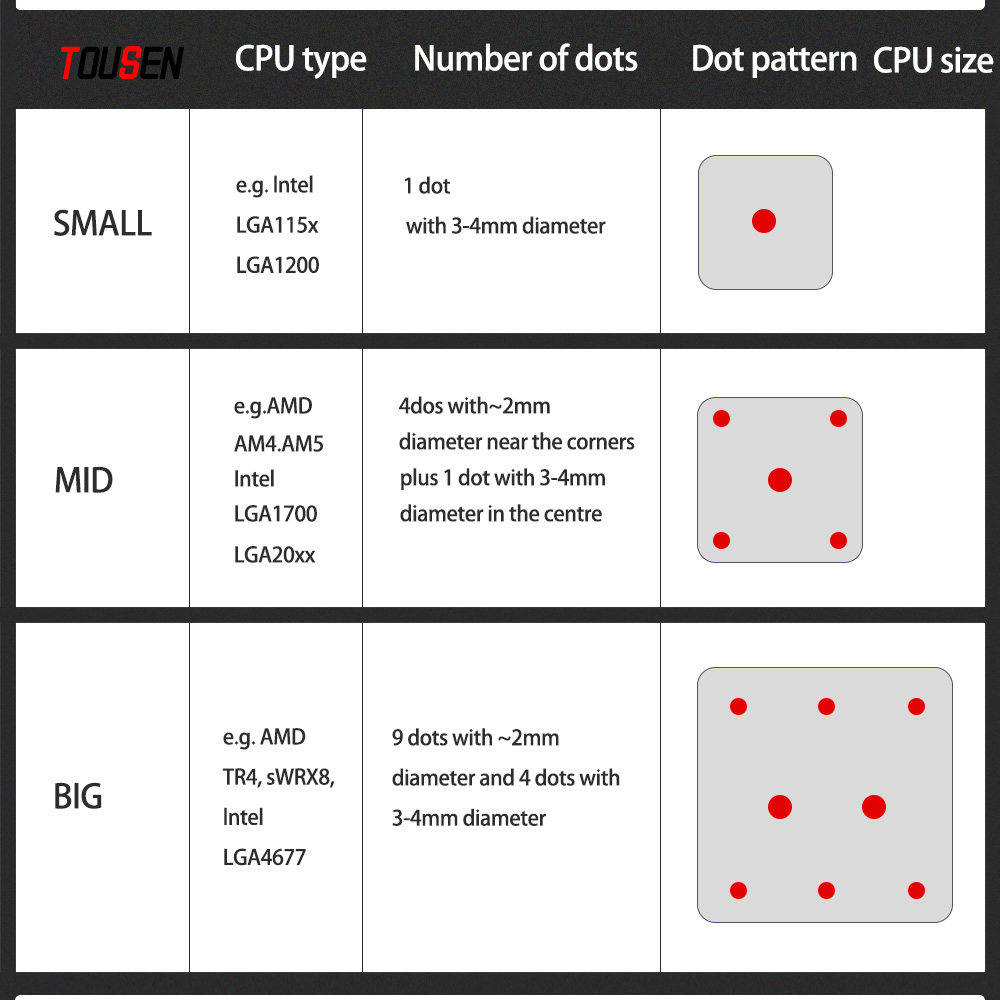
Using too little thermal paste may leave portions of the interface inadequately covered. Applying excessive material, on the other hand, can increase the effective thickness of the thermal path. Engineers therefore need to optimize the application amount and interface thickness according to the actual package and cooling structure.
Thermal Grease Versus Thermal Gels
Different thermal management designs require different material characteristics. Thermal grease is generally suitable for applications where a thin and conformable thermal interface is required. It can help compensate for microscopic surface irregularities while maintaining a relatively short thermal path.
Thermal gels, in comparison, are often considered when the assembly contains larger gaps, greater dimensional variation or components that require a more compliant interface. Their ability to conform to complex geometries can be advantageous in certain electronic cooling designs.
Therefore, engineers should not select thermal paste, thermal grease or thermal gels based solely on thermal conductivity. A practical evaluation should also consider viscosity, dispense or printing characteristics, bond-line thickness, mechanical compliance, electrical properties, operating temperature and reliability requirements.
Evaluating TSAS50 for High-Speed Optical Communication Applications
For electronic thermal management applications, TOUSEN TSAS50 provides an option for engineers evaluating high-performance thermal interface materials.
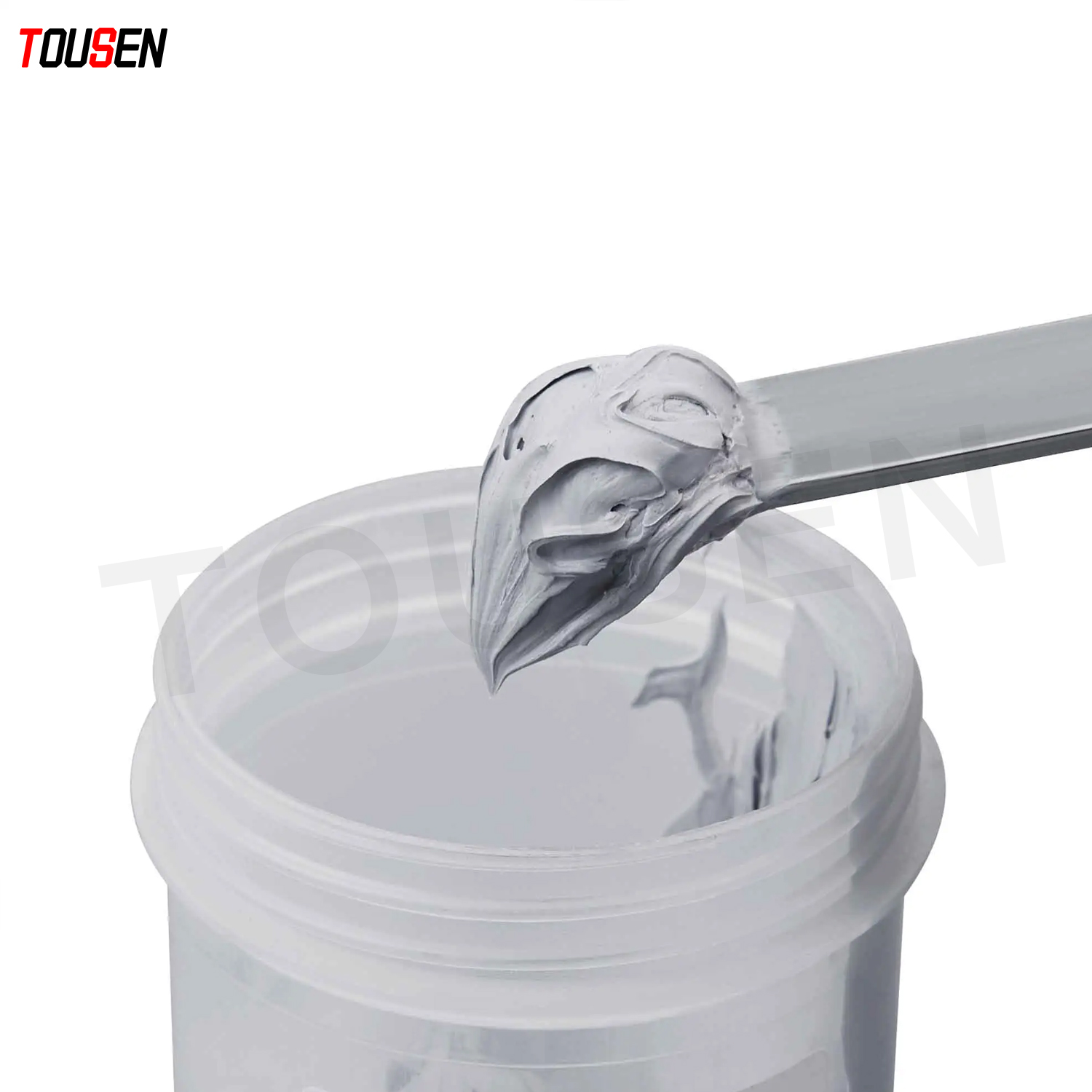
TSAS50 is a gray, single-component, non-curing thermally conductive compound designed for thermal interface applications. Its published thermal conductivity is 7.0 W/m·K, while the reported thermal resistance coefficient is 0.025 °C·cm²/W at 60 psi. The material has a viscosity of approximately 120 Pa·s at 22°C and a reported volume resistivity of 1.7 × 10¹² Ω·cm.
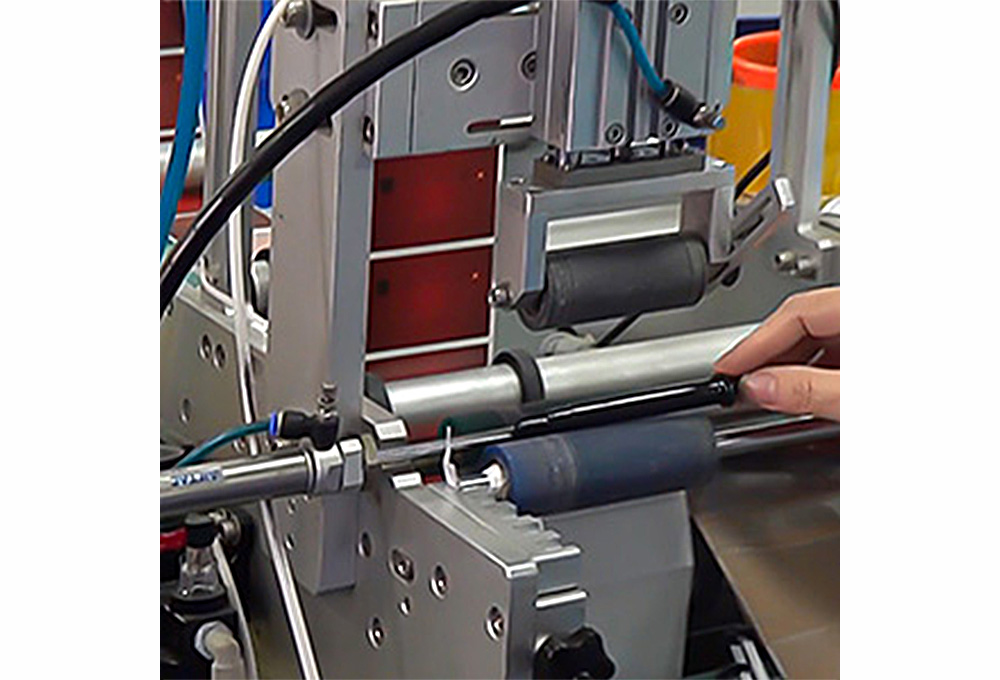
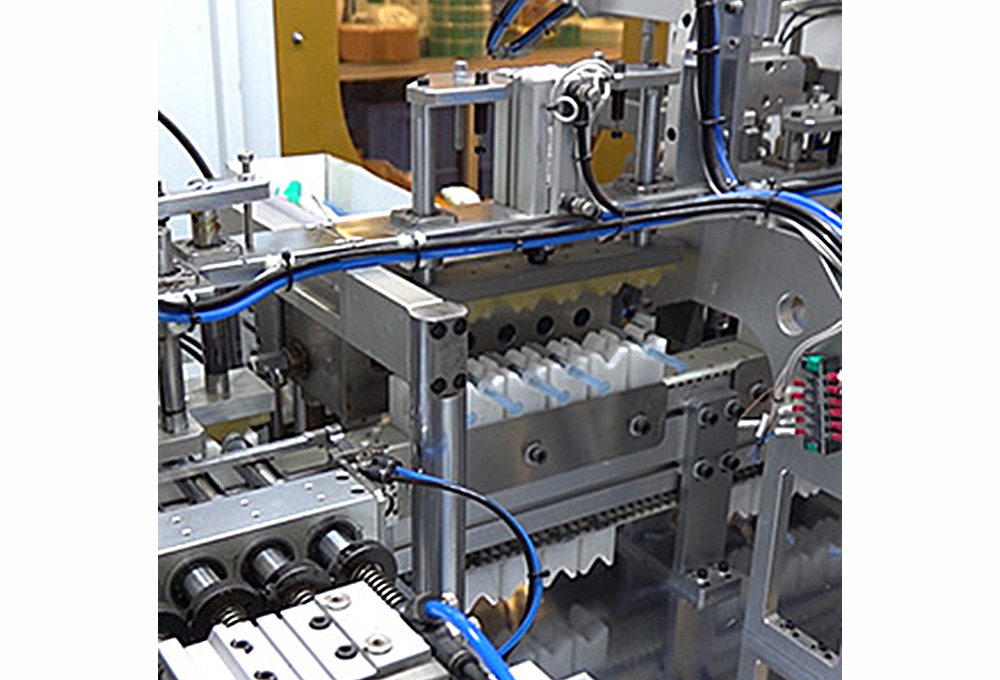
Another consideration for high-volume electronics manufacturing is process compatibility. TSAS50 is a single-component, non-curing material and supports screen-printing processes, allowing engineers and manufacturers to evaluate it for controlled material deposition and repeatable production processes.
For optical transceiver cooling, the material should be evaluated as part of the complete thermal design rather than treated as an isolated component. Engineers can determine the appropriate application area, target bond-line thickness and deposition method based on the heat source, thermal spreader geometry and assembly conditions.
More information about the TSAS50 thermally conductive material is available on the TOUSEN TSAS50 product page.
Why Thermal Conductivity Alone Is Not Enough
One common mistake in thermal interface material selection is focusing exclusively on the highest published thermal conductivity value. In real-world assemblies, system-level thermal performance can be affected by several additional factors.
For example, a high-conductivity thermal grease may not deliver its expected performance if the material is applied unevenly or the actual interface is significantly thicker than intended. Similarly, a thermal paste must be compatible with the manufacturing process and the mechanical configuration of the assembly.
For optical transceivers used in AI networking systems, engineers should consider the complete heat path, including the heat-generating device, thermal interface, heat spreader, heatsink and surrounding cooling environment.
This approach helps identify the actual thermal bottleneck instead of assuming that changing the interface material alone will solve the entire cooling problem.
Reliability Considerations for AI Data Center Applications
AI data centers are designed for continuous operation, making long-term reliability a critical consideration. Optical transceivers may operate for extended periods under elevated thermal loads, while repeated temperature changes can introduce additional mechanical and material stresses.
When evaluating a thermal interface material, engineers should therefore consider thermal cycling, operating temperature, material stability, mechanical compatibility and interaction with adjacent components.
Laboratory testing can include thermal resistance measurements, temperature-rise testing, thermal cycling and long-term reliability evaluation. These tests help determine whether a specific thermal paste or thermal grease is appropriate for the intended optical transceiver design.
Building a More Efficient Thermal Path for AI Infrastructure
The rapid adoption of AI is increasing demand for high-bandwidth optical communication and more densely integrated networking equipment. As optical transceivers continue to evolve, thermal management will become increasingly important to maintaining stable performance and long-term reliability.
Thermal paste, thermal grease and thermal gels each provide different performance characteristics and should be selected according to the geometry and operating requirements of the application. For thin interfaces between heat-generating components and cooling structures, a suitable thermal paste or thermal grease may provide an effective thermal path. Where larger gaps or greater compliance are required, thermal gels may deserve consideration.
With its 7.0 W/m·K reported thermal conductivity, non-curing single-component formulation and screen-printing capability, TOUSEN TSAS50 provides engineers with another material option to evaluate for optical communication and other high-density electronics cooling applications.
Ultimately, successful thermal management is not determined by one material specification. It depends on the interaction between the thermal interface material, component geometry, assembly process and cooling architecture. For optical transceivers supporting the next generation of AI infrastructure, designing an efficient and reliable thermal path is becoming an increasingly important part of system engineering.
How to Use Thermal Paste Correctly for Better Heat Transfer
Related Article