How to Use Thermal Paste Correctly for Better Heat Transfer
How to Use Thermal Paste Correctly for Reliable Heat Transfer
As electronic devices continue to become more powerful and compact, effective thermal management has become an essential part of product design. CPUs, GPUs, power modules, LEDs, automotive electronics, communication equipment and industrial controllers can all generate significant amounts of heat during operation. If this heat cannot be transferred efficiently to a heatsink or cooling structure, excessive temperature may reduce performance, accelerate component aging and, in severe cases, cause system instability.
From an engineering perspective, thermal paste is one of the simplest and most widely used thermal interface materials for improving heat transfer between a heat-generating component and a heatsink. However, selecting a suitable material is only part of the solution. The application method, interface condition, coating thickness and assembly pressure can have a significant influence on the final thermal performance.
What Is Thermal Paste and Why Is It Necessary?
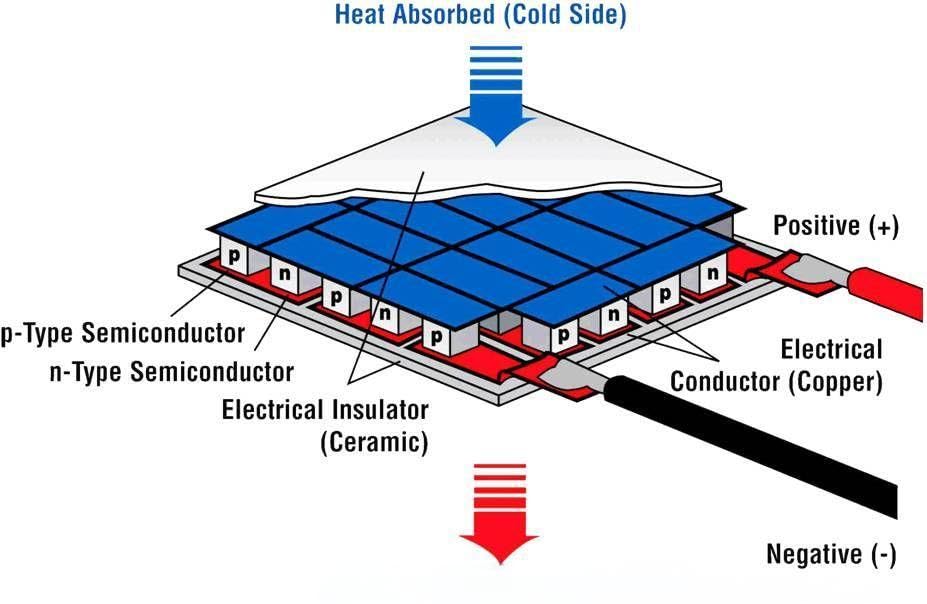
The contact surfaces of an electronic component and heatsink may appear flat to the naked eye, but microscopic surface irregularities remain between them. These small gaps can trap air, and air has relatively poor thermal conductivity compared with most thermal interface materials.
Thermal paste is designed to fill these microscopic gaps and improve the effective thermal contact between two solid surfaces. A properly selected thermal interface material can therefore reduce contact thermal resistance and provide a more efficient heat-transfer path from the component to the heatsink.
In the market, terms such as thermal grease, thermal compound and thermal paste are often used interchangeably. Although formulations can differ considerably, the engineering objective is generally similar: replace poorly conductive air gaps with a material capable of transferring heat more effectively.
Thermal Paste vs Thermal Grease and Thermal Gels
Choosing between different thermal interface materials should be based on the mechanical and thermal requirements of the application rather than thermal conductivity alone.
Thermal paste is commonly used where two relatively rigid surfaces need an efficient thermal interface. It is particularly suitable for processors, power semiconductor devices, LEDs and other components assembled directly against a heatsink.
Thermal grease generally refers to a paste-like thermal interface material that remains soft during operation. Its ability to wet surfaces and fill microscopic irregularities makes it useful in applications where low interface resistance is important.
Thermal gels, by comparison, are often considered when the assembly contains larger gaps, uneven surfaces or components with different heights. Their soft and compliant characteristics can provide advantages in applications requiring stress absorption and gap accommodation.
Therefore, engineers should not simply select a material because its advertised thermal conductivity is higher. Interface thickness, viscosity, pump-out resistance, operating temperature, electrical properties, mechanical requirements and assembly process should all be evaluated together.
How to Apply Thermal Paste Correctly
1. Clean Both Contact Surfaces
Before applying thermal paste, the component surface and heatsink surface should be clean and free from dust, oil, oxidation products and old interface material. Contamination can create additional thermal resistance and may prevent the material from forming a uniform interface.
For maintenance work, the previous thermal compound should be removed carefully. After cleaning, allow the surfaces to dry completely before applying new material.
2. Use the Appropriate Amount
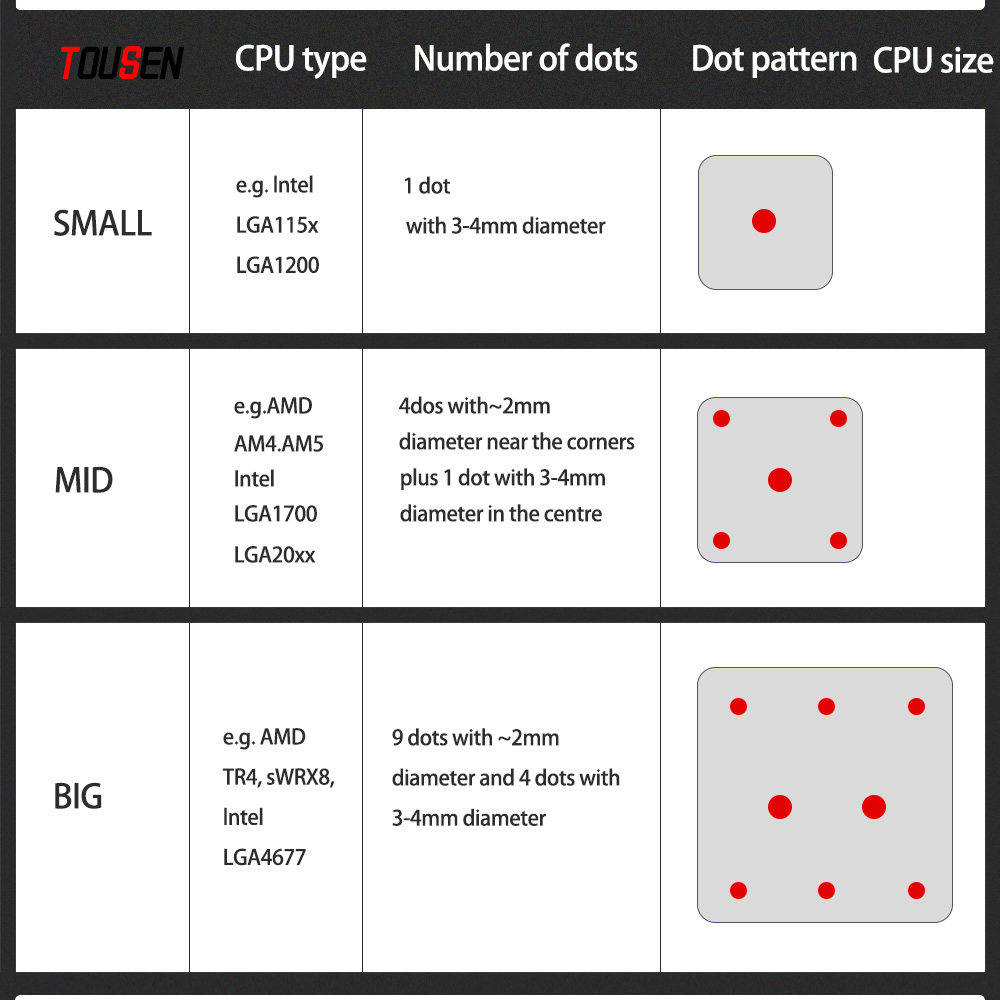
One of the most common mistakes is assuming that more thermal paste automatically means better cooling. In reality, thermal interface materials are primarily intended to fill surface imperfections rather than create a thick thermal layer.
Excessive material can increase the effective bond-line thickness and may increase thermal resistance. On the other hand, insufficient material may leave portions of the interface exposed to air.
The optimum amount depends on component size, surface flatness, material viscosity and assembly conditions. For production applications, engineers should establish a controlled dispensing or printing process rather than relying entirely on manual judgment.
3. Apply Uniform Assembly Pressure
After applying the thermal paste, the heatsink should be assembled according to the specified mechanical procedure. Uniform pressure helps spread the material and reduce the thickness of the thermal interface.
Uneven mounting pressure can produce areas with different bond-line thicknesses. It can also cause incomplete contact between the component and heatsink. For high-performance electronic assemblies, the mechanical design of the mounting system is therefore closely related to the performance of the thermal interface.
4. Avoid Unnecessary Rework
Once a heatsink has been installed, repeatedly removing and reinstalling it may introduce air into the interface or redistribute the thermal grease unevenly. If rework is necessary, the interface should normally be inspected and the material reapplied according to the manufacturer's recommended process.
How to Select the Right Thermal Interface Material
Thermal conductivity is an important specification, but it should not be treated as the only selection criterion. From an engineering perspective, several parameters should be considered.
- Thermal conductivity: Determines the material's ability to transfer heat under defined test conditions.
- Viscosity: Influences dispensing, spreading and surface wetting.
- Thermal resistance: Provides a more application-oriented indication of heat-transfer performance.
- Operating temperature: The material should remain stable throughout the expected temperature range.
- Electrical properties: Electrically insulating formulations may be required around sensitive electronic components.
- Reliability: Pump-out, dry-out, migration and aging behavior should be evaluated for long-term applications.
- Process compatibility: The material should match the dispensing, coating and assembly process used in production.
For applications with larger mechanical tolerances, thermal gels or gap-filling materials may be more appropriate than conventional thermal paste. Conversely, when the interface gap is very small and low thermal resistance is the priority, a properly selected thermal grease can be highly effective.
TSAS50 Thermal Paste for Electronic Thermal Management
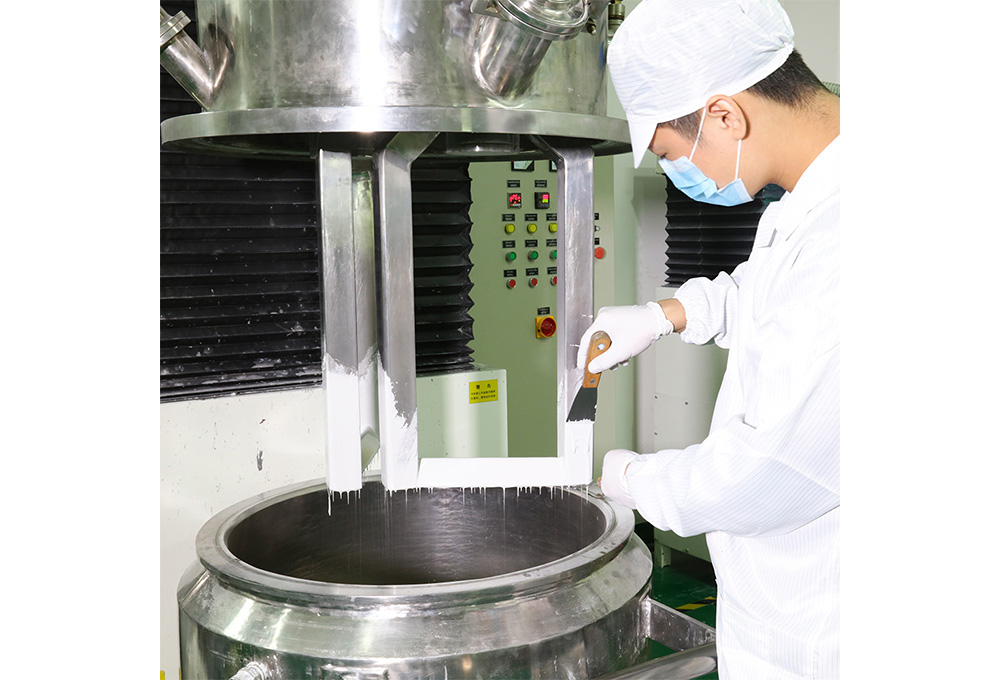
For engineers looking for a practical thermal interface solution, TOUSEN TSAS50 is designed for applications where efficient heat transfer and reliable interface contact are required. Its paste-like formulation allows the material to fill microscopic surface irregularities between heat-generating components and cooling structures.
TSAS50 can be considered for thermal management applications involving electronic components, power devices and other assemblies where a thermal interface material is required. As with any thermal paste, the final thermal performance depends not only on the material itself but also on the interface thickness, surface condition, dispensing quantity and assembly pressure.
For detailed product information, technical specifications and application guidance, engineers can refer to the TOUSEN TSAS50 Thermal Paste product page.
Common Mistakes Engineers Should Avoid
Several application mistakes repeatedly appear in thermal management projects. Applying too much thermal grease, failing to clean the contact surfaces, selecting a material based only on its nominal thermal conductivity and ignoring mechanical tolerance are common examples.
Another important issue is using the wrong type of thermal interface material for the assembly. A material that performs well on a CPU may not necessarily be the best solution for an automotive power module or a battery system. Different applications have different requirements for thermal performance, compression, durability, electrical insulation and environmental resistance.
Engineering Approach to Thermal Interface Design
A reliable thermal solution should be considered as a complete system rather than as a single material selection. The heat source, interface material, heatsink, mechanical structure and cooling environment all contribute to the final thermal performance.
In practical engineering projects, thermal paste, thermal grease and thermal gels each have their own suitable application scenarios. The correct choice should be based on the actual interface gap, temperature range, assembly process, reliability requirements and expected service life.
For high-volume manufacturing, it is also recommended to validate the complete application process through thermal testing and reliability testing. Monitoring thermal resistance, component temperature and interface stability under actual operating conditions can provide more meaningful data than relying solely on material datasheet values.
Conclusion
Correct application of thermal paste is just as important as selecting a high-quality material. Clean contact surfaces, appropriate material quantity, controlled interface thickness and uniform mounting pressure are fundamental factors for achieving reliable heat transfer.
At the same time, engineers should understand the differences between thermal paste, thermal grease and thermal gels and select the most suitable solution according to the actual application. A well-designed thermal interface can help reduce thermal resistance, improve system stability and support long-term reliability.
For projects requiring customized thermal management materials, material selection should ultimately be verified through application-specific testing. This engineering-oriented approach provides a more reliable basis for designing efficient and durable thermal solutions.
Thermal Management for Optical Modules in AI Data Centers
When to Replace Thermal Paste for Reliable Thermal Management
Related Article