
Engineering Guide to SSD Thermal Pad, Thermal Gap Pad & CPU
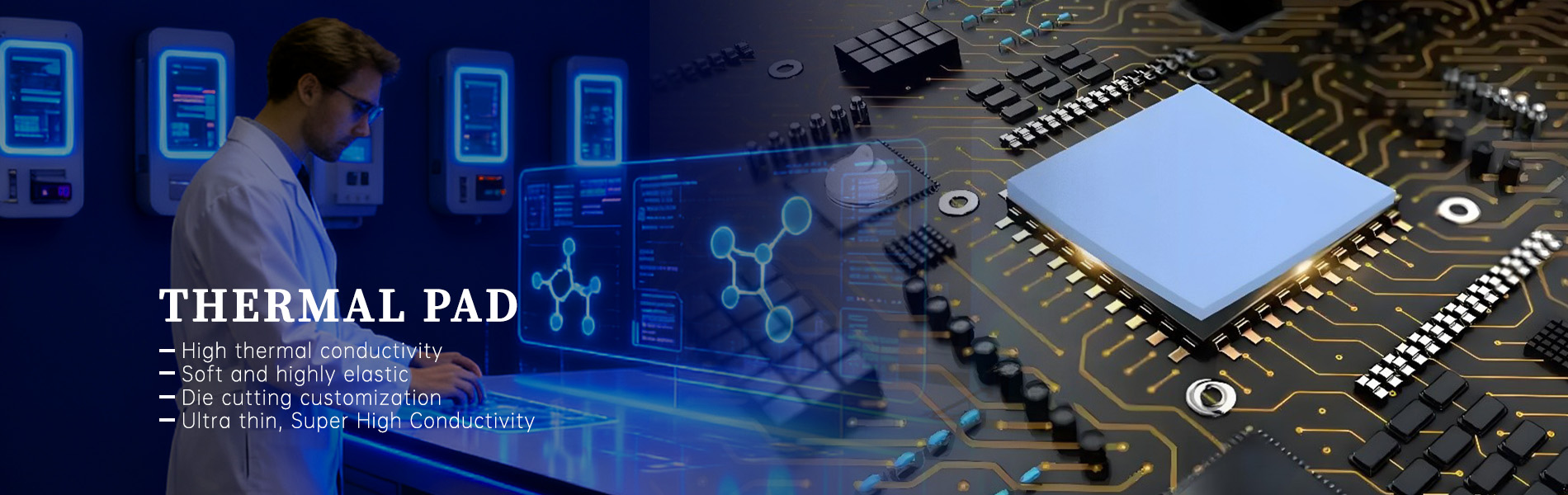
How Engineers Select the Right Thermal Interface Materials: A Professional Analysis of SSD Thermal Pad, Thermal Gap Pad, and Thermal Pad for CPU
As electronic systems continue to move toward higher power density, higher integration, and faster operating speeds, thermal management has become a critical part of system reliability and performance. From an engineer’s standpoint, thermal interface materials (TIMs) are no longer auxiliary components; they are fundamental elements that determine whether heat can be transferred efficiently from the heat source to the cooling solution.
In practical engineering design, improper selection of a ssd thermal pad, a thermal gap pad, or a thermal pad for cpu can lead to elevated junction temperature, thermal throttling, accelerated aging, and long-term reliability risks. This article provides a structured, objective, and technically rigorous overview of how to evaluate these materials and how high-performance thermal pads can be integrated seamlessly into modern thermal solutions.
1. Why Thermal Interface Materials Matter in Modern Electronics
Even when heat sinks and heat spreaders are precisely machined, microscopic surface roughness inevitably traps air at the interface. Air has very low thermal conductivity and significantly increases thermal resistance. Thermal interface materials are designed to fill these micro-gaps, replacing air with a conductive medium that improves heat transfer.
In applications such as data storage, computing, power electronics, and communication equipment, the performance of a ssd thermal pad, thermal gap pad, or thermal pad for cpu directly impacts temperature stability, power efficiency, and overall product lifespan. Engineers therefore evaluate TIMs using both thermal and mechanical performance metrics rather than cost alone.
2. Functional Differences Between Key Thermal Pad Categories
2.1 SSD Thermal Pad – Optimizing Heat Dissipation for High-Speed Storage
Solid-state drives, especially NVMe SSDs, generate concentrated heat during sustained read/write operations. Without effective heat dissipation, performance throttling may occur. A properly selected ssd thermal pad ensures efficient heat transfer from the controller and NAND components to the heat sink or chassis.
Key engineering characteristics of a ssd thermal pad include:
- High thermal conductivity for rapid heat spreading.
- Soft compressibility to compensate for assembly tolerances.
- Stable mechanical properties under continuous thermal cycling.
- Ease of installation and compatibility with compact layouts.
From an engineering validation perspective, temperature mapping and long-term stress testing are essential to verify that the selected ssd thermal pad maintains consistent thermal resistance over time.
2.2 Thermal Gap Pad – Flexible Solution for Uneven or Large Interfaces
In many industrial and embedded systems, component height variations and uneven surfaces create significant air gaps. A thermal gap pad is engineered to bridge these gaps while maintaining reliable thermal conduction.
Typical advantages of a thermal gap pad include:
- Excellent conformability to irregular surfaces.
- Wide thickness options to accommodate mechanical tolerances.
- Good dielectric strength for electrically sensitive designs.
- Reworkability compared with cured thermal adhesives.
When designing multi-component cooling paths, engineers often combine multiple layers of thermal gap pad materials to optimize compression force distribution and thermal stability.
2.3 Thermal Pad for CPU – Ensuring Stable Processor Performance
The CPU remains one of the highest power-density components in any computing system. A reliable thermal pad for cpu must deliver consistent heat transfer across wide temperature ranges and operating cycles.
Design considerations for a thermal pad for cpu include:
- Low thermal resistance at defined compression levels.
- Dimensional stability to avoid pump-out or material fatigue.
- Controlled thickness for predictable mounting pressure.
- Long-term chemical and thermal durability.
In compact systems or low-profile cooling assemblies, a well-engineered thermal pad for cpu can provide more consistent performance compared with conventional thermal grease.
3. Key Performance Metrics for Thermal Pad Evaluation
From a technical perspective, selection of a ssd thermal pad, thermal gap pad, or thermal pad for cpu should be driven by quantitative performance data.
3.1 Thermal Conductivity
Higher thermal conductivity reduces interface thermal resistance and improves heat flow efficiency. However, engineers must also consider real contact resistance, compression behavior, and thickness tolerance when analyzing system-level performance.
3.2 Thermal Resistance
Thermal resistance reflects the combined effects of material conductivity, thickness, and surface contact quality. Accurate modeling and empirical testing are recommended when qualifying a ssd thermal pad or thermal gap pad for critical applications.
3.3 Mechanical Compliance and Compression
Mechanical compliance ensures adequate surface contact without excessive mechanical stress. This is especially important for fragile components and for assemblies using a thermal pad for cpu.
3.4 Long-Term Reliability
Thermal cycling, humidity exposure, and aging behavior must be evaluated to ensure stable performance throughout the product lifecycle.
4. Engineering-Based Selection Methodology
A structured approach improves the reliability of TIM selection:
- Define power dissipation and allowable temperature limits.
- Measure interface gap and surface flatness.
- Determine required thermal conductivity and compression range.
- Validate assembly feasibility and maintenance requirements.
- Conduct prototype testing and thermal validation.
This process applies equally to a ssd thermal pad, a thermal gap pad, and a thermal pad for cpu, ensuring objective engineering decisions.
5. High-Performance Thermal Pad Solution from ITOUSEN
For applications requiring stable and high-efficiency thermal performance, the ITOUSEN Ultra High Performance Thermal Pad series provides a balanced combination of thermal conductivity, compliance, and long-term reliability.
Product details are available at:
https://www.itousen.com/ultra-high-performance-thermal-pad.html

Engineering advantages include:
- High thermal conductivity for reduced interface thermal resistance.
- Multiple thickness options to support diverse mechanical tolerances.
- Excellent compressibility for complex assemblies.
- Stable performance under extended thermal cycling.
- Easy customization for system integration.
The product can be effectively applied as a ssd thermal pad for storage cooling, a thermal gap pad for uneven interfaces, and a thermal pad for cpu in processor cooling architectures.
6. Conclusion
From an engineering perspective, thermal interface material selection must be driven by data, system requirements, and reliability objectives. Understanding the functional differences and performance criteria of a ssd thermal pad, thermal gap pad, and thermal pad for cpu enables optimized thermal design and predictable system behavior.
By integrating high-quality thermal pads with verified performance characteristics, engineers can significantly improve thermal efficiency, operational stability, and product lifespan in modern electronic systems.
Thermal Pad vs Thermal Paste How to Choose the Best Thermal Pads
Pad Thermal Solutions for CPU and Graphics Card Thermal Management
Related Article