
Engineering Guide to Thermal Pad Fillers and Rth Performance
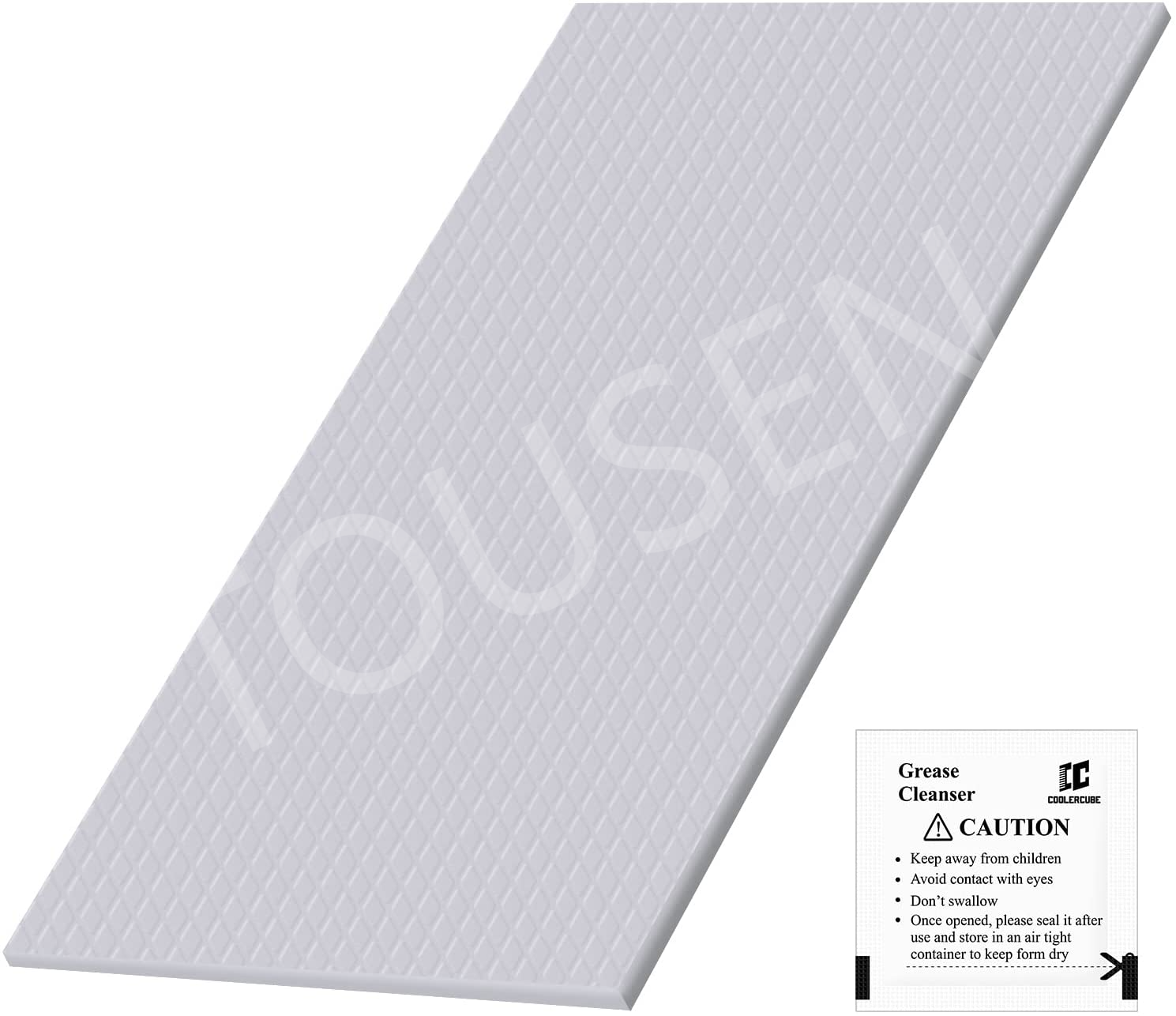
Engineering Logic Behind Thermal Pad Filler Selection
From Equivalent Thermal Resistance (Rth) to Server, Automotive, and Consumer Electronics Applications
As power density in electronic devices continues to increase, thermal pads have become a critical component in modern thermal management systems. In real-world applications, the performance of a thermal pad is not determined solely by its nominal thermal conductivity. Instead, it is the result of a comprehensive interaction between filler material properties, interface thermal resistance, compression behavior, and application-specific constraints.
This article presents an engineering-oriented analysis of three mainstream thermal pad filler systems—Alumina (Al2O3), Aluminum Nitride (AlN), and Diamond. Using the equivalent thermal resistance (Rth) model as the evaluation framework, we further map these materials to server, automotive, and consumer electronics use cases to establish a clear and practical selection logic.
1. The Core Metric: System Thermal Resistance, Not Just Thermal Conductivity
In actual electronic assemblies, a thermal pad functions as a thermal interface material (TIM). Heat does not flow exclusively through the pad itself but through a complete thermal path:
Heat Source → Thermal Pad → Heatsink / Cold Plate
From an engineering standpoint, the equivalent thermal resistance can be expressed as:
Rth = Rcontact1 + RTIM + Rcontact2
- RTIM: Bulk thermal resistance of the pad, determined by material thermal conductivity and thickness
- Rcontact: Interface thermal resistance, governed by surface roughness, pad softness, compression ratio, filler morphology, and assembly pressure
In many real applications, interface thermal resistance accounts for more than half of the total system Rth. Therefore, selecting a material based solely on a higher thermal conductivity value often leads to suboptimal thermal performance.
2. Alumina-Filled Thermal Pads: Stable and Cost-Effective, with a Clear Performance Ceiling
Alumina is the most widely used filler material in thermal pads due to its well-balanced properties:
- Stable material quality and mature supply chain
- Excellent electrical insulation
- Fine particle size and uniform dispersion
- Soft silicone matrix with good compressibility
- High cost-performance ratio
However, from a materials science perspective, alumina has an intrinsic thermal conductivity of approximately 30 W/m·K. In silicone-based systems, attempts to push thermal conductivity higher by increasing filler loading encounter several engineering limits:
- Excessive filler loading significantly reduces processability
- Pad hardness increases, reducing conformability
- Actual contact area decreases, increasing interface thermal resistance
As a result, alumina-filled thermal pads are typically optimized for the 3–8 W/m·K range and are best suited for consumer electronics and low-to-medium power applications.
At TOUSEN, alumina-filled thermal pads represent a fully mature, mass-produced product family, offering stable long-term supply with multiple options in thickness, hardness, and thermal performance.
3. Aluminum Nitride-Filled Thermal Pads: The Mainstream Engineering Solution Above 10 W/m·K
For applications requiring thermal conductivities above 10 W/m·K, aluminum nitride has become the preferred filler material. Key material characteristics include:
- High intrinsic thermal conductivity (~170–200 W/m·K)
- Excellent electrical insulation
- Efficient formation of continuous thermal pathways at moderate filler loadings
In silicone systems, aluminum nitride enables a significant reduction in RTIM while preserving the softness and compressibility required to minimize interface thermal resistance. Visually and mechanically, AlN-filled pads are often indistinguishable from alumina-based products, yet they deliver substantially improved thermal performance under high heat flux conditions.
From a system-level perspective, aluminum nitride thermal pads achieve an optimal balance between:
- Bulk thermal resistance reduction
- Low interface thermal resistance
- Manufacturability and long-term reliability
This is why 10–15 W/m·K aluminum nitride thermal pads have become the mainstream choice for servers, power electronics, communication infrastructure, and automotive thermal systems.
TOUSEN’s aluminum nitride thermal pads are mass-production qualified and validated for thermal stability, compression resilience, and batch-to-batch consistency.
4. Diamond-Filled Thermal Pads: Extremely High Conductivity Does Not Guarantee Lower System Rth
Diamond exhibits an exceptionally high intrinsic thermal conductivity, often exceeding 1000 W/m·K, making it theoretically attractive as a thermal filler. However, practical engineering considerations significantly limit its general applicability in thermal pads.
Diamond particles are typically larger and much harder than ceramic fillers. When incorporated into silicone matrices, this leads to:
- Reduced pad softness and flowability
- Limited ability to conform to microscopic surface roughness
- Restricted increase in effective contact area under compression
Consequently, while RTIM may be very low, the combined interface resistance Rcontact1 + Rcontact2 often increases, resulting in a system thermal resistance that is not necessarily superior to aluminum nitride solutions.
Diamond-filled thermal pads are therefore best suited for highly controlled, ultra-flat interfaces with sufficient assembly pressure, typically in specialized or research-driven applications.
TOUSEN offers diamond-filled thermal pads as fully industrialized products, targeted at specific high-end and customized thermal management requirements.
5. Application-Oriented Material Selection Logic
Server and Data Center Applications
- Very high power and heat flux density
- Extreme sensitivity to system thermal resistance
Preferred solution: Aluminum nitride thermal pads
Automotive Electronics
- Thermal cycling, vibration, and long service life requirements
- Reliability prioritized alongside performance
Preferred solution: Aluminum nitride, with high-reliability alumina options
Consumer Electronics
- Lower overall power
- Limited assembly pressure and strong cost sensitivity
Preferred solution: Alumina-filled thermal pads

6. Conclusion
There is no universally “best” thermal pad defined by thermal conductivity alone. Effective thermal management depends on system-level thermal resistance, interface behavior, and application constraints.
TOUSEN focuses on engineered thermal interface solutions. Our alumina-, aluminum nitride-, and diamond-filled thermal pads are all mass-production-ready products, enabling us to support a wide range of thermal challenges with proven reliability and engineering confidence.
Why Thermal Pads of the Same Thickness Perform Differently | Engineering FAQ
TF40 BN Film vs Graphite Sheet: Engineering Comparison for Advanced Thermal Design
Related Article