Engineering Guide to Thermal Pad for Computer Cooling
Engineering Perspective on Thermal Pad Applications in Modern Computer Systems
As computing hardware continues to evolve toward higher processing speeds and greater power density, thermal management has become one of the most critical aspects of system reliability and performance. From CPUs and GPUs to VRAM modules and NVMe SSD controllers, effective heat dissipation directly determines operational stability and service life. In this context, the thermal pad plays a foundational role in enabling efficient heat transfer within computer systems.
From an engineering standpoint, selecting the appropriate thermal pad is not simply a matter of material substitution—it is a calculated thermal design decision that affects junction temperature, throttling thresholds, and long-term component durability.
Understanding the Function of a Thermal Pad
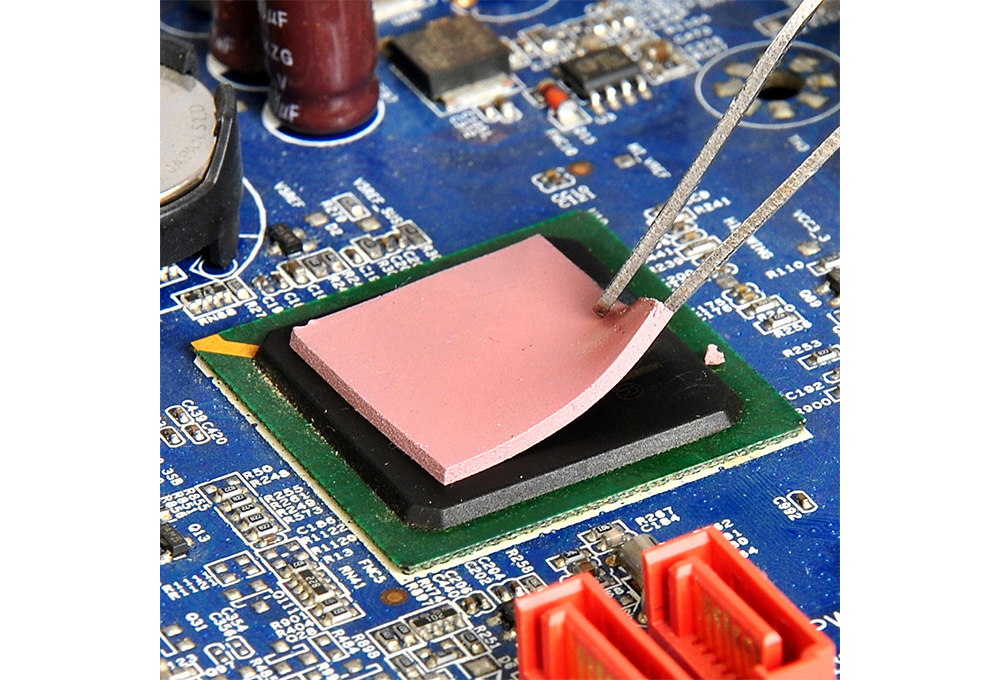
A thermal pad is a solid thermal interface material (TIM), typically composed of a silicone-based matrix filled with thermally conductive ceramic or metallic particles such as aluminum oxide or boron nitride. Its primary function is to eliminate microscopic air gaps between heat-generating components and heat sinks.
Even precision-machined metal surfaces contain microscopic irregularities. When two surfaces are joined without a proper interface material, trapped air significantly increases thermal resistance due to air’s extremely low thermal conductivity. A properly specified thermal pad fills these voids, dramatically reducing interface thermal resistance and improving heat transfer efficiency.
Compared to thermal grease, a silicone thermal pad offers several advantages:
- Controlled thickness for consistent gap management
- Clean installation with no pump-out or migration risk
- Electrical insulation properties
- Mechanical cushioning for vibration-sensitive assemblies
Critical Performance Parameters for Thermal Pad Selection
1. Thermal Conductivity
Thermal conductivity (W/m·K) is the primary indicator of a thermal pad's heat transfer capability. In computer applications, typical values range from 1.0 W/m·K for entry-level materials to 15 W/m·K or higher for performance-grade products.
High-power devices such as GPUs and high-frequency memory modules benefit significantly from higher conductivity thermal pad materials, as they reduce localized hot spots and improve overall thermal distribution.
2. Thermal Resistance
While conductivity is important, total interface thermal resistance depends on thickness, compression rate, and surface contact quality. Engineers must evaluate the full thermal stack-up to ensure that the selected thermal pad achieves the target junction temperature under maximum load conditions.
3. Compressibility and Conformability
A quality thermal pad must provide sufficient compressibility to adapt to manufacturing tolerances without overstressing PCB assemblies. Balanced elasticity ensures reliable long-term contact even under thermal cycling.
4. Reliability Under Thermal Cycling
Computer systems frequently experience temperature fluctuations during power cycling and workload variation. A high-performance silicone thermal pad should maintain mechanical integrity and stable thermal performance across extended operational life cycles, typically from -40°C to 150°C.
Application Scenarios in Computer Systems
Motherboard Chipset Cooling
Modern motherboard chipsets and power management ICs often operate within compact layouts. A precisely sized thermal pad ensures effective heat conduction to low-profile aluminum heat sinks without inducing board warpage.
GPU Memory and VRAM Modules
High-performance graphics cards generate substantial heat in memory modules and voltage regulation components. A high-conductivity thermal pad improves heat dissipation efficiency, helping prevent thermal throttling during sustained workloads such as gaming, rendering, or AI processing.
NVMe SSD Thermal Control
NVMe SSD controllers can rapidly reach elevated temperatures during heavy read/write operations. Integrating a properly selected thermal pad between the controller and a dedicated heat spreader significantly lowers peak temperatures, enhancing both stability and endurance.
Best Practices for Installation
Even the highest-quality thermal pad will underperform if improperly installed. Engineers should:
- Remove protective liners before installation
- Ensure full surface coverage without trapped air pockets
- Apply uniform compression during assembly
- Select correct thickness to avoid excessive stress or insufficient contact
Proper installation ensures that the thermal pad performs as designed within the overall thermal architecture.
High-Performance Silicone Thermal Pad Solutions
For engineers seeking reliable, production-grade solutions, Itousen provides a comprehensive portfolio of high-performance silicone thermal pad materials engineered specifically for computer and electronics applications.
Key advantages include:
- Multiple thermal conductivity options (including high-performance grades exceeding 10 W/m·K)
- Precision thickness control for tight mechanical tolerances
- Excellent compressibility with long-term resilience
- Stable electrical insulation and thermal reliability
Detailed specifications and customization options are available at:
https://www.itousen.com/silicone-thermal-pads.html

These thermal pad solutions are widely applicable in desktop systems, laptops, GPU modules, SSD assemblies, servers, and data center infrastructure where thermal reliability is mission-critical.
Conclusion
Effective thermal management is fundamental to maximizing computing performance and ensuring long-term hardware reliability. Within the thermal stack, the thermal pad serves as a critical bridge between heat sources and dissipation structures.
By carefully evaluating conductivity, compressibility, thickness, and lifecycle stability, engineers can optimize system temperatures and prevent performance degradation. Selecting a high-quality silicone thermal pad is not merely a materials choice—it is an engineering decision that directly impacts system integrity.
For professionals designing next-generation computer hardware, investing in the right thermal pad solution is a decisive step toward achieving thermal efficiency, durability, and competitive performance.
Engineering Thermal Pad Solutions for Home Appliances
Thermal Pad Solutions for Battery Thermal Management
Related Article