Engineering Guide to Thermal Paste for CPU Performance

Engineering Insight: Why High-Performance Thermal Interface Materials Are Critical for CPU Stability and Reliability
As computing performance continues to scale upward, modern processors operate at increasingly higher power densities. From data centers and industrial control systems to professional workstations and embedded platforms, thermal management has become a defining factor in long-term reliability and performance consistency. From an engineer’s perspective, the role of thermal paste for cpu is no longer a secondary consideration; it is a core element of system-level thermal design.
This article provides a technically grounded analysis of how a high-quality processor thermal compound and processor thermal grease influence heat transfer efficiency, system stability, and service life. The discussion remains objective, data-driven, and focused on practical engineering value, while introducing a proven product solution that aligns with professional requirements.
1. Why Thermal Management Defines Processor Performance
A processor converts electrical energy into computational output, but a significant portion of that energy becomes heat. If this heat is not removed efficiently, junction temperature rises rapidly, triggering thermal throttling, voltage instability, or even permanent damage. In high-load environments such as continuous computation, simulation, rendering, or edge AI processing, thermal margins are often narrow.
Cooling systems typically consist of heat spreaders, heat sinks, vapor chambers, fans, or liquid cooling loops. However, the interface between the CPU and the heat sink remains a critical bottleneck. Even perfectly machined metal surfaces contain microscopic voids that trap air, which has extremely poor thermal conductivity. This is where thermal paste for cpu plays a decisive role by displacing air and forming a thermally efficient bridge between mating surfaces.
From a system engineering standpoint, selecting the correct processor thermal compound is equivalent to reducing interface thermal resistance, directly improving heat flow and stabilizing operating temperature across the entire thermal stack.
2. Functional Mechanism of Thermal Interface Materials
Thermal interface materials (TIMs) are designed to fill micro-gaps and surface irregularities between two solid interfaces. A well-formulated processor thermal grease contains thermally conductive fillers suspended in a stable matrix. Once applied under mounting pressure, the material spreads evenly, eliminating voids and improving real contact area.
The effectiveness of thermal paste for cpu can be evaluated through several parameters:
- Thermal conductivity: Determines how efficiently heat transfers through the material.
- Thermal resistance: Indicates total heat flow resistance across the interface layer.
- Mechanical stability: Resistance to pump-out, drying, or separation over time.
- Electrical safety: Non-conductive formulations reduce short-circuit risks.
A properly selected processor thermal compound optimizes these variables, resulting in predictable and repeatable thermal performance under dynamic operating conditions.
3. Common Types of Thermal Compounds and Engineering Selection Criteria
The market offers several categories of processor thermal grease, including silicone-based, ceramic-filled, carbon-based, and metal-enhanced formulations. Each category presents trade-offs in conductivity, application behavior, cost, and long-term reliability.
In engineering practice, selection criteria typically include:
- Measured thermal conductivity values validated by standardized testing.
- Long-term stability under thermal cycling and vibration.
- Compatibility with copper, aluminum, nickel-plated surfaces, and CPU heat spreaders.
- Ease of application for mass production or field maintenance.
For high-performance processors, a premium thermal paste for cpu with consistent material quality and controlled rheology ensures uniform layer thickness and stable thermal impedance throughout its service life.
4. System-Level Benefits of High-Quality Thermal Paste
An optimized processor thermal compound delivers measurable improvements at the system level. Field data and laboratory testing commonly demonstrate the following benefits:
4.1 Reduced Peak Operating Temperature
A well-designed thermal paste for cpu can reduce peak junction temperatures by several degrees Celsius compared to generic compounds. Even a modest reduction significantly improves thermal headroom and prevents throttling during sustained workloads.
4.2 Improved Stability Under Continuous Load
Stable interface conductivity minimizes temperature fluctuations, protecting clock stability and reducing thermal stress on solder joints and packaging materials. A consistent processor thermal grease layer prevents performance drift over extended operating cycles.
4.3 Extended Component Lifespan
Lower operating temperatures reduce electromigration risk and slow material aging. In industrial or server environments, a reliable processor thermal compound directly supports longer maintenance intervals and reduced total cost of ownership.
5. Practical Guidelines for Selecting and Applying Thermal Paste
From an engineering workflow perspective, selecting thermal paste for cpu should follow a structured evaluation process:
- Review datasheets: Verify thermal conductivity, operating temperature range, and aging characteristics.
- Assess application method: Dispensing consistency and wetting behavior affect production efficiency.
- Confirm reliability data: Look for thermal cycling and long-term stability validation.
- Consider safety and compliance: Non-corrosive and electrically non-conductive formulations reduce risk.
Proper installation techniques—controlled application volume, uniform mounting pressure, and clean surfaces—maximize the effectiveness of both processor thermal grease and processor thermal compound.
6. Product Spotlight: ITOSUEN TS-AD90 Thermally Conductive Paste
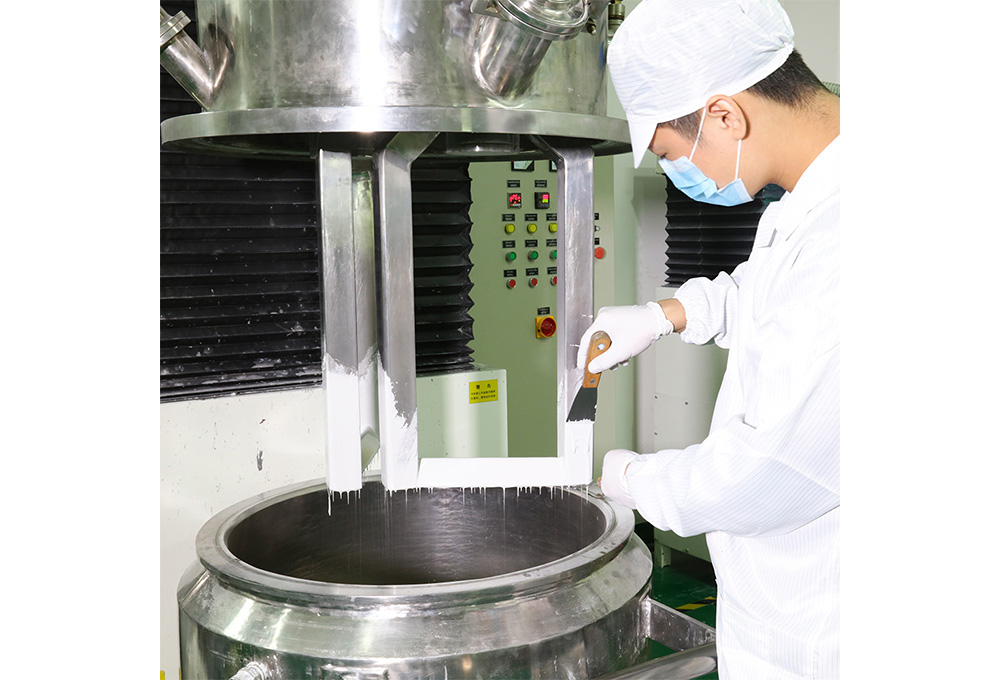
In professional thermal management projects, material consistency and predictable performance are essential. The ITOSUEN TS-AD90 Thermally Conductive Paste is engineered to meet demanding thermal and reliability requirements across a wide range of CPU platforms.
Key performance characteristics include:
- High thermal conductivity: Enhances heat transfer efficiency across the interface.
- Low thermal resistance: Reduces temperature gradient between CPU and heat sink.
- Excellent long-term stability: Maintains performance under thermal cycling and continuous operation.
- Non-conductive formulation: Improves electrical safety and system reliability.
For engineers evaluating thermal paste for cpu in performance-driven designs, TS-AD90 offers balanced rheology, strong adhesion behavior, and reliable thermal consistency. It integrates seamlessly into both manual assembly and automated dispensing environments.
Detailed specifications and application guidance are available at:
https://www.itousen.com/products/tsad90-thermally-conductive-paste.html

In comparative evaluations, TS-AD90 demonstrates stable interface impedance, making it a practical alternative to conventional processor thermal compound solutions used in demanding thermal architectures.
7. Engineering Case Example
In a high-density computing platform operating under sustained workloads, TS-AD90 was deployed as the primary processor thermal grease. Thermal measurements were conducted over extended operating cycles using calibrated sensors and controlled airflow conditions.
Compared with baseline materials, the system achieved:
- Average CPU temperature reduction of approximately 6–10°C.
- Improved thermal consistency during peak utilization.
- Reduced frequency throttling events under continuous load.
These results highlight the tangible impact that a high-quality thermal paste for cpu can deliver when integrated correctly into system design.
8. Conclusion: The Strategic Role of Thermal Interface Materials
Thermal interface materials should be treated as functional engineering components rather than consumables. A reliable processor thermal compound and well-formulated processor thermal grease directly influence performance margins, stability, and long-term operational safety.
As processor power density continues to rise, the importance of selecting a validated thermal paste for cpu becomes even more critical. Engineering teams benefit from solutions that combine measurable performance, material stability, and manufacturing compatibility.
By applying structured evaluation methods and leveraging proven products such as ITOSUEN TS-AD90, system designers can build thermally resilient platforms that meet both present and future performance demands.
How Much Thermal Paste on CPU for Optimal Cooling Performance
Best Buy Thermal Paste Guide | Best Thermal Compound for Heatsink
Related Article