
Pad Thermal Solutions for CPU and Graphics Card Thermal Management
Engineering Insight: The Role of Pad Thermal Solutions in Modern Electronic Thermal Management
As electronic systems continue to evolve toward higher power density, smaller form factors, and greater computational capability, thermal management has become a defining factor in overall system reliability and performance. From an engineering perspective, effective heat dissipation is no longer an auxiliary consideration—it is a core design requirement. Among various thermal interface materials, pad thermal solutions play a critical role in bridging the gap between heat-generating components and heat-dissipating structures.
This article provides a technically objective and application-oriented discussion of pad thermal materials, with particular focus on cpu thermal pad and graphics card thermal pads. The analysis is based on engineering practice, thermal theory, and long-term reliability considerations, while seamlessly integrating high-performance product solutions suitable for demanding applications.
Understanding Pad Thermal Materials from an Engineering Perspective
A pad thermal material is a compliant thermal interface designed to enhance heat transfer between two solid surfaces. In real-world assemblies, perfectly flat and fully contacting interfaces are practically impossible due to surface roughness, component tolerances, and assembly constraints. These microscopic air gaps significantly increase thermal resistance, as air has extremely poor thermal conductivity.
By conforming to surface irregularities, a pad thermal solution displaces air and establishes a continuous heat conduction path. From a thermal resistance network standpoint, this reduces interface resistance and improves overall heat flow from the heat source to the heat sink or chassis.
In engineering applications, pad thermal materials are commonly preferred over liquid thermal compounds when gap filling, electrical insulation, mechanical compliance, and long-term stability are required simultaneously.
CPU Thermal Management and the Function of a CPU Thermal Pad
Central Processing Units (CPUs) represent one of the highest heat-flux components in modern electronic systems. Whether in desktop computers, servers, or embedded platforms, CPUs generate concentrated thermal loads that must be efficiently transferred away to maintain safe junction temperatures.
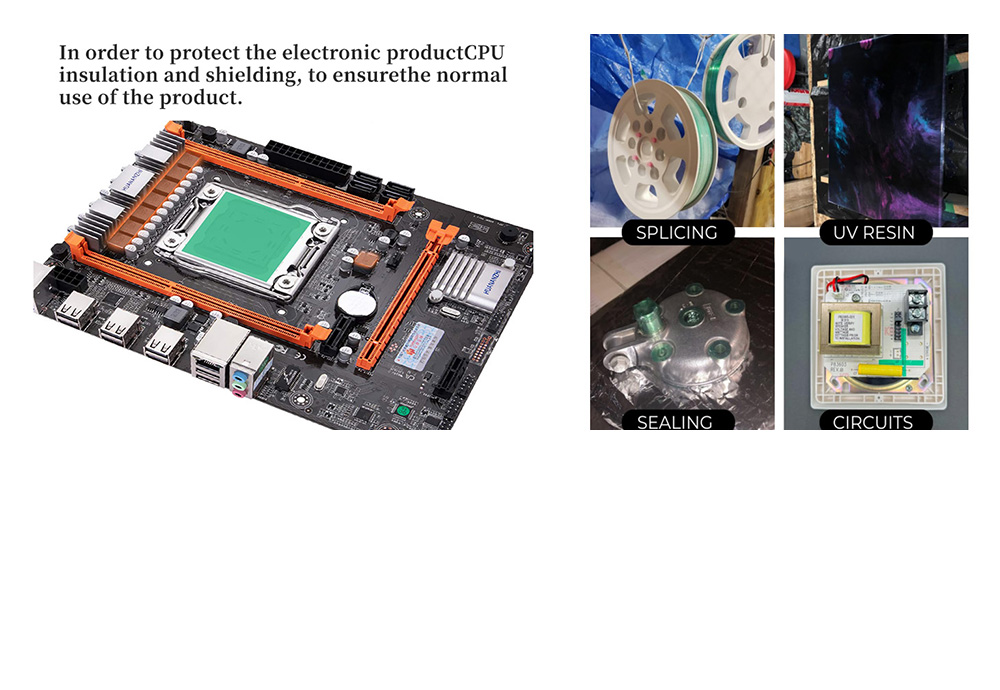
A cpu thermal pad serves as the interface between the CPU package (or integrated heat spreader) and the cooling solution, such as an air-cooled heatsink or liquid cooling cold plate. From an engineering standpoint, the effectiveness of this interface directly impacts thermal throttling behavior, clock stability, and component lifespan.
When selecting a cpu thermal pad, engineers typically evaluate several key parameters:
- Thermal conductivity and bulk thermal resistance
- Compression behavior and recovery characteristics
- Long-term thermal cycling reliability
- Electrical insulation and material compatibility
A well-designed cpu thermal pad must balance high thermal conductivity with sufficient softness to accommodate surface unevenness, while maintaining structural integrity under continuous mechanical load.
Graphics Card Thermal Pads: Managing Complex and Distributed Heat Sources
Unlike CPUs, graphics cards present a more complex thermal environment. In addition to the GPU core, heat is generated by memory modules, voltage regulation components, and power delivery circuits. These elements often reside at different heights and locations, making uniform thermal contact challenging.
Graphics card thermal pads are engineered to address this complexity by filling variable gaps and ensuring consistent thermal coupling across multiple components. From a thermal design perspective, these pads help reduce localized hot spots and improve overall temperature balance across the graphics card assembly.
In high-performance graphics cards, especially those used for gaming, professional rendering, or AI acceleration, graphics card thermal pads contribute significantly to maintaining stable operating temperatures under sustained workloads.
Engineers evaluating graphics card thermal pads must consider:
- Pad thickness accuracy to match component stack-up tolerances
- Thermal conductivity consistency across the pad surface
- Mechanical compliance to avoid component stress
- Resistance to pump-out and material degradation
Engineering Best Practices in Pad Thermal Application
The performance of any pad thermal solution is not solely determined by material properties; correct application is equally critical. In engineering practice, several factors are consistently observed to influence thermal results.
Surface Preparation
Prior to installing a pad thermal material, all contact surfaces should be free of dust, oil, and residues. Even minor contaminants can introduce thermal barriers that negate the benefits of a high-performance pad thermal solution.
Controlled Compression
Pad thermal materials are designed to operate within a specific compression range. Excessive compression may damage internal filler structures, while insufficient compression can result in incomplete surface contact. Finite element analysis and validation testing are often employed to determine optimal compression forces in critical designs.
Multi-Component Thermal Optimization
In systems utilizing both cpu thermal pad and graphics card thermal pads, coordinated thermal design is essential. Engineers must evaluate heat flow paths holistically rather than optimizing individual interfaces in isolation.
High-Performance Pad Thermal Solutions for Demanding Applications
For applications requiring reliable thermal performance under continuous or high-load conditions, material quality and manufacturing consistency become decisive factors. High-performance pad thermal solutions are engineered to provide stable thermal conductivity, controlled compressibility, and long-term durability.
A representative example of such a solution can be found here:
High-Performance Thermal Pad Solution

These pad thermal products are designed to support a wide range of applications, including cpu thermal pad usage in high-performance computing systems and graphics card thermal pads for advanced GPU assemblies. Their material formulation and dimensional stability make them suitable for both consumer electronics and industrial-grade equipment.
Conclusion: Pad Thermal Materials as a Foundation of Reliable Thermal Design
From an engineering standpoint, thermal management is a system-level discipline that demands careful material selection, mechanical design, and validation testing. Pad thermal solutions, including specialized cpu thermal pad and graphics card thermal pads, form an essential part of this framework.
When properly selected and applied, these materials significantly reduce interface thermal resistance, stabilize operating temperatures, and extend component service life. As electronic systems continue to push performance boundaries, the importance of robust and well-engineered pad thermal solutions will only increase.
For engineers and system designers seeking dependable thermal interface materials, high-quality pad thermal products offer a practical and proven path toward achieving thermal reliability without compromising mechanical or electrical safety.
Engineering Guide to SSD Thermal Pad, Thermal Gap Pad & CPU
GPU Thermal Pads for High-Performance Computing Systems
Related Article