Optical Module Thermal Management and Thermal Interface Materials
Optical Module Thermal Management and the Role of Thermal Interface Materials
As optical communication systems move toward higher bandwidth and greater port density, optical modules are operating under increasingly demanding thermal conditions. From 400G and 800G transceivers to emerging 1.6T architectures, higher data throughput is often accompanied by increased power density inside a compact package. In this environment, effective thermal management is no longer simply a matter of selecting a heat sink. The complete thermal path, including the interface between the optical module and cooling structure, must be carefully designed.
For engineers developing optical transceivers, data center networking equipment and telecom systems, the selection of a suitable thermal paste, thermal grease or thermal gels can directly influence interface thermal resistance, temperature stability, assembly consistency and long-term reliability.
Why Thermal Management Is Critical for Optical Modules
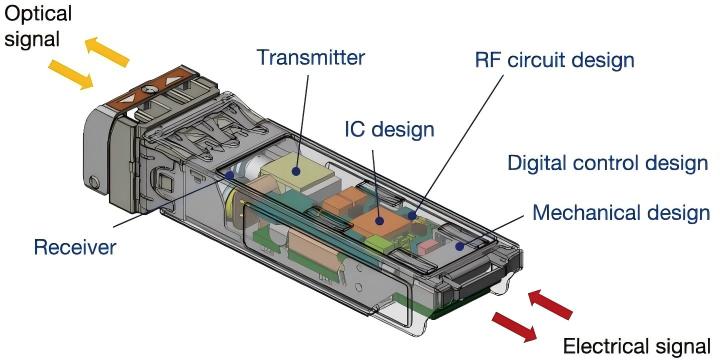
An optical transceiver integrates several heat-generating components within a relatively limited volume. Depending on the architecture, heat may be generated by the DSP, laser driver, optical engine, TIA, CDR and other active electronic components. As module power increases, localized hot spots can become more difficult to control.
The thermal path normally involves heat transfer from the internal semiconductor or optoelectronic component to a package or heat spreader, followed by transfer through a thermal interface material and finally into a heat sink, chassis or other cooling structure.
From an engineering perspective, the interface itself should not be overlooked. Even when the heat sink has high thermal conductivity, microscopic surface roughness and dimensional tolerances can leave air gaps between mating surfaces. Air is a poor thermal conductor, so these gaps can significantly increase thermal resistance. A properly selected thermal paste or thermal grease can fill microscopic surface irregularities and improve the effective contact between the heat source and heat dissipation structure.
Thermal Paste and Thermal Grease in Optical Module Cooling
In optical module thermal design, thermal paste and thermal grease are generally considered when the interface requires a thin and conformable thermal layer. Unlike rigid interface materials, these materials can flow into surface imperfections and reduce interfacial air gaps.
However, high thermal conductivity alone should not be used as the sole selection criterion. Engineers should also consider bond line thickness, viscosity, dispensing or printing characteristics, interface pressure, thermal cycling, oil separation, evaporation and long-term mechanical stability.
A material with extremely high bulk thermal conductivity may not provide the expected system-level improvement if it cannot achieve a sufficiently thin and uniform interface. In practical optical module assemblies, controlling the actual interface thickness can be just as important as the nominal thermal conductivity of the material.
Thermal gels are another option when the interface contains relatively large or variable gaps. Compared with conventional thermal paste or thermal grease, thermal gels can provide greater compliance and conformability in certain applications. However, engineers must evaluate dispensing volume, gap geometry, curing behavior where applicable, material stability and potential migration before selecting thermal gels for an optical module.
Key Parameters When Selecting Thermal Interface Materials
For optical transceiver applications, a practical material evaluation should include more than the thermal conductivity value shown on a datasheet. The following parameters deserve particular attention:
- Thermal conductivity: Determines the material's ability to conduct heat through its bulk.
- Interfacial thermal resistance: Indicates how effectively the material reduces resistance at the mating surfaces.
- Bond line thickness: A thinner and well-controlled interface can reduce the thermal path length.
- Viscosity and rheology: Important for automated dispensing, screen printing and controlled material application.
- Thixotropy: Helps maintain the applied geometry and reduce unwanted slump after dispensing or printing.
- Oil separation and evaporation: Important for long-term reliability, especially in compact electronic assemblies.
- Electrical insulation: Should be evaluated when the material is applied near electrical contacts or conductive structures.
- Thermal cycling stability: The interface should remain stable as the module repeatedly experiences temperature changes.
TSAS50 Thermal Paste for Thin Optical Module Interfaces
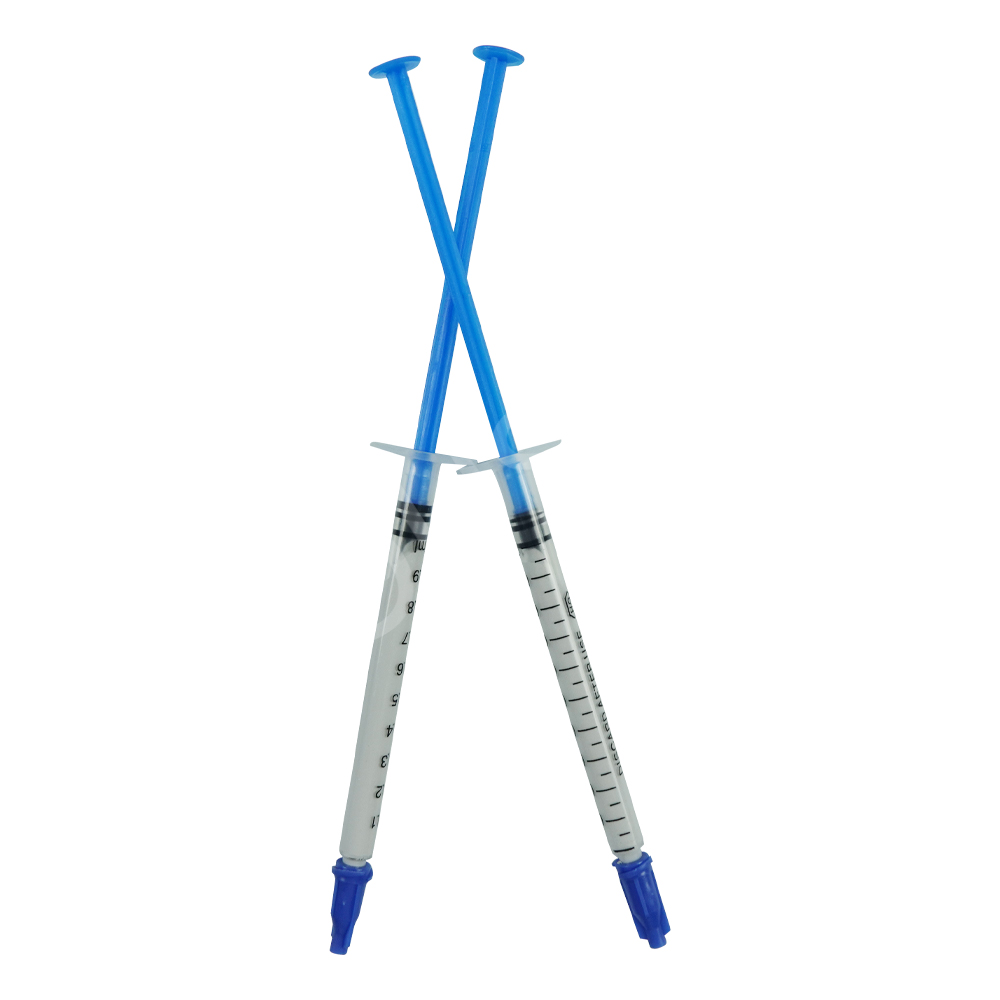
When an optical module design requires a thin, conformable and process-friendly thermal interface, a material such as TOUSEN TSAS50 can be considered as part of the thermal design. TSAS50 is a one-component, non-curing thermally conductive compound based on a silicone matrix and thermally conductive fillers. Its formulation is designed to provide stable thermal contact between an electronic assembly and a heat sink or chassis.
According to the manufacturer's published specifications, TSAS50 provides a thermal conductivity of 7.0 W/m·K and a thermal resistance coefficient of 0.025 °C·cm²/W at 60 psi. Its viscosity is approximately 120 Pa·s at 22°C, with a specific gravity of 2.9 g/cm³.
From a manufacturing perspective, TSAS50 also has several characteristics that may be relevant to optical module thermal-interface applications. It is a gray, thixotropic, non-curing material, requires no curing process, and is formulated without solvent. The product is also designed for screen printing and can achieve a thin bond line thickness. These characteristics can be useful when the thermal interface must be controlled consistently during volume production.
Another consideration is material stability. The published data for TSAS50 indicates an oil separation rate below 0.01% after testing at 200°C for 96 hours, while liquid evaporation loss is listed at 0.13% after 96 hours at 120°C. These figures should still be verified under the customer's actual module structure, operating temperature and reliability test conditions rather than treated as a direct prediction of system lifetime.
How Engineers Should Evaluate Thermal Paste for Optical Modules
In practical engineering projects, the selection process should begin with the actual thermal path rather than with a material datasheet. First, identify the main heat sources and estimate their power dissipation. Second, determine where the dominant thermal resistance exists. Third, evaluate the physical gap, surface flatness and available assembly pressure at each interface.
If the mating surfaces are relatively flat and require a very thin interface, thermal paste or thermal grease may be appropriate. If the interface has larger dimensional tolerances or uneven surfaces, thermal gels or other gap-filling materials may provide better mechanical conformity.
Engineers should then validate the selected material through actual thermal testing. Junction or case temperature, heat sink temperature, interface thickness, contact pressure and temperature rise should be measured under representative operating conditions. Thermal cycling and aging tests are also important because an interface that performs well during initial testing may behave differently after repeated heating and cooling.
Thermal Management Should Be Designed as a System
For next-generation optical modules, thermal performance cannot be optimized by looking at thermal conductivity alone. Heat source distribution, package construction, heat spreading, interface resistance, heat sink capacity and airflow must be considered as a complete system.
The role of thermal paste, thermal grease and thermal gels is therefore to support the entire thermal path rather than act as an isolated solution. The right material is the one that matches the actual interface geometry, assembly process and reliability requirements.
For applications requiring a thin, non-curing and process-compatible thermal interface, TSAS50 Thermal Grease provides one practical option for engineering evaluation. Its 7.0 W/m·K thermal conductivity, low thermal resistance coefficient, thixotropic behavior and screen-printable formulation make it suitable for consideration in high-performance electronic thermal-management designs.
More importantly, material selection should always be validated against the customer's actual optical module structure, heat load, interface pressure and environmental conditions. This engineering approach helps avoid simply choosing a material based on the highest conductivity number and instead focuses on achieving stable, repeatable and reliable system-level thermal performance.
Optical Module Thermal Management for High Density AI Computing
Thermal Management for Optical Modules in the AI Token Era
Related Article