Thermal Management for Optical Modules in the AI Token Era
Thermal Management for Optical Modules in the AI Token Era
The rapid adoption of generative AI and large language models is driving a significant increase in data processing requirements across modern data centers. As AI workloads generate more tokens and run for longer periods, GPUs, AI accelerators, networking switches, and high-speed optical modules are operating under increasingly demanding thermal conditions.
Optical modules are particularly important in this environment because they provide the high-speed optical interconnects required for communication between servers, switches, and computing clusters. As data rates move toward 800G, 1.6T, and beyond, thermal management becomes an increasingly important part of optical module design. Engineers must consider not only device power consumption, but also heat transfer paths, interface resistance, package geometry, assembly pressure, and long-term material stability.
In this context, thermal paste, thermal grease, and other thermal interface materials can play an important role in improving heat transfer between heat-generating components and external cooling structures.
Why Increasing AI Token Workloads Put More Pressure on Optical Module Thermal Management
Token generation itself does not directly create heat. The thermal challenge comes from the computing and networking infrastructure required to process increasing AI workloads. Training and inference operations can keep AI accelerators and networking equipment under sustained high utilization, increasing both total system power and localized heat density.
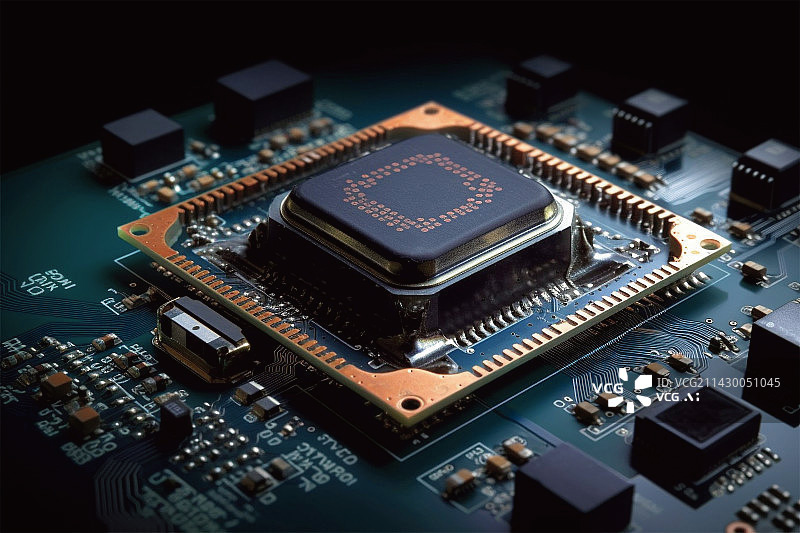
Optical modules form a critical part of this high-bandwidth communication architecture. Inside a typical high-speed optical module, components such as the DSP, laser driver, TIA, and optical transceiver elements can contribute to the overall thermal load. When these components operate in a compact package, localized hot spots may develop if heat cannot be efficiently transferred away from the source.
Excessive component temperature can affect electrical characteristics, optical performance, reliability, and system stability. For this reason, optical module thermal design should be considered as a complete heat-transfer system rather than simply a choice of a high-conductivity material.
The Role of Thermal Paste and Thermal Grease in Optical Module Cooling
Even highly finished metal surfaces contain microscopic irregularities. When two solid surfaces are brought together, small air gaps can remain at the interface. Because air has relatively low thermal conductivity, these gaps can significantly increase the effective thermal resistance of the interface.
A properly selected thermal paste or thermal grease fills these microscopic gaps and improves contact between the heat source and the cooling structure. The objective is not to replace the heat sink or housing, but to create a more efficient thermal path between the two surfaces.
For optical modules, however, simply selecting the material with the highest advertised thermal conductivity is not always the best engineering approach. The actual thermal performance depends on several factors, including bond line thickness, interface pressure, surface condition, material rheology, application method, and operating temperature.
A material that performs well in a laboratory thermal conductivity test may not necessarily provide the same performance in a production optical module. Engineers should therefore evaluate the complete interface rather than relying on a single material specification.
Thermal Paste vs Thermal Grease vs Thermal Gels
Different thermal interface materials are designed for different application requirements. Thermal paste and thermal grease are commonly used where a thin, conformable thermal interface is required between components and cooling surfaces.
Thermal gels, on the other hand, are often considered when larger surface variations, component tolerances, or compliant gap-filling characteristics need to be accommodated. Their soft and conformable nature can be advantageous in applications where mechanical compliance is as important as thermal transfer.
The selection between thermal paste, thermal grease, and thermal gels should therefore be based on the actual mechanical and thermal requirements of the assembly. Important considerations include interface thickness, component geometry, compression force, dispensing or printing process, operating temperature, and long-term reliability.
For compact optical modules with relatively small interface gaps, a thermally conductive paste with controlled rheological behavior may provide advantages during both application and operation. In larger or more tolerance-sensitive interfaces, thermal gels may offer a more suitable solution.
TSAS50 Thermal Paste for High Performance Electronic Cooling
For engineers evaluating a thermal paste for optical communication equipment and other high-power electronic assemblies, TOUSEN TSAS50 provides a practical material option for further qualification.
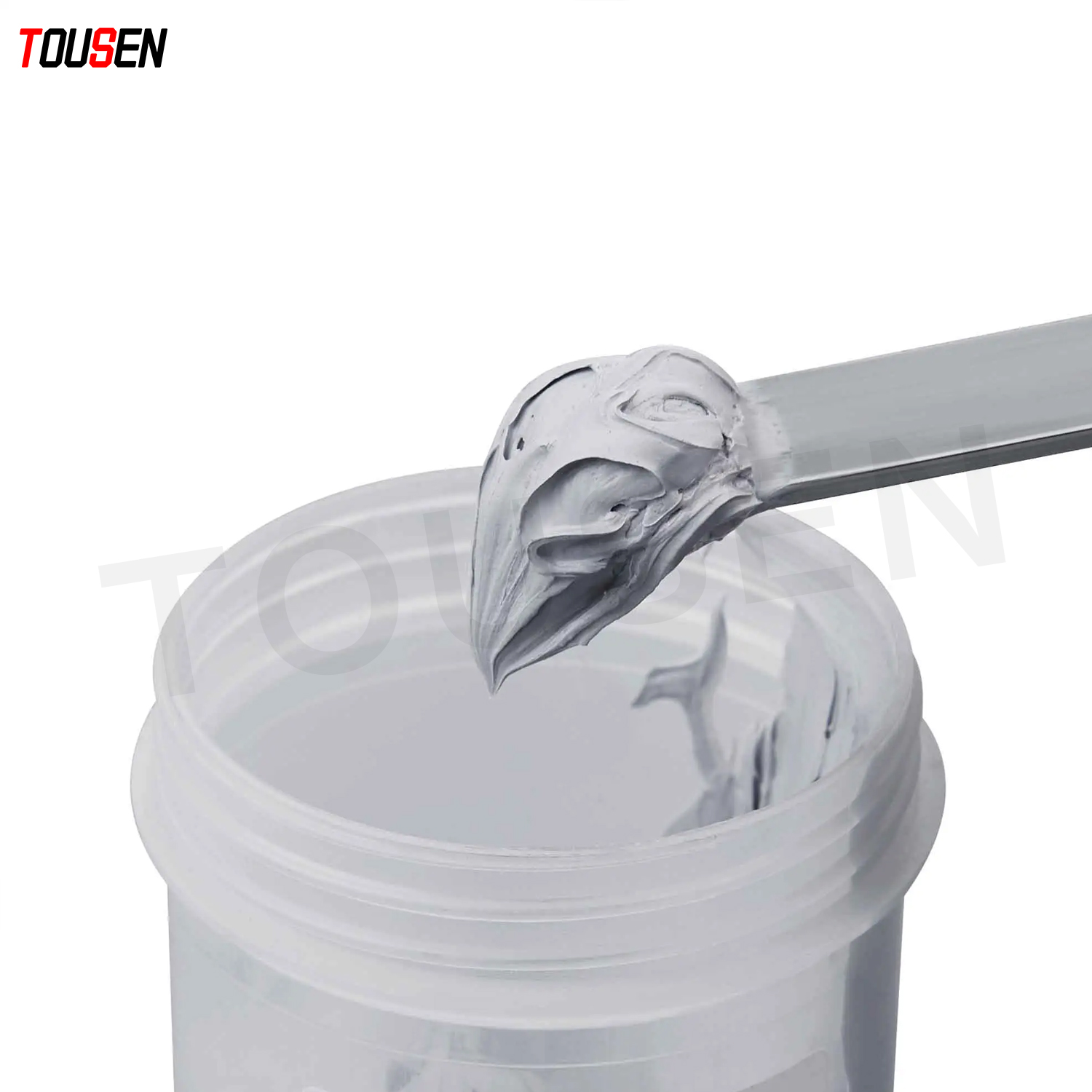
TSAS50 is a single-component, non-curing thermally conductive silicone material designed to improve heat transfer between electronic components and cooling structures. According to the manufacturer's published specifications, TSAS50 provides a thermal conductivity of 7.0 W/m·K and a thermal resistance coefficient of approximately 0.025 °C·cm²/W at 60 psi.
The material is supplied as a gray compound with a specific gravity of approximately 2.9 g/cm³ and a viscosity of approximately 120 Pa·s at 22°C. Its thixotropic behavior helps maintain the applied material in the intended area and can be beneficial where controlled application and reduced slump are required.
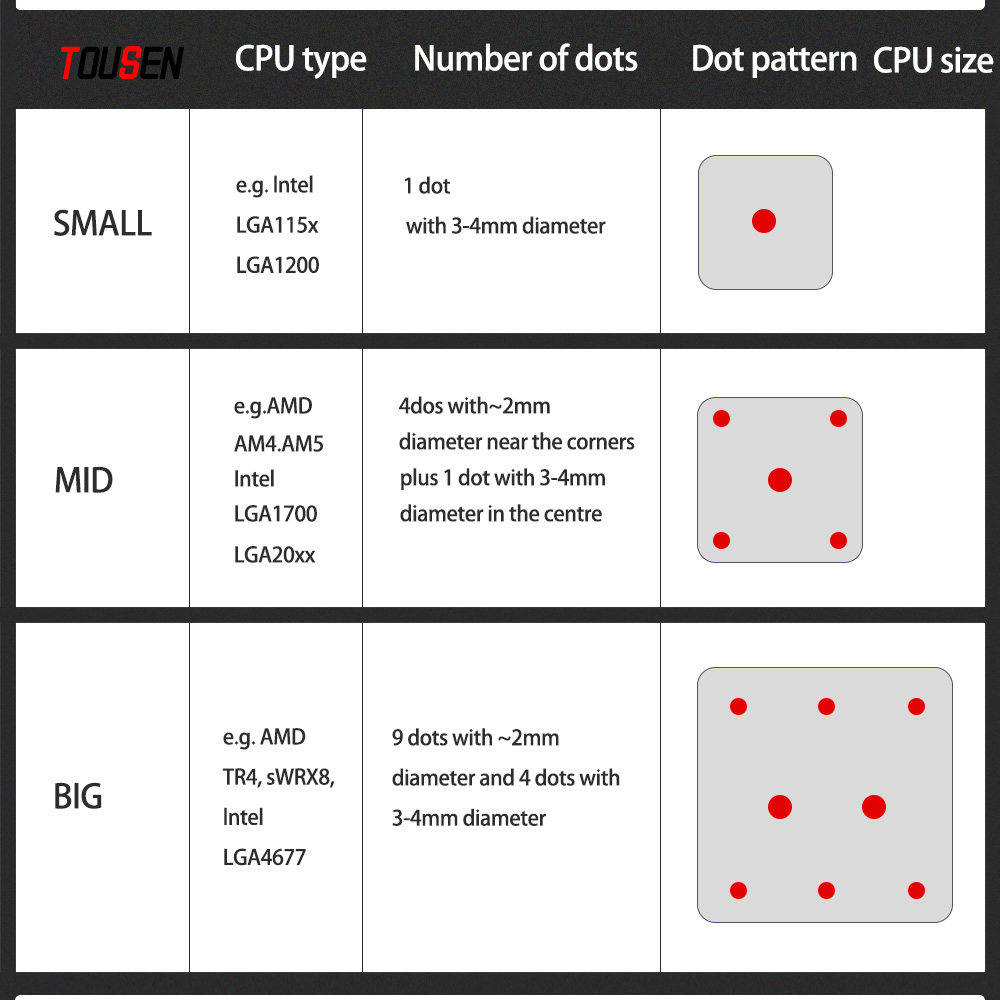
TSAS50 is also formulated as a solvent-free, non-curing material and can be evaluated for screen-printing processes. These characteristics make it relevant to manufacturing environments where thermal performance must be considered together with process control and production consistency.
For optical module applications, the actual suitability of TSAS50 should be determined through engineering validation. Factors such as heat source power, interface area, bond line thickness, compression pressure, housing material, operating temperature, and assembly process should all be included in the evaluation.
Learn more about TSAS50 thermal paste
Key Engineering Factors When Selecting a Thermal Interface Material
From an engineering perspective, selecting a thermal interface material for high-speed optical modules requires a balanced evaluation rather than focusing on one specification. The following factors should be considered during material selection and qualification.
1. Thermal Resistance
Thermal conductivity is important, but the final thermal path is also strongly influenced by interface thickness and contact resistance. A lower-resistance interface can provide more effective heat transfer even when two materials have similar bulk conductivity.
2. Rheological Behavior
The viscosity and thixotropic characteristics of a thermal paste or thermal grease directly affect dispensing, printing, spreading, and final interface thickness. These properties should be matched to the manufacturing process.
3. Interface Stability
Optical modules are precision electronic assemblies. Excessive oil separation, material migration, or volatile components can create reliability concerns. Long-term stability should therefore be included in qualification testing.
4. Mechanical Compatibility
The material must work with the mechanical structure of the optical module. Compression force, surface roughness, component tolerances, and thermal expansion can all influence the actual performance of the interface.
5. Manufacturing Compatibility
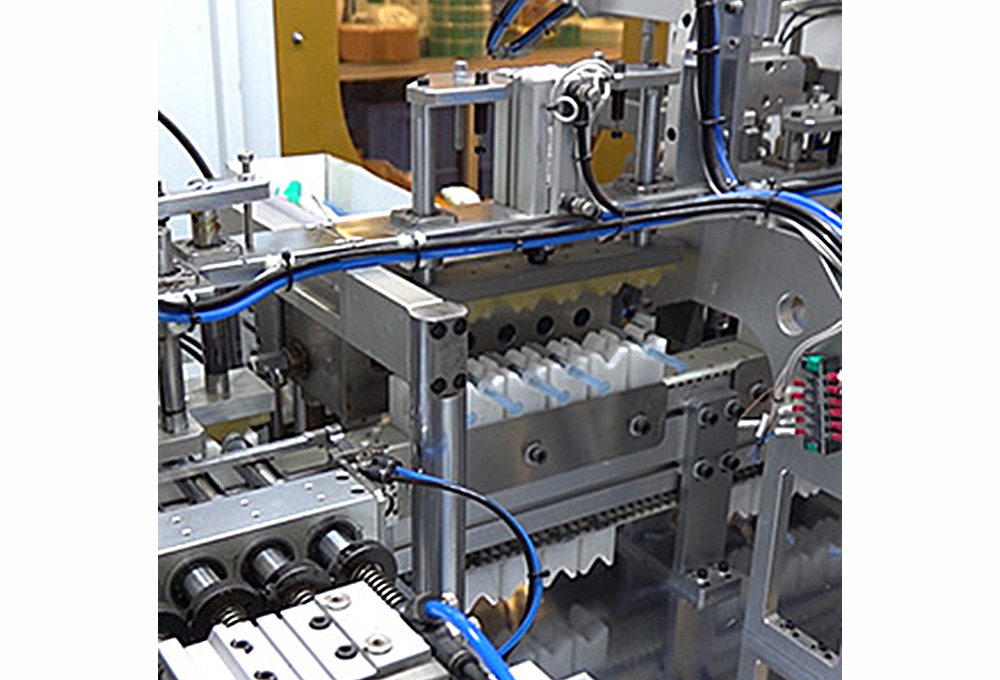
A technically suitable thermal material must also be compatible with the production process. Dispensing, stencil printing, screen printing, automated assembly, and manual application can impose different viscosity and flow requirements.
Thermal Management Is Becoming a System-Level Requirement
As AI infrastructure continues to evolve, the thermal requirements of optical communication systems will increasingly be determined by the interaction between computing power, network bandwidth, package density, and cooling architecture.
The growth of AI Token processing is therefore indirectly increasing the importance of efficient thermal management throughout the data center. Optical modules, networking equipment, AI accelerators, and power electronics all require carefully engineered thermal paths to maintain stable operation under sustained workloads.
In this environment, thermal paste, thermal grease, and thermal gels should be viewed as engineering materials rather than interchangeable commodities. The right solution depends on the interface geometry, thermal load, manufacturing process, mechanical constraints, and reliability requirements of the application.
Conclusion
The continued growth of AI workloads and Token processing is creating new thermal challenges for data center infrastructure. As optical module speeds increase and package dimensions remain highly constrained, effective interface-level heat transfer becomes increasingly important.
From an engineering standpoint, the most appropriate thermal interface material is not necessarily the material with the highest nominal thermal conductivity. Engineers should evaluate thermal resistance, bond line thickness, rheology, mechanical compatibility, application process, and long-term reliability as an integrated system.
With a published thermal conductivity of 7.0 W/m·K, a thermal resistance coefficient of approximately 0.025 °C·cm²/W at 60 psi, single-component non-curing chemistry, and thixotropic processing characteristics, TSAS50 can be considered as a candidate thermal paste for optical modules and other high-performance electronic cooling applications, subject to application-specific testing and qualification.
For engineers developing 800G or 1.6T optical modules, AI servers, high-speed switches, or other high-power electronic systems, selecting the right thermal paste, thermal grease, or thermal interface material should ultimately be based on measured thermal performance and reliability under the actual operating conditions.
Optical Module Thermal Management Material Selection Guide
Related Article