Thermal Pad Solutions for Home Appliances-Engineering Insight
Thermal Pads in Home Appliances: An Engineer’s Perspective on Reliable Thermal Management
As home appliances continue to evolve toward higher power density, smarter control systems, and compact internal layouts, thermal management has become a defining factor in product reliability and lifecycle performance. From inverter air conditioners to induction cooktops and intelligent washing machines, excessive heat is no longer a secondary concern—it is a primary engineering constraint.
From an engineer’s standpoint, the discussion around thermal pad selection, system-level heat transfer efficiency, and long-term stability is not about marketing claims, but about measurable performance, manufacturability, and consistency. This article provides an objective, technically grounded overview of thermal pads and pad thermal material solutions as applied in modern home appliance design.
1. Thermal Challenges in Modern Home Appliances
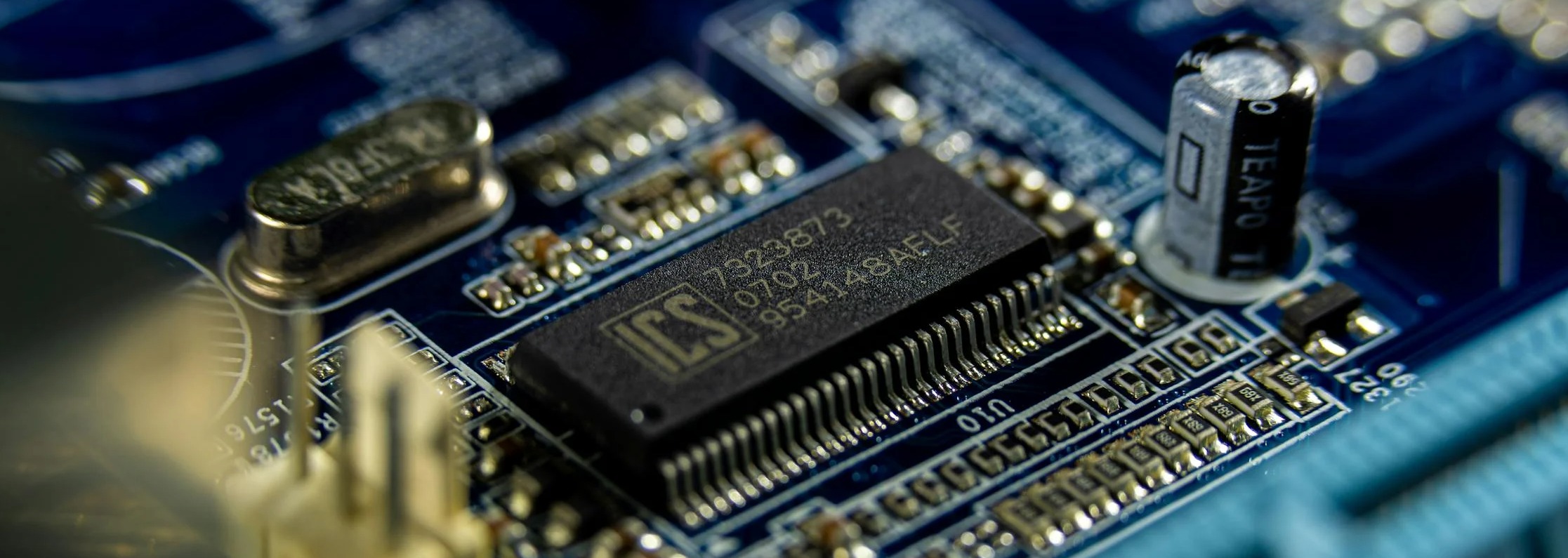
The increasing adoption of power electronics, high-frequency switching devices, and compact PCB assemblies has significantly increased localized heat generation inside household appliances. Typical high-risk components include:
- Power MOSFETs and IGBTs in inverter modules
- Motor drive control boards
- High-current power supplies and converters
- Main control processors with continuous thermal load
Without an optimized thermal path, excessive junction temperatures can result in performance drift, accelerated material aging, reduced service life, and in extreme cases, safety concerns. Effective heat transfer from the heat source to the cooling structure is therefore a fundamental design requirement.
2. Why Thermal Interface Materials Matter
Even when two solid surfaces appear flat, microscopic air gaps are always present at the interface. Air is a poor thermal conductor, and these gaps significantly increase contact thermal resistance. Thermal interface materials (TIMs) are designed to eliminate these air gaps and improve heat conduction across mating surfaces.
Common TIM options include thermal grease, phase-change materials, gap fillers, and solid thermal pads. Among these, thermal pads have gained increasing adoption in home appliance manufacturing due to their stability and process advantages.
3. Understanding Thermal Pads and Pad Thermal Material
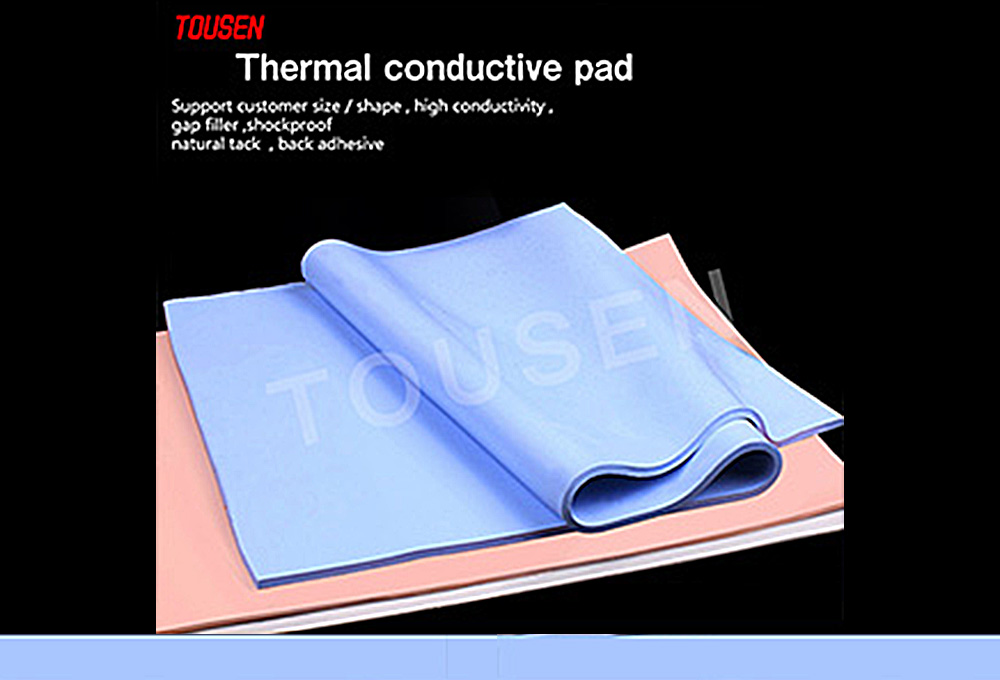
A thermal pad is a solid, elastomer-based thermal interface material typically composed of silicone or polymer matrices filled with thermally conductive particles. Unlike thermal grease, thermal pads maintain a defined thickness and shape, making them suitable for applications with known gap tolerances.
In engineering documentation and procurement discussions, the term thermal pads often refers to multi-point or multi-component thermal interface applications across a system. Meanwhile, pad thermal material is commonly used to emphasize the material composition, thermal conductivity, and mechanical characteristics required for a specific design.
From a system design perspective, these terms describe the same functional objective: reducing interface thermal resistance while maintaining mechanical reliability.
4. Advantages of Thermal Pads in Home Appliance Applications
Compared with traditional thermal grease, thermal pads offer several advantages that align well with large-scale appliance manufacturing:
- Consistent thickness control, enabling predictable thermal performance
- Clean assembly with no risk of pump-out or contamination
- Compatibility with automated production processes
- Mechanical compliance to accommodate vibration and tolerance variation
- Electrical insulation when required by the design
These characteristics make thermal pads especially suitable for inverter control boards, power modules, and enclosure-based heat spreading structures commonly found in modern home appliances.
5. Key Selection Criteria for Thermal Pads
Selecting the appropriate thermal pad is a multi-parameter engineering decision. The following factors should be evaluated together rather than in isolation:
Thermal Conductivity
Measured in W/m·K, higher thermal conductivity generally improves heat transfer. However, excessively stiff high-conductivity materials may reduce surface contact if not properly matched to the application.
Thickness and Compressibility
The pad must fully bridge the interface gap under assembly pressure. Compressibility ensures intimate contact with uneven surfaces while maintaining structural integrity.
Mechanical Properties
Shore hardness, elasticity, and recovery behavior directly impact long-term reliability, particularly under thermal cycling conditions.
Electrical Insulation
Many home appliance designs require electrical isolation between live components and grounded heat sinks, making insulation performance a critical requirement.
Environmental Reliability
Resistance to thermal aging, humidity, and long-term compression set must be validated through testing.
6. Practical Engineering Example: Inverter Control Board Optimization
In a recent inverter air-conditioning project, the original design utilized thermal grease between power devices and an aluminum heat spreader. During extended thermal cycling tests, inconsistent thermal resistance and material migration were observed.
The engineering team transitioned to a pad thermal material solution with controlled thickness and matched compressibility. After implementation, the system demonstrated:
- More stable device junction temperatures
- Improved repeatability across production batches
- Cleaner assembly and reduced rework
This case highlights how well-selected thermal pads can improve both thermal performance and manufacturing efficiency.
For engineers evaluating similar solutions, a wide range of industrial-grade thermal pads is available at:
https://www.itousen.com/TIM-thermal-pads.html

7. Thermal Pads vs. Thermal Grease: An Objective Comparison
| Parameter | Thermal Grease | Thermal Pads / Pad Thermal Material |
|---|---|---|
| Assembly cleanliness | Moderate risk of contamination | Clean and controlled |
| Thickness control | Inconsistent | Highly consistent |
| Automation compatibility | Limited | Excellent |
| Long-term stability | Potential pump-out | Stable under cycling |
8. Conclusion: Thermal Design as a System-Level Discipline
In home appliance engineering, thermal management is not a single-component decision but a system-level discipline that influences reliability, safety, and customer satisfaction. The appropriate use of thermal pad and thermal pads—supported by well-engineered pad thermal material—enables designers to achieve consistent thermal performance while meeting manufacturing and cost targets.
By approaching thermal interface selection with objective analysis, testing validation, and supplier collaboration, engineers can significantly enhance product robustness in increasingly demanding operating environments.
To explore engineered thermal pad solutions designed for home appliance applications, visit:
https://www.itousen.com/TIM-thermal-pads.html
Silicone Foam Solutions for EV Battery Pack Engineering
Thermal Pad Solutions for EV Charging Stations-Engineering View
Related Article