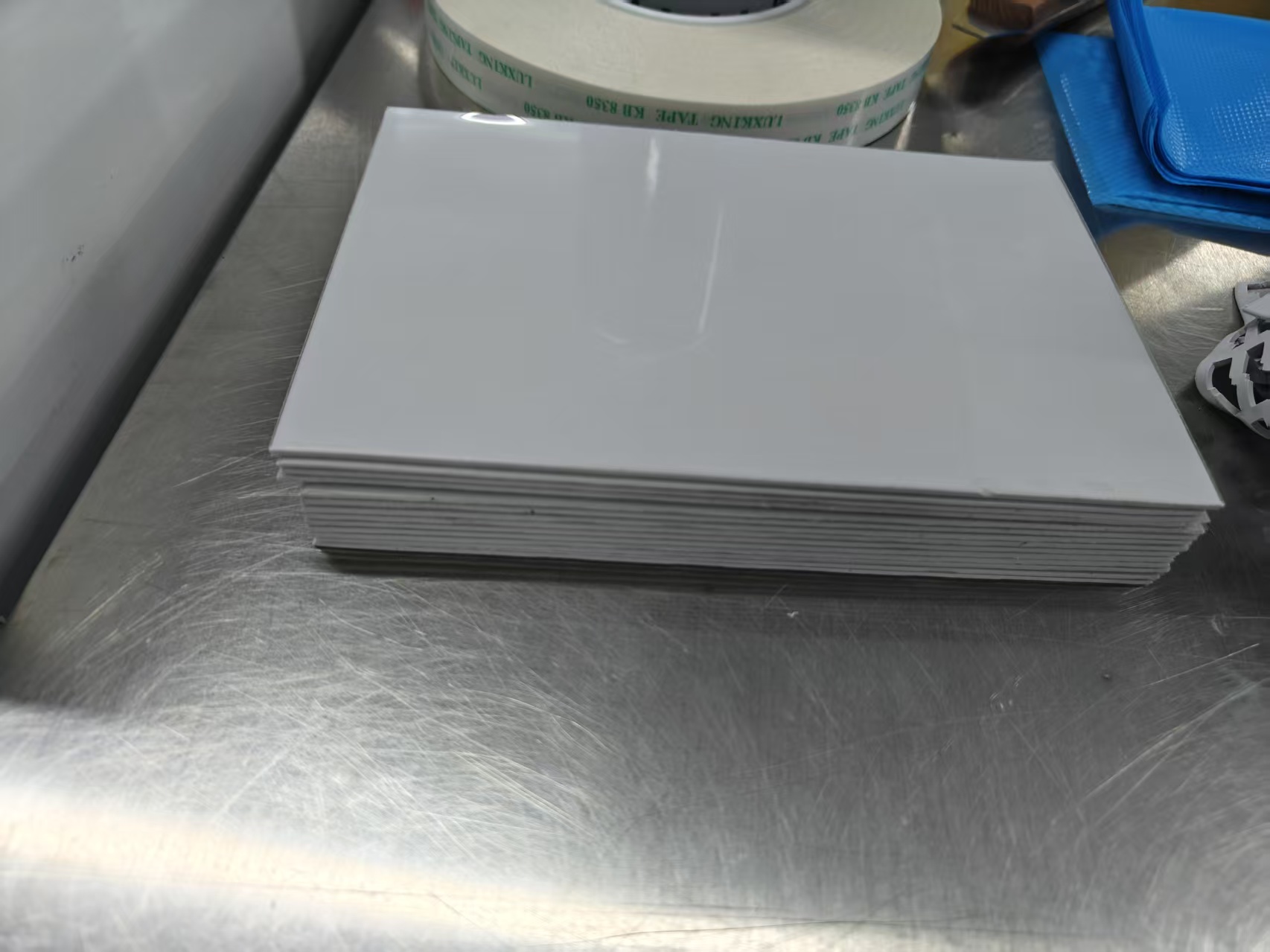
Thermal Pad Solutions for Tablet Computer Cooling

Thermal Pad Solutions for Reliable Tablet Computer Thermal Management
Tablet computers have evolved into high-performance mobile platforms for business applications, digital learning, entertainment, industrial control, and AI-assisted computing. As processors become more powerful and internal components become more densely integrated, thermal management presents an increasingly important engineering challenge. A properly selected thermal pad can improve heat transfer between electronic components and heat-spreading structures while accommodating the mechanical constraints of a slim enclosure.
For engineers developing tablets, selecting a suitable thermal interface material is not simply a matter of choosing the highest thermal conductivity. The material must also match the interface gap, assembly pressure, electrical insulation requirements, operating temperature, and long-term reliability targets. Understanding these factors helps manufacturers develop a practical pad thermal solution that balances cooling performance, mechanical protection, and production consistency.
1. Why Thermal Management Matters in Tablet Computers
Unlike desktop computers, tablet devices have limited internal space for fans, heat sinks, and large air channels. Their thin housings also restrict natural convection and reduce the available area for heat dissipation. Meanwhile, the system-on-chip (SoC), CPU, GPU, memory, power management integrated circuits, and wireless communication modules can generate concentrated heat during demanding workloads.
When heat cannot be transferred efficiently away from these components, several problems may occur. Processor temperatures may rise, sustained performance may be reduced by thermal throttling, battery aging may accelerate under unfavorable thermal conditions, and the enclosure may become uncomfortable to hold. Uneven temperature distribution can also create additional challenges for mechanical design and user experience.
A thermal pad helps establish a predictable thermal pathway between a heat-generating component and a heat spreader, metal shield, or chassis. By filling small surface irregularities and replacing poorly conducting air gaps, the interface can reduce contact thermal resistance. However, the pad does not generate cooling by itself. Its effectiveness depends on the entire heat-transfer path, including the receiving structure and the final heat-rejection mechanism.
2. Key Applications of Thermal Pads Inside Tablets
2.1 SoC and Processor Cooling
The SoC is often one of the principal heat sources in a tablet. High-resolution video processing, multitasking, gaming, and AI workloads can create substantial transient or sustained thermal loads. A thermal pad can be positioned between the processor package or an approved thermal interface surface and an internal heat spreader, depending on the device architecture.
During material selection, engineers should consider the available contact area, package height, surface flatness, maximum allowable compression force, and required bond-line thickness. A pad that is too hard may not conform adequately at the available mounting pressure, while an excessively thick pad can increase thermal resistance. The objective is to establish consistent contact without placing unnecessary mechanical stress on the processor or surrounding components.
2.2 Memory and Power Management Components
Memory devices, voltage regulators, power management ICs, and other supporting components may also require thermal control. Their heat output and allowable operating temperatures differ from those of the main processor, so a single material specification may not be suitable for every location.
A pad thermal interface can bridge component-height differences and transfer heat toward a shared shield or heat spreader. Electrically insulating silicone-based materials may be particularly useful where thermal coupling and electrical isolation are both required. Nevertheless, dielectric strength, thickness, edge coverage, and compatibility with adjacent materials should be verified against the actual design requirements.
2.3 Heat Transfer to the Internal Shield and Enclosure
Many tablet designs use graphite sheets, metal shields, aluminum spreaders, or thermally conductive structural components to distribute localized heat across a larger area. A thermal pad may connect selected components to these structures, improving thermal contact across an interface that cannot be filled reliably by direct metal-to-metal contact.
The resulting temperature distribution depends on the thermal conductivity and geometry of the spreader, the interface resistance, and the ability of the enclosure to release heat. Engineers should evaluate the temperature of both the internal components and the external surfaces. Lowering a processor junction temperature does not automatically mean every enclosure area will remain cooler, because heat spreading changes where energy is released.
3. How to Select the Right Thermal Pad
Effective material selection begins with the actual assembly conditions rather than a catalog conductivity value. The following parameters should be considered during engineering evaluation.
- Thermal conductivity: A higher value can reduce the material's bulk thermal resistance when thickness and other conditions are comparable. It does not independently determine the performance of the complete interface.
- Thickness and gap tolerance: Select a thickness that accommodates the real component-to-spreader gap, including dimensional tolerances, warpage, and assembly variation.
- Hardness and compressibility: A compliant pad can conform to surface irregularities, but its compression behavior must remain compatible with the mounting load and fragile electronic packages.
- Electrical insulation: Verify dielectric properties whenever the interface is located near exposed conductors or electrically sensitive components.
- Operating temperature: Confirm that the material maintains suitable mechanical and thermal properties across the expected temperature range.
- Reliability and compatibility: Assess compression set, thermal cycling performance, outgassing requirements, material aging, and compatibility with plastics, metals, coatings, and adhesives.
- Manufacturing requirements: Consider die-cut dimensions, positioning accuracy, handling, assembly takt time, and inspection requirements for high-volume production.
For a first-order comparison, the bulk thermal resistance of a uniform pad can be estimated using R = t/(kA), where t is the material thickness, k is its thermal conductivity, and A is the effective contact area. The result represents only the material layer under idealized conditions. Actual interface resistance, contact pressure, surface quality, and heat-spreader performance must also be considered.
4. Why Silicone Thermal Pads Are Suitable for Tablet Design
Silicone thermal pads are widely used in electronic assemblies because their compliant structure can accommodate practical interface gaps while providing a defined material thickness. Depending on the formulation, they can combine thermal conductivity, electrical insulation, flexibility, and resistance to environmental temperature changes.
Compared with thermal grease, a preformed pad is easier to handle, position, inspect, and replace during assembly or servicing. It can also provide a more controlled interface geometry in applications where dispensing accuracy or grease migration presents a manufacturing concern. However, pads are not universally superior: very small bond-line thicknesses or highly constrained interfaces may favor other thermal interface materials.
Engineers should also avoid assuming that every silicone thermal pad provides the same performance. Conductivity, hardness, compression force, dielectric strength, thickness tolerance, and surface tack vary by product grade. A material should therefore be selected using verified technical data and application-specific testing rather than the silicone designation alone.
5. Itousen Silicone Thermal Pads for Tablet Applications
For tablet manufacturers and electronic design teams evaluating thermal interface materials, Itousen silicone thermal pads offer a product range to consider when designing thermal pathways between heat-generating components and heat-spreading structures.
Depending on the selected grade and application requirements, a silicone thermal pad can be evaluated for processor cooling, memory interfaces, power management components, and connections to internal metal shields or heat spreaders. Preformed pad geometries can also support repeatable assembly and customized shapes for compact electronic layouts.
When evaluating an Itousen pad thermal solution, engineers should confirm the specific grade's thermal conductivity, available thicknesses, hardness, compression characteristics, electrical insulation performance, and operating temperature range with the supplier. These values should not be assumed to be identical across the product family. Where a custom die-cut part is required, the component layout and interface dimensions should be reviewed before finalizing the material specification.
For prototype validation, engineers can compare candidate pads under representative operating loads and assembly conditions. Recording processor temperatures, shield temperatures, enclosure temperatures, and power consumption helps establish whether the selected interface delivers a meaningful improvement over the baseline design.
6. Installation and Reliability Verification
Even a well-designed thermal pad can underperform if installation is poorly controlled. Before assembly, mating surfaces should be clean and free from contamination that could interfere with thermal contact. The pad should be aligned with the intended contact area without folds, tears, or unintended overlap with connectors and sensitive components.
Mounting pressure must be sufficient to establish contact but should remain within the mechanical limits of the component package and surrounding structure. Excessive compression can damage delicate components, deform support structures, or alter the interface thickness beyond the intended design range. Insufficient compression can leave air gaps and increase contact resistance.
Reliability testing should include representative high-load operation, thermal cycling, mechanical vibration where applicable, and dimensional verification after assembly. For high-volume manufacturing, engineers should also monitor pad placement, material lot consistency, and the repeatability of the assembled thermal interface.
7. Conclusion
Thermal management is a critical part of tablet computer engineering because compact enclosures must accommodate increasingly demanding electronic workloads. A correctly specified thermal pad can reduce interface resistance, transfer heat toward internal spreaders, and help maintain stable operating conditions. Its performance, however, depends on more than thermal conductivity alone.
By considering interface thickness, compressibility, electrical insulation, mechanical loading, assembly tolerances, and long-term reliability, engineers can make more informed material choices. Itousen silicone thermal pads provide a product range worth evaluating for tablet thermal management projects. Reviewing the relevant technical specifications and validating performance in the actual device are essential steps toward a reliable, production-ready solution.
Explore the product range: Itousen Silicone Thermal Pads.
Phase Change Thermal Pads for Laptop CPU and GPU Cooling
Related Article