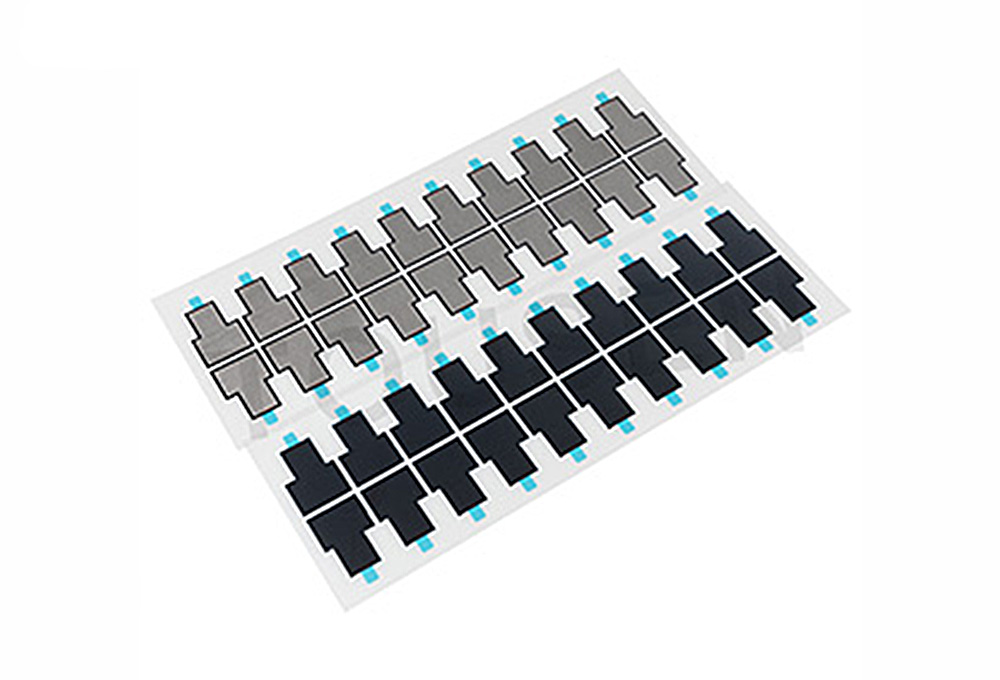
Phase Change Thermal Pads for Laptop CPU and GPU Cooling

Phase Change Thermal Pad Applications in Laptop Cooling Systems
Introduction
As laptops become thinner, lighter, and more powerful, thermal management has become a critical engineering challenge. Modern notebook computers must dissipate heat from CPUs, GPUs, voltage regulator modules, and other high-power components within a highly restricted internal space. When the cooling system cannot transfer heat efficiently, users may experience higher operating temperatures, increased fan noise, reduced performance, and thermal throttling.
Selecting the appropriate thermal interface material is essential to laptop thermal design. A conventional thermal pad is useful for filling gaps between components and heat sinks, while a phase change thermal pad offers another option for interfaces that require low thermal resistance and improved surface conformity.
For laptop manufacturers, thermal engineers, and maintenance professionals, understanding the differences between these materials helps improve cooling efficiency while maintaining assembly consistency and long-term reliability.
Why Thermal Interface Materials Matter in Laptops
A laptop cooling system typically consists of heat pipes or a vapor chamber, a fin stack, and one or more cooling fans. Heat generated by the processor must pass through several interfaces before reaching the heat sink and being released into the surrounding air.
Even when the cooling hardware is properly designed, microscopic surface irregularities between the processor package and the cooling plate can create small air gaps. Because air transfers heat poorly compared with most thermal interface materials, these gaps can increase interfacial thermal resistance.
A suitable thermal pad or phase change material helps establish a more continuous heat-transfer path. However, the best choice depends on interface geometry and mechanical requirements. A conventional thermal pad is generally appropriate for filling relatively large gaps, accommodating component height differences, and providing mechanical compliance. A phase change thermal pad is often worth evaluating for thin interfaces where reducing contact resistance is a priority.
Engineers should not select a material solely according to its thermal conductivity rating. Material thickness, mounting pressure, surface flatness, operating temperature, and the thermal resistance of the complete assembly must also be considered.
How a Phase Change Thermal Pad Works
A phase change thermal pad combines convenient solid-state handling with temperature-dependent softening during operation. Before installation, the material can be supplied in a sheet or precision-cut shape, allowing it to be positioned accurately on the target component.
When the interface reaches the material's designed phase transition temperature, the material softens and conforms more closely to microscopic surface irregularities. This can improve contact between the heat source and the cooling structure, reducing contact thermal resistance.
For laptop cooling, this behavior is particularly relevant to CPU and GPU interfaces. These components experience temperature changes as processing loads fluctuate between idle operation, everyday applications, gaming, and computationally intensive workloads.
Compared with liquid thermal grease, a preformed phase change thermal pad can simplify material handling and improve placement consistency in production. It may also reduce certain risks associated with grease migration or pump-out, although actual performance depends on formulation, mounting conditions, and thermal cycling.
It is important to distinguish a phase change thermal pad from a conventional gap-filling pad. The former is generally selected for close-contact interfaces, while the latter may be more suitable when substantial mechanical gaps must be accommodated.
Key Laptop Applications
1. CPU Cooling
The CPU is one of the primary heat sources in a laptop. During demanding workloads, processor power consumption can rise significantly, placing additional pressure on the cooling system.
A phase change thermal pad can be considered between the CPU package and its cooling plate when the interface geometry, mounting pressure, and material specifications are compatible. Its ability to improve surface conformity after warming may help reduce contact resistance.
For engineers, the objective is not simply to select the highest-conductivity material. The complete interface must be evaluated to ensure that the material forms an appropriate bond line without interfering with the mechanical mounting structure.
2. Discrete GPU Cooling
Gaming laptops and mobile workstations often use dedicated GPUs for graphics rendering, simulation, video processing, and other demanding applications. GPU cooling performance can directly influence sustained operating frequency and system stability.
A phase change thermal pad may be suitable for the GPU die when the original thermal design calls for this type of interface material. However, memory chips, power components, and other surrounding devices may require conventional thermal pads with different thicknesses and compression characteristics.
Using one material throughout the entire cooling assembly is not always appropriate. Engineers should distinguish between the thin, high-performance interface required by the GPU die and the gap-filling requirements of surrounding components.
3. Thin and Lightweight Laptop Designs
Slim laptops have limited space for heat pipes, cooling plates, and air channels. Small changes in interface thickness or contact quality can affect the thermal performance of the complete cooling system.
A phase change thermal pad can offer a practical solution where the design requires a controlled interface thickness and low contact resistance. Pre-cut materials can also support repeatable positioning during high-volume assembly.
Nevertheless, the material cannot compensate for an undersized heat sink, restricted airflow, or insufficient fan capacity. Effective laptop cooling requires the thermal interface material and the mechanical cooling structure to work together.
4. Thermal Cycling and Long-Term Reliability
Laptop components repeatedly heat up and cool down during normal use. Over time, these temperature cycles can affect the stability of thermal interfaces.
When selecting a thermal pad, engineers should evaluate changes in contact resistance, material movement, mechanical stress, and performance after repeated thermal cycling. A phase change thermal pad may help address certain interface stability requirements, but its suitability must be verified under actual operating conditions.
For repair applications, technicians should also confirm the material thickness and interface design specified by the laptop manufacturer. Substituting a material that is too thick or too stiff may increase mounting pressure, compromise contact with the processor, or affect contact with surrounding components.
TOUSEN PCM8500 Phase Change Thermal Pad for Laptop Cooling
For laptop designs that require a high-performance thermal interface, TOUSEN PCM8500 is a phase change thermal interface material worth evaluating.
According to the published product specifications, PCM8500 offers the following characteristics:
- Thermal conductivity: 8.5 W/m·K
- Thermal resistance: As low as 0.04 °C·cm²/W
- Phase change temperature: Approximately 45°C
- Available thicknesses: 0.2 mm, 0.25 mm, 0.3 mm, 0.4 mm, and 0.5 mm
- Supply formats: Sheets, rolls, and precision die-cut parts
- Density: Approximately 2.8 g/cm³
At room temperature, PCM8500 remains solid, supporting convenient handling and accurate placement during assembly. As the operating temperature approaches its designed transition range, the material softens to improve conformity between mating surfaces.
For laptop manufacturers, the available thickness options provide flexibility when matching the material to a specific processor package and cooling assembly. Sheet and die-cut formats may also support repeatable production processes.
PCM8500 can be evaluated for compatible CPU and GPU cooling interfaces, but the appropriate thickness and installation conditions must be confirmed for each laptop design. The published thermal resistance value should be interpreted according to its specified test conditions rather than assumed to represent the complete laptop cooling path.
For detailed specifications and technical information, visit the TOUSEN PCM8500 phase change thermal interface material product page.
How to Select the Right Thermal Pad for a Laptop
Before replacing an existing thermal interface material or introducing a new material into production, engineers should evaluate several factors.
Interface Thickness and Geometry
Confirm the actual gap between the heat source and cooling surface. A material that is too thick may increase thermal resistance or interfere with mounting. The selected thermal pad should match the mechanical tolerances of the assembly.
Thermal Performance
Consider thermal conductivity and interface thermal resistance together. The final result depends on material thickness, contact quality, surface condition, and applied pressure.
Phase Transition Temperature
Verify that the material's transition behavior is appropriate for the laptop's expected operating temperature range. The material should function reliably under both typical and demanding workloads.
Mechanical Compatibility
Check mounting pressure, surface flatness, component tolerances, and the possibility of material displacement during repeated heating and cooling. A suitable phase change thermal pad should be compatible with the complete mechanical assembly.
Manufacturing and Maintenance
Consider whether sheets or die-cut parts can improve assembly consistency. During servicing, follow the device manufacturer's thermal interface specifications and installation procedures rather than assuming that different materials are interchangeable.
Application Testing
Validate CPU and GPU temperatures under representative workloads, including sustained high-load operation. Where possible, compare results using the same ambient temperature, fan settings, power limits, and test duration. This provides a more reliable basis for assessing the effectiveness of a thermal pad.
Conclusion
As laptop performance continues to increase within increasingly compact designs, thermal interface selection plays an important role in managing processor temperatures and maintaining stable operation.
A conventional thermal pad remains valuable for gap filling and mechanical compliance. A phase change thermal pad offers an alternative for close-contact interfaces where low thermal resistance, improved surface conformity, and consistent assembly are important.
With a published thermal conductivity of 8.5 W/m·K, thermal resistance as low as 0.04 °C·cm²/W, and multiple thickness options, TOUSEN PCM8500 provides engineers with a candidate material for evaluating compatible laptop CPU and GPU cooling applications.
The final selection should always be based on the actual interface geometry, operating temperature, mounting pressure, and long-term reliability requirements. Through application-specific validation, laptop manufacturers and thermal engineers can determine whether PCM8500 or another thermal interface material offers the most appropriate balance of thermal performance, manufacturing efficiency, and service life.
Phase Change Thermal Pads for Telecom Thermal Management
Related Article