Phase Change Thermal Pad for High Power Electronics

How Phase Change Thermal Pads Improve Thermal Management in High Power Electronics
As electronic systems continue to move toward higher power density and more compact mechanical designs, thermal management has become an increasingly important engineering consideration. CPUs, GPUs, AI accelerators, power modules, telecommunications equipment and high-performance consumer electronics can generate substantial heat within a limited installation space. In these applications, the choice of a thermal interface material can directly influence junction temperature, system stability and long-term reliability.
Traditional thermal pads provide an effective way to bridge mechanical gaps between a heat source and a heat sink. However, when the interface requires very low thermal resistance and excellent surface conformity, a conventional thermal pad may not always provide the desired balance between thermal performance and assembly convenience. This is where a phase change thermal pad can provide an alternative engineering approach.
What Is a Phase Change Thermal Pad?
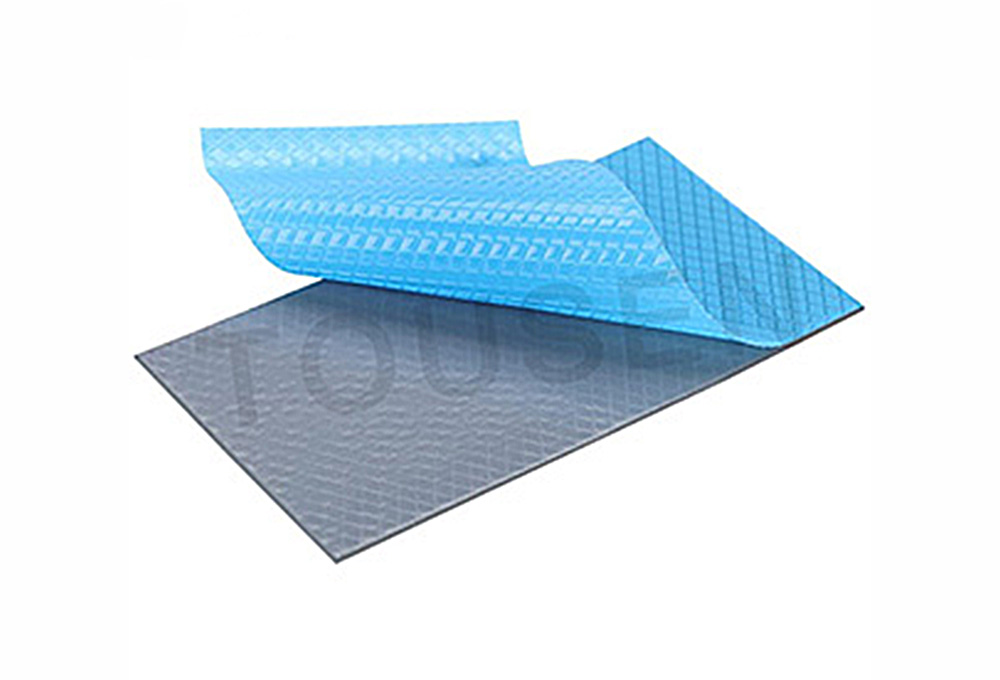
A phase change thermal pad is a solid thermal interface material at room temperature that changes its physical behavior when the operating temperature reaches a designed phase transition range. During operation, the material softens and flows microscopically into surface irregularities, helping increase the effective contact area between the electronic component and the cooling structure.
The basic objective is to reduce the microscopic air gaps that normally exist between two solid surfaces. Because air has very low thermal conductivity, these gaps can contribute significantly to interface thermal resistance. A properly designed phase change thermal pad can therefore create a thinner and more conformal thermal interface during operation while maintaining the handling advantages of a pad during assembly.
From an engineering perspective, this characteristic makes a phase change material different from a conventional thermal pad. A conventional thermal pad mainly relies on mechanical compression and material compliance to compensate for surface irregularities. A phase change thermal pad additionally uses temperature-induced softening to improve wetting and reduce contact resistance.
Why Engineers Consider Phase Change Thermal Pads
Thermal conductivity is an important specification, but it should not be evaluated independently. The actual thermal performance of a thermal interface depends on several factors, including material thickness, thermal conductivity, contact resistance, surface roughness, mounting pressure and the thermal behavior of the complete heat-transfer path.
For this reason, engineers evaluating a thermal pad or phase change solution should first determine the actual interface requirements. If the assembly has a relatively large mechanical gap, a conventional compliant thermal pad may be more appropriate. If the interface gap is small and the primary objective is to minimize thermal resistance, a phase change thermal pad may provide a more suitable solution.
Another important consideration is long-term stability. Compared with liquid thermal grease, a phase change material is supplied and handled as a solid interface material. This can simplify production and reduce concerns associated with excessive dispensing, contamination and material migration. During operation, the phase transition allows the material to improve surface contact without requiring the same application process as liquid grease.
PCM8500 Phase Change Thermal Interface Material
For applications requiring high thermal performance together with simplified handling, TOUSEN PCM8500 provides a practical phase change thermal pad solution. PCM8500 is designed for high-power electronic thermal management and combines the processing characteristics of a pad with the interface performance of a phase change thermal material.
According to the product specifications, PCM8500 provides a thermal conductivity of approximately 8.5 W/m·K and a thermal resistance as low as 0.04°C·cm²/W. Its phase change temperature is approximately 45°C, allowing the material to remain solid during normal handling while softening during operation to improve interface wetting. Thickness options include 0.2, 0.25, 0.3, 0.4 and 0.5 mm.
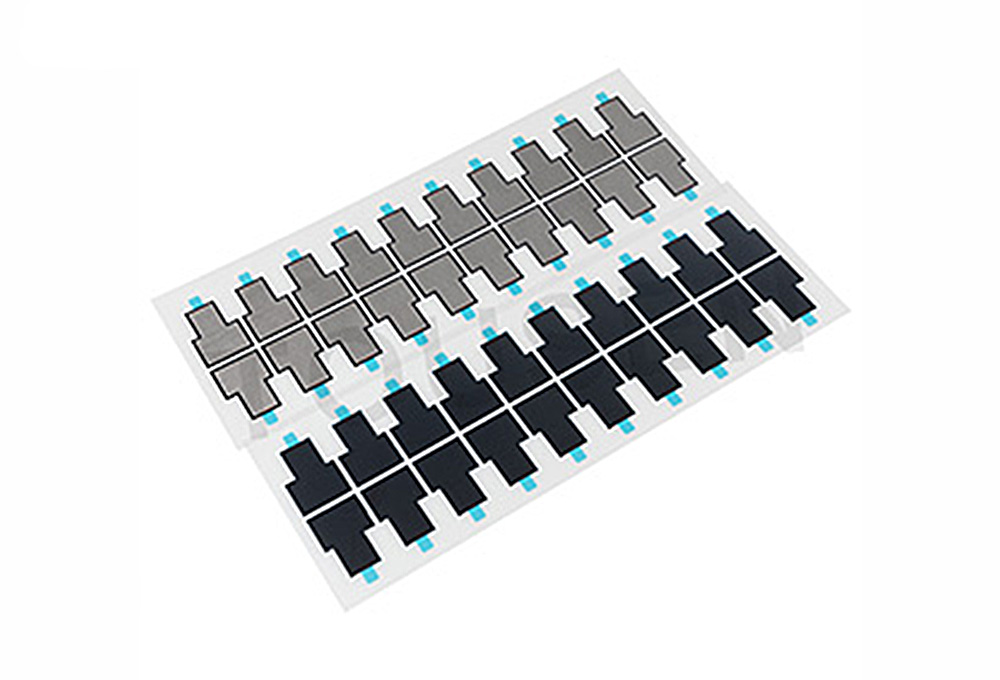
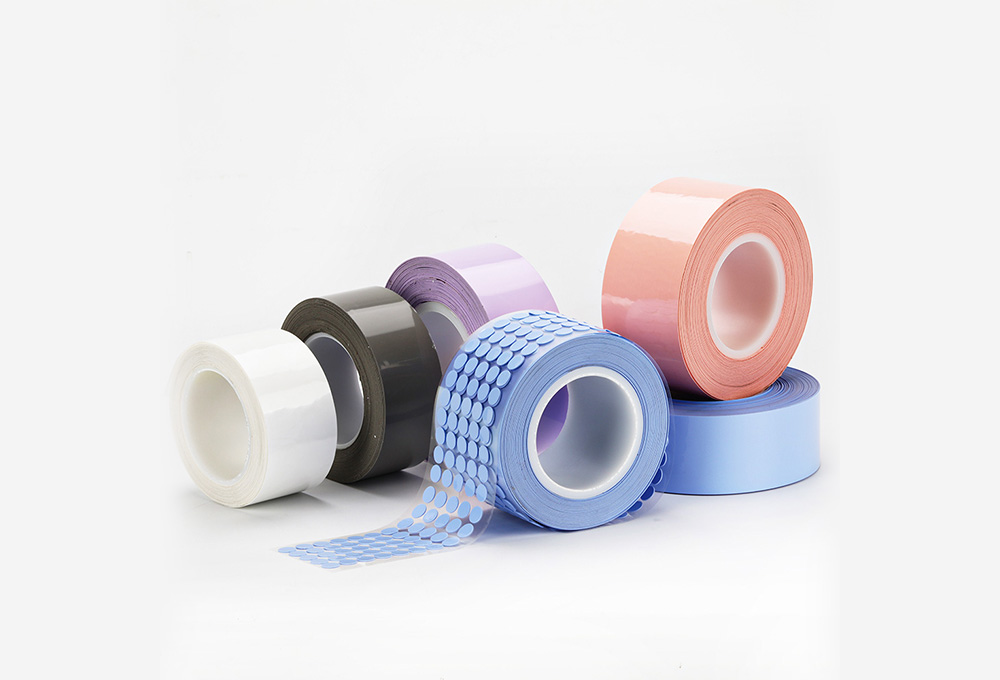
PCM8500 is also available in sheets, rolls and die-cut formats. This flexibility is useful for manufacturers that need to integrate the thermal interface into automated or semi-automated assembly processes. For detailed technical information, engineers can refer to the PCM8500 phase change thermal interface material product page.
Application in CPU and GPU Cooling
CPU and GPU packages are among the most demanding applications for thermal interface materials. As computing performance increases, localized heat flux can become difficult to manage using a conventional thermal pad alone.
A phase change thermal pad can be particularly useful where the interface between the processor package and heat spreader or cooling assembly is relatively thin and requires low thermal resistance. During operation, phase transition helps the material conform to microscopic surface irregularities, supporting more efficient heat transfer.
This approach is relevant to high-performance desktop processors, graphics cards, AI accelerator modules and workstation platforms. However, engineers should validate the selected thickness, clamping pressure and actual thermal resistance under application-specific conditions rather than selecting the material solely according to nominal thermal conductivity.
AI Servers and Data Center Hardware
AI servers and high-density computing platforms are creating increasingly demanding thermal design requirements. GPU accelerators and other computing devices can operate at high power levels for extended periods, making thermal interface reliability particularly important.
In these systems, a phase change thermal pad can provide a useful combination of solid-state handling and low interface thermal resistance. PCM8500 is specified for AI servers, data center hardware and GPU computing modules, where maintaining an efficient thermal path between the heat-generating package and cooling structure is essential.
For large-scale production, the availability of sheet, roll and die-cut formats can also help engineers align the thermal interface material with the manufacturing process. The actual production design should consider dimensional tolerances, surface flatness, compression conditions and rework requirements.
Power Electronics and Telecommunications Equipment
Power electronics modules, MOSFETs, switching devices and telecommunications hardware also require reliable thermal interfaces. In these applications, the thermal interface must often operate continuously while experiencing repeated temperature changes.
A conventional thermal pad may be suitable when a larger gap must be filled or electrical insulation and mechanical compliance are primary requirements. In contrast, a phase change thermal pad can be considered when the interface thickness is relatively small and lower thermal resistance is a major design objective.
PCM8500 is designed for applications including power electronics modules and telecommunications equipment. Its phase transition behavior is intended to improve contact between mating surfaces during operation, while its solid form simplifies material handling during assembly.
High Power LED and Consumer Electronics Applications
High-power LED modules, compact consumer electronics and other space-constrained products face similar thermal challenges. The cooling structure may have limited installation space, while component tolerances and surface roughness can prevent perfect metal-to-metal contact.
In these situations, selecting an appropriate thermal pad requires consideration of interface thickness, thermal resistance and mechanical compliance. Where the interface is thin and high thermal performance is required, a phase change thermal pad can help reduce contact resistance while maintaining relatively simple assembly procedures.
How Should Engineers Select a Phase Change Thermal Pad?
Material selection should begin with the actual application rather than with a single performance number. Engineers should evaluate at least five factors:
- Thermal resistance: Evaluate the complete interface rather than relying only on thermal conductivity.
- Thickness: Select a thickness appropriate for the actual mechanical stack-up and surface tolerance.
- Phase transition temperature: Confirm that the transition behavior is compatible with the application's operating temperature.
- Assembly process: Consider whether sheet, roll or die-cut supply is suitable for production.
- Long-term reliability: Validate performance under the application's thermal cycling, pressure and environmental conditions.
These considerations are particularly important when replacing a conventional thermal pad or thermal grease. A material that performs well in laboratory testing may not automatically deliver the same result in a complete electronic assembly. Application-specific testing under realistic pressure, temperature and surface conditions remains essential.
Conclusion
A phase change thermal pad provides an intermediate approach between conventional solid thermal pads and liquid thermal grease. It combines solid-state handling with temperature-activated surface conformity, making it attractive for applications where low interface thermal resistance, manufacturing efficiency and long-term stability are important.
For CPU and GPU cooling, AI servers, data centers, power electronics, telecommunications equipment and high-power LED systems, PCM8500 offers a high-performance phase change interface option with approximately 8.5 W/m·K thermal conductivity, 0.04°C·cm²/W thermal resistance and a phase transition temperature of approximately 45°C. The final material selection should always be based on the actual thermal, mechanical and manufacturing requirements of the application.
For engineers evaluating a phase change thermal pad for a new design or as a replacement for an existing thermal interface, PCM8500 can be considered as part of a structured thermal validation process.
Phase Change Thermal Pad for High Performance Electronics
Related Article