Phase Change Thermal Pads for Telecom Thermal Management

How Phase Change Thermal Pads Improve Thermal Management in Telecommunications Equipment
As telecommunications networks evolve toward 5G, high-speed optical transmission and increasingly dense computing infrastructure, thermal management has become a critical engineering consideration. Base stations, remote radio units, optical transceivers, network switches and power conversion modules must operate reliably under continuous electrical loads and changing environmental conditions. Selecting the right thermal pad is therefore essential for maintaining component temperatures, reducing thermal resistance and supporting long-term equipment reliability.
Conventional thermal pads remain widely used in telecommunications hardware because they can accommodate mechanical tolerances and simplify assembly. However, applications requiring a thin thermal interface and low contact resistance may benefit from a phase change thermal pad. By combining solid-state handling with temperature-activated surface conformity, this material offers an alternative for selected high-performance communication devices.
1. Why Thermal Management Matters in Telecommunications
Modern telecommunications equipment contains several heat-generating components, including radio-frequency power amplifiers, application-specific integrated circuits (ASICs), field-programmable gate arrays (FPGAs), digital signal processors, optical transceivers and power semiconductor devices. As data throughput and processing capacity increase, these components may generate substantial heat within limited installation spaces.
Excessive operating temperatures can accelerate electronic component aging, affect signal-processing stability and reduce the reliability margin of the overall system. In outdoor installations, high ambient temperatures and restricted airflow can further complicate heat dissipation. Meanwhile, indoor switches and optical transmission equipment may face high power density and limited space for cooling structures.
A properly selected thermal pad establishes a heat-transfer path between a component and a heat sink, chassis or cold plate. Its function is to replace insulating air gaps at the interface and improve thermal contact. Nevertheless, the effectiveness of a thermal pad depends on more than its nominal thermal conductivity. Material thickness, contact pressure, surface flatness and interface thermal resistance must also be considered.
2. What Is a Phase Change Thermal Pad?
A phase change thermal pad is a thermal interface material designed to remain manageable during assembly and soften within a specified temperature range during operation. This temperature-dependent behavior allows the material to conform more closely to microscopic surface irregularities, improving contact between the heat-generating component and the cooling structure.
Even precision-machined metal surfaces contain microscopic peaks and valleys. When two surfaces are assembled, small air pockets may remain between them. Because air transfers heat poorly compared with most engineered thermal interface materials, these gaps can increase contact resistance and limit heat flow.
A conventional thermal pad primarily relies on its compressibility to accommodate surface irregularities and mechanical gaps. A phase change thermal pad adds temperature-activated softening to this process. Once the material reaches its designed transition range, it can improve surface wetting and reduce interfacial resistance, provided that the mounting pressure and interface geometry are appropriate.
This distinction is important when engineers compare a standard thermal pad with a phase change solution. A conventional pad may be preferable for larger gaps or applications requiring greater mechanical compliance. A phase change thermal pad is worth evaluating when the interface is relatively thin and low thermal resistance is a priority.
3. Applications in 5G Base Stations and Remote Radio Units
5G base stations and remote radio units (RRUs) integrate radio-frequency circuits, power amplifiers, signal-processing components and power-management devices. These systems may operate continuously, while their enclosures must also protect internal electronics against dust, moisture and outdoor temperature variations.
A thermal pad can transfer heat from power amplifiers and other heat-generating components to metal housings or dedicated heat sinks. In assemblies with uneven surfaces or relatively large gaps, a compliant gap-filling pad may be the most appropriate choice. Its mechanical properties help accommodate component-height variations and assembly tolerances.
Where the interface is thin and the mounting geometry is tightly controlled, a phase change thermal pad may offer another approach. Its temperature-activated conformity can improve contact across the interface without requiring liquid dispensing during assembly. This characteristic is particularly relevant when manufacturers seek repeatable material placement and controlled bond-line thickness.
However, outdoor telecommunications equipment requires additional validation. Engineers should assess thermal cycling, material migration, environmental exposure and mechanical stability under the actual operating conditions. A phase change thermal pad does not replace the need for a correctly sized heat sink, adequate airflow or a suitable enclosure design.
4. Thermal Management for Optical Transceivers and High-Speed Networking
Optical transceivers convert electrical signals into optical signals and perform the reverse conversion at the receiving end. High-speed modules used in data centers, telecommunications networks and optical transmission systems can generate considerable localized heat, particularly around their electronic driver and signal-processing components.
Temperature control is important because excessive heat can affect component operating margins and contribute to reliability problems. The thermal interface between the module and its cooling structure must therefore be designed according to the module's power dissipation, available contact area and allowable temperature rise.
A conventional thermal pad can be useful when the mechanical interface requires gap accommodation or additional compliance. For a thin interface where lower contact resistance is the main objective, a phase change thermal pad may be considered. Its ability to soften during operation can improve contact with the mating surfaces while retaining a preformed material format for assembly.
In compact optical modules, engineers should pay particular attention to the permitted mounting force, interface thickness and thermal expansion of surrounding components. Excessive pressure may damage sensitive packages, while an unsuitable material thickness can increase thermal resistance or prevent adequate contact. Prototype testing should confirm the actual temperature distribution before production approval.
5. Network Switches, Routers and Communication Power Supplies
High-capacity network switches and routers contain switching ASICs, processors, memory devices and power conversion circuits. As port density and data throughput increase, heat must be transferred efficiently from these components to heat sinks or chassis structures.
A thermal pad provides a practical solution where a defined gap must be bridged or where electrical insulation is required. The material must be selected according to the component's electrical characteristics, required dielectric performance and mechanical loading limits. Not every thermal interface material provides electrical insulation, so the relevant technical specifications must be verified.
Communication power supplies introduce another set of thermal challenges. MOSFETs, rectifiers, inductors and power modules can generate heat during continuous conversion. In assemblies with a thin, controlled interface between a semiconductor package and a cooling plate, a phase change thermal pad may help reduce contact resistance.
Nevertheless, a phase change thermal pad should not automatically replace every existing thermal pad. Where large gaps, substantial component-height variation or low clamping pressure dominate the design, a conventional gap-filling material may remain more suitable. The correct decision requires evaluation of the complete thermal and mechanical assembly.
6. TOUSEN PCM8500 Phase Change Thermal Pad
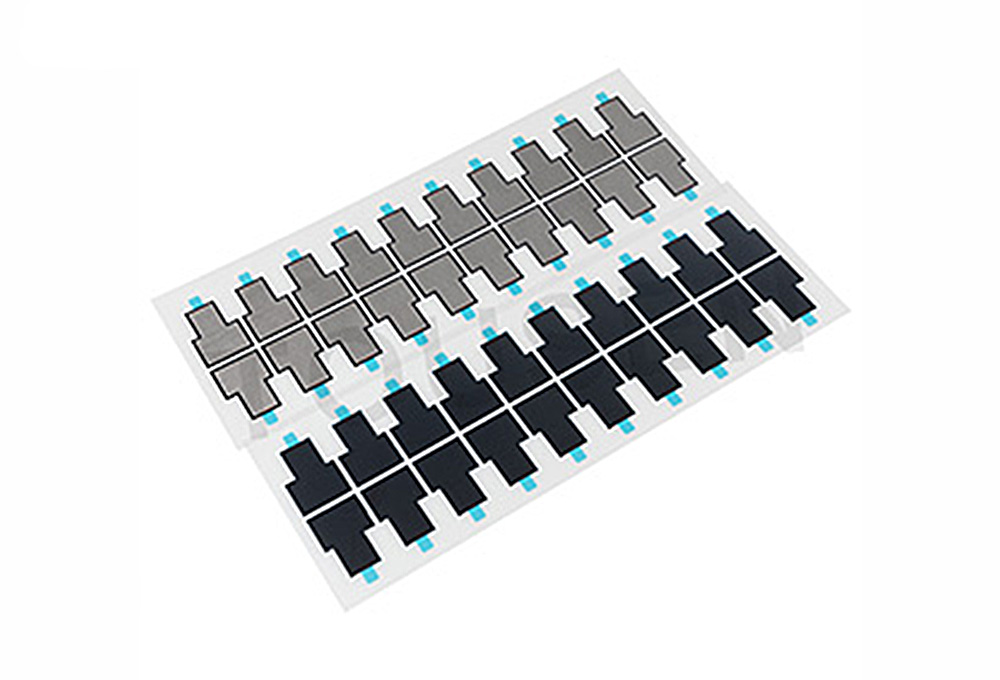
For telecommunications manufacturers evaluating a high-performance thermal interface, TOUSEN offers the PCM8500 phase change thermal pad. This product is designed for demanding electronic cooling applications in which thermal performance, assembly consistency and interface conformity are important considerations.
According to the published product information, PCM8500 has a nominal thermal conductivity of approximately 8.5 W/m·K, a specified thermal resistance as low as 0.04 °C·cm²/W and a phase change temperature of approximately 45°C. Available thickness options include 0.2 mm, 0.25 mm, 0.3 mm, 0.4 mm and 0.5 mm.
At room temperature, PCM8500 can be handled as a preformed solid material. As the interface reaches the designed transition range, the material softens and can conform to surface irregularities. This combination can be useful for selected communication modules, network processors, power electronics and other compact electronic assemblies.
For manufacturing flexibility, the material is available in sheet, roll and die-cut formats, subject to product configuration. Pre-cut parts can simplify placement and help maintain consistent coverage across repeated assemblies. Engineers should confirm the required dimensions, thickness, operating temperature and installation conditions with the supplier before finalizing a design.
Detailed specifications and product information are available on the TOUSEN PCM8500 phase change thermal pad product page.
7. How to Select the Right Thermal Pad for Telecommunications Equipment
Choosing a suitable thermal pad requires a system-level assessment rather than a comparison of thermal conductivity alone. The following factors should be considered during material qualification.
- Thermal resistance: Evaluate the complete interface and its contribution to component temperature rise. Confirm the test conditions behind the published material data.
- Interface thickness: Measure the actual assembled gap, including component tolerances, housing flatness and mounting variation. Select a thickness appropriate for the mechanical stack-up.
- Operating temperature: For a phase change thermal pad, verify that the material's transition range is compatible with the expected operating conditions.
- Mounting pressure: Confirm that the required contact pressure is compatible with the component package, printed circuit board and cooling assembly.
- Electrical requirements: Check dielectric strength and insulation requirements where the interface is positioned near energized components.
- Environmental reliability: Evaluate thermal cycling, humidity, vibration and other conditions relevant to the intended telecommunications installation.
- Manufacturing process: Consider placement accuracy, die-cut geometry, production throughput and inspection requirements when choosing the material format.
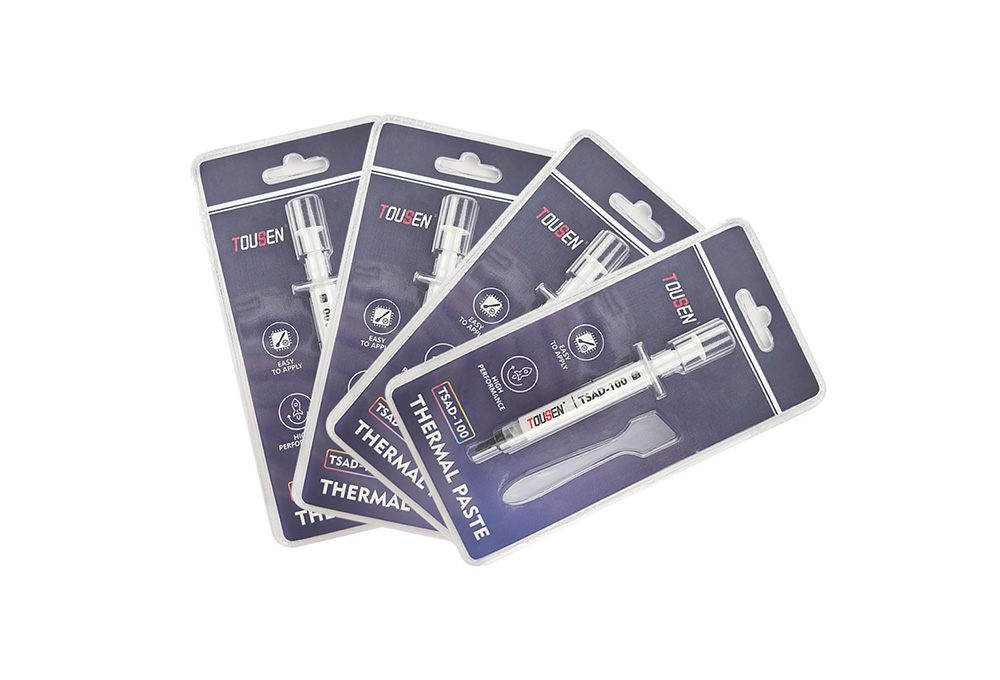
These criteria help determine whether a conventional thermal pad, a phase change thermal pad, thermal grease or another interface material is most appropriate. Material selection should be validated in a representative assembly rather than based exclusively on a datasheet specification.
8. Validation and Long-Term Reliability
Before introducing a new thermal pad into telecommunications equipment, engineers should establish a repeatable validation procedure. Initial testing should measure component temperatures under representative electrical loads and ambient conditions. Where possible, the test should also record mounting pressure, interface dimensions and cooling-system operating parameters.
Reliability testing should reproduce the expected temperature cycles and mechanical stresses. For a phase change thermal pad, engineers should check whether the interface maintains suitable contact after repeated heating and cooling, and whether any material movement or residue affects adjacent components. Outdoor equipment may require additional humidity, vibration and environmental testing.
Comparative testing should use the same hardware, mounting procedure and operating conditions for each candidate material. This approach helps distinguish improvements caused by the interface material from those caused by changes in airflow, heat-sink contact or assembly pressure.
Conclusion
Reliable telecommunications performance depends on controlling heat at the component level and maintaining an effective thermal path to the cooling structure. A conventional thermal pad remains an important solution for gap filling, compliance and selected electrically insulating interfaces. For thin interfaces where low thermal resistance and improved surface conformity are priorities, a phase change thermal pad provides an additional option.
TOUSEN PCM8500 combines a published thermal conductivity of approximately 8.5 W/m·K with a phase change temperature of approximately 45°C and multiple thickness options. These characteristics make it a candidate for evaluation in 5G infrastructure, optical communication modules, network switches and communication power electronics. Final selection should be based on the actual interface geometry, thermal load, mounting pressure and reliability requirements.
To determine whether PCM8500 is suitable for your telecommunications application, visit the TOUSEN PCM8500 product page and confirm the detailed technical requirements with the engineering team.
Phase Change Thermal Pads for High Performance Electronics
Related Article