Thermal Pads GPU and Thermal Pad vs Paste for EV Batteries
Thermal Pads for EV Battery Thermal Management: An Engineering Perspective
As electric vehicles and energy storage systems continue to advance, battery thermal management has become a critical engineering discipline. Maintaining an appropriate operating temperature is essential not only for heat dissipation, but also for battery safety, service life, charging performance, and long-term system reliability.
From an engineering perspective, thermal pads, thermal paste, and other thermal interface materials (TIMs) each have specific advantages depending on the application. In EV battery packs, silicone-based thermal pads are increasingly considered for applications where controlled gap filling, electrical insulation, mechanical compliance, and assembly consistency are required.
This article examines the role of thermal interface materials in battery thermal management and compares thermal pads with thermal paste from a practical engineering standpoint.
Why Thermal Interface Materials Matter in EV Battery Packs
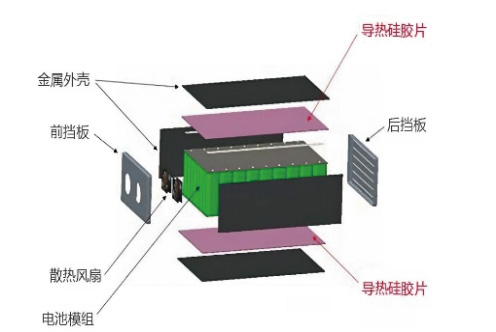
Battery cells generate heat during charging and discharging. If significant air gaps exist between the cells and the cooling structure, the low thermal conductivity of air can substantially increase interface thermal resistance. A properly selected TIM helps eliminate these air gaps and establishes a more effective thermal path between the battery cell and the cooling plate.
Unlike many consumer electronics applications, EV battery systems must operate under demanding conditions. Battery modules may experience vibration, thermal cycling, mechanical compression, dimensional tolerances, and high-voltage electrical environments. Therefore, the thermal interface material must be evaluated as part of the complete mechanical and thermal system rather than by thermal conductivity alone.
This is one reason thermal pads are widely considered for battery module and battery pack applications.
Thermal Pad vs Paste: What Engineers Should Consider
The comparison of thermal pad vs paste should not be reduced to which material has the higher thermal conductivity. The two technologies differ fundamentally in physical form, installation method, gap-filling behavior, and long-term system performance.
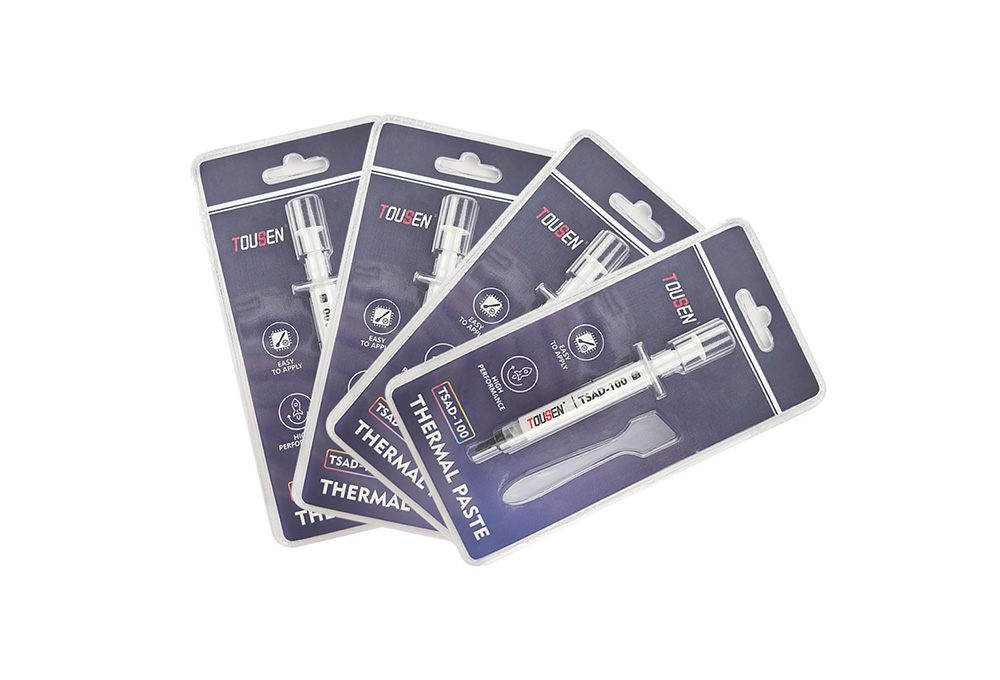
Thermal paste is a flowable TIM that can effectively wet microscopic surface irregularities. This characteristic makes it particularly useful for applications such as CPUs, GPUs, and other high-heat-flux semiconductor devices where the interface gap is very small.
However, large-area battery applications introduce different challenges. Material migration, excessive application, thickness control, contamination, and process consistency can become important considerations when a paste is used across a large battery module.
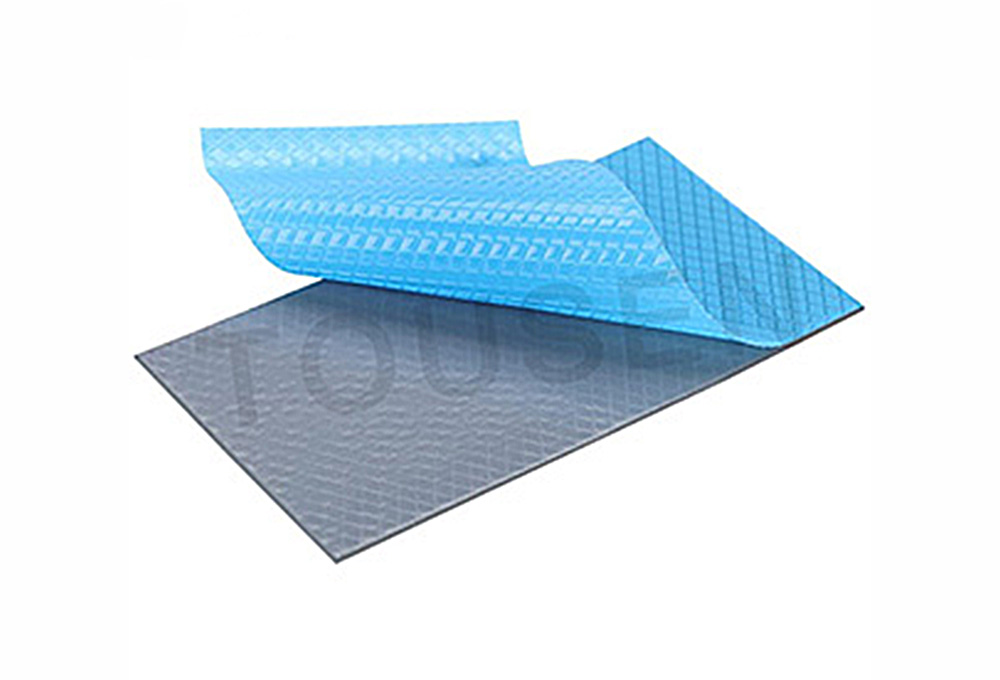
By comparison, a preformed thermal pad can be manufactured to a defined thickness and geometry. During assembly, the pad is positioned between the heat-generating component and the cooling structure and compressed according to the designed mechanical tolerance.
Therefore, when evaluating thermal pad vs paste, engineers should consider total thermal resistance, compression behavior, assembly efficiency, electrical insulation, reliability, and manufacturing requirements—not simply the nominal thermal conductivity value.
Key Advantages of Thermal Pads in Battery Thermal Management
1. Effective Gap Filling
Battery modules inevitably contain dimensional tolerances between cells, cooling plates, housings, and structural components. A properly selected thermal pad can accommodate these gaps through controlled thickness and compression.
Silicone thermal pads are particularly useful when the interface requires a degree of compliance. Under controlled compression, the material can conform to surface irregularities while maintaining physical contact with the mating surfaces.
2. Electrical Insulation
High-voltage battery systems require careful electrical isolation between conductive components. A thermal interface material may therefore need to provide both thermal transfer and dielectric protection.
Silicone-based thermal pads can be formulated to combine thermal conductivity with electrical insulation. This makes them suitable for interfaces between battery cells, cooling plates, heat spreaders, and other conductive structures where electrical isolation is required.
3. Consistent Assembly
Because thermal pads are supplied as preformed materials, they can be die-cut or otherwise fabricated to match specific battery module geometries. This can simplify installation and improve process consistency compared with manually dispensing and spreading thermal paste.
For high-volume EV battery production, repeatable material thickness and predictable placement can be valuable for maintaining consistent thermal performance across battery packs.
4. Mechanical Compliance and Long-Term Stability
Battery packs are exposed to repeated temperature changes and mechanical loading throughout their service life. Thermal expansion and contraction can alter the interface between the battery cell and cooling structure.
A compliant silicone thermal pad can accommodate a certain degree of dimensional change and mechanical tolerance while maintaining contact pressure. This characteristic can contribute to more stable long-term thermal performance.
Thermal Pads GPU Applications vs Battery Applications
The engineering requirements for thermal pads GPU applications are different from those of EV battery systems, even though both applications rely on TIM technology.
In graphics cards, thermal pads are commonly used to bridge height differences between memory modules, VRM components, and heatsinks. The GPU die itself may use thermal paste because the interface gap is extremely small and the local heat flux is very high.
Battery systems, by contrast, generally require larger-area thermal interfaces. Engineers may prioritize controlled thickness, compression behavior, electrical insulation, mechanical compliance, and long-term reliability.
Consequently, a material that performs well in a thermal pads GPU application should not automatically be considered the best choice for an EV battery pack. The interface geometry and system-level requirements must always be evaluated first.
Thermal Pads Compared with Other TIM Technologies
From an engineering standpoint, silicone thermal pads should be evaluated based on their overall performance rather than a single specification.
Thermal paste can offer excellent surface wetting and low interface resistance in very thin bond lines. Thermally conductive adhesives can provide both thermal transfer and structural bonding, but their cured nature may make rework and maintenance more difficult. Phase-change materials can deliver efficient thermal interfaces within specific operating temperature ranges, but their behavior must be evaluated against the application's thermal cycle.
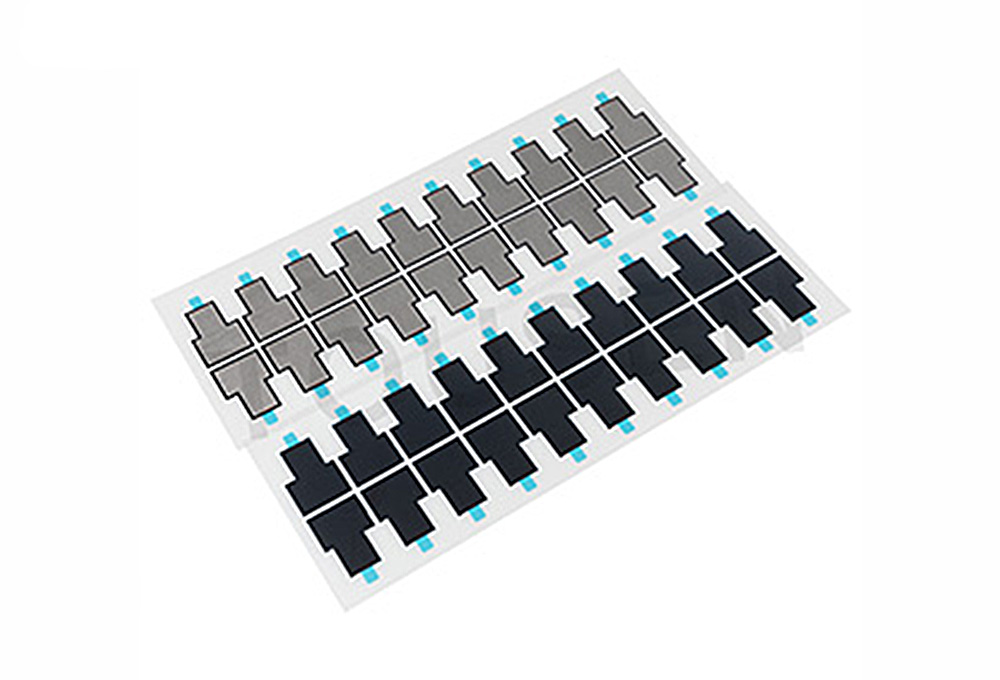
Thermal pads provide a different balance of performance. They can combine thermal conductivity, electrical insulation, controlled thickness, gap filling, mechanical compliance, and manufacturing convenience in one preformed interface material.
For battery modules that require large-area thermal contact and electrical isolation, this combination can provide a practical solution for thermal management design.
TOUSEN Silicone Thermal Pads for Battery Applications
TOUSEN provides silicone thermal pads for electronic thermal management applications, including battery modules and other systems where controlled thermal transfer and gap filling are required.
In an actual engineering project, material selection should be based on the complete application rather than thermal conductivity alone. Important parameters typically include:
- Thermal conductivity: Determines the material's ability to transfer heat through the interface.
- Thickness: Directly affects the thermal resistance of the interface.
- Hardness: Influences compression force and surface conformity.
- Compression ratio: Determines how effectively the material accommodates dimensional tolerances.
- Dielectric performance: Important for high-voltage battery applications.
- Operating temperature range: Must be compatible with the battery system's thermal environment.
- Compression set and recovery: Important for maintaining stable contact during long-term operation.
For this reason, selecting a thermal pad based solely on the highest available thermal conductivity is not necessarily the optimal engineering approach. A material that is too hard may increase assembly pressure, while an excessively thick or poorly matched pad can increase thermal resistance. The objective is to achieve an appropriate balance between thermal, mechanical, electrical, and manufacturing requirements.
How Engineers Should Select Thermal Pads
A practical selection process can be divided into four dimensions: thermal performance, mechanical performance, electrical safety, and manufacturing compatibility.
First, determine the required thermal resistance based on cell heat generation and the cooling architecture. Next, measure the actual interface gap and establish the required pad thickness and compression range. Electrical properties should then be verified according to the battery system's voltage and insulation requirements. Finally, the material should be evaluated for production efficiency, dimensional consistency, handling, and assembly compatibility.
Under this approach, thermal pad vs paste is not simply a competition between two materials. Rather, they represent different engineering solutions for different interface conditions.
For large-area battery interfaces with significant gaps, electrical insulation requirements, and the need for repeatable assembly, silicone thermal pads can offer a strong combination of performance and process reliability. For extremely thin interfaces and very high local heat flux, thermal paste may remain the more appropriate option.
Conclusion
As EV battery systems move toward higher energy density, greater integration, and longer service life, thermal interface material selection is becoming increasingly important. Thermal pads provide more than heat transfer. Their ability to combine gap filling, electrical insulation, mechanical compliance, controlled thickness, and manufacturing consistency makes them a practical option for many battery thermal management designs.
Whether the application involves thermal pads GPU solutions, server hardware, power electronics, or EV battery modules, engineers should select TIMs according to the actual interface geometry, heat flux, gap tolerance, electrical requirements, and reliability targets.
For EV battery applications in particular, the balance between thermal pad vs paste should be determined through system-level evaluation. When a design requires large-area coverage, controlled compression, electrical insulation, and stable long-term contact, silicone thermal pads can provide a well-balanced thermal interface solution.
Thermal Heat Pad and Thermal Pads for EV Charging Systems
Thermal Pads for GPU and Thermal Pad vs Paste Explained
Related Article