Thermal Paste for AI Systems High Performance Thermal Management
Thermal Paste in the AI Era: An Engineering Perspective on Thermal Management Performance
As artificial intelligence (AI) continues to scale across high-performance computing (HPC), data centers, autonomous systems, and edge devices, the demand for higher computational density is accelerating. While semiconductor advancements drive performance gains, thermal management has emerged as a limiting factor in system reliability and efficiency.
From an engineering standpoint, thermal paste—often categorized as a thermal interface material (TIM)—has evolved from a secondary consumable into a critical enabler of system-level performance. This article presents a technical and objective analysis of thermal paste, focusing on its role, material properties, and application in AI-driven environments.
Why AI Systems Demand Higher-Performance Thermal Paste
Modern AI processors, including GPUs and specialized accelerators, operate under sustained high workloads that generate significant heat flux. During training and inference tasks, localized hotspots can quickly develop, challenging conventional cooling strategies.
In practical engineering scenarios, inadequate thermal management can lead to:
- Thermal throttling and reduced computational throughput
- Accelerated component degradation
- System instability and increased failure rates
Thermal paste plays a critical role by filling microscopic air gaps between heat-generating components and heat sinks, significantly reducing interfacial thermal resistance and improving heat transfer efficiency.
Engineering Principles and Key Performance Metrics of Thermal Paste
From a materials engineering perspective, the effectiveness of thermal paste depends on several core parameters:
1. Thermal Conductivity
High-performance AI applications typically require thermal paste with thermal conductivity values exceeding 5 W/m·K, with advanced formulations reaching even higher levels.
2. Interfacial Thermal Resistance
Beyond bulk conductivity, thermal paste must effectively conform to surface irregularities to minimize thermal resistance at the interface.
3. Long-Term Stability
Material degradation mechanisms—such as pump-out, dry-out, or phase separation—can significantly impact the long-term reliability of thermal paste in continuous operation environments.
4. Process Compatibility
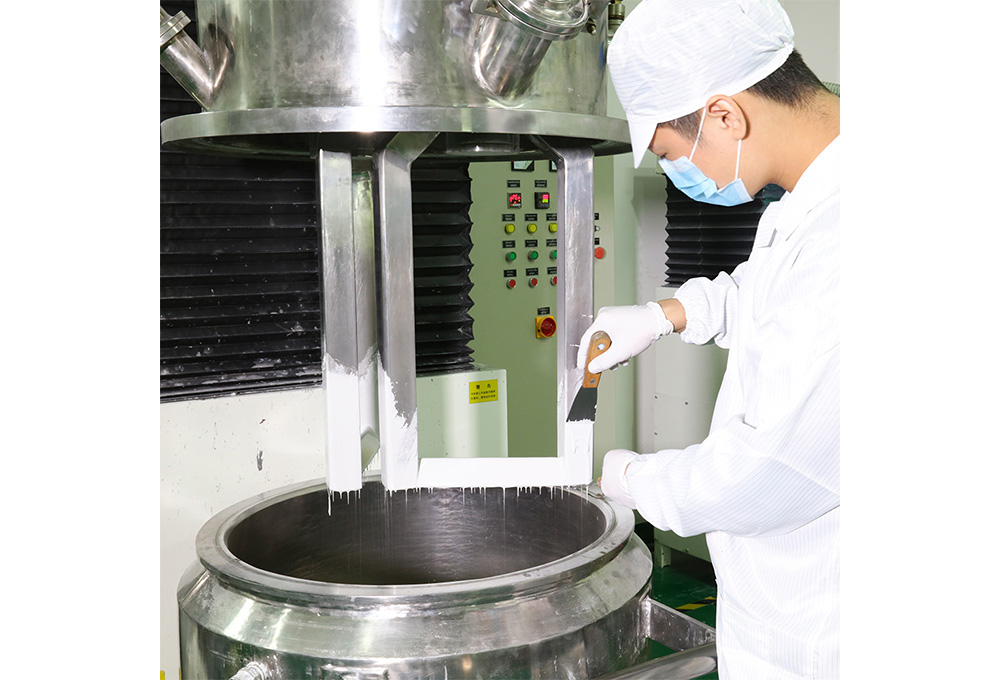
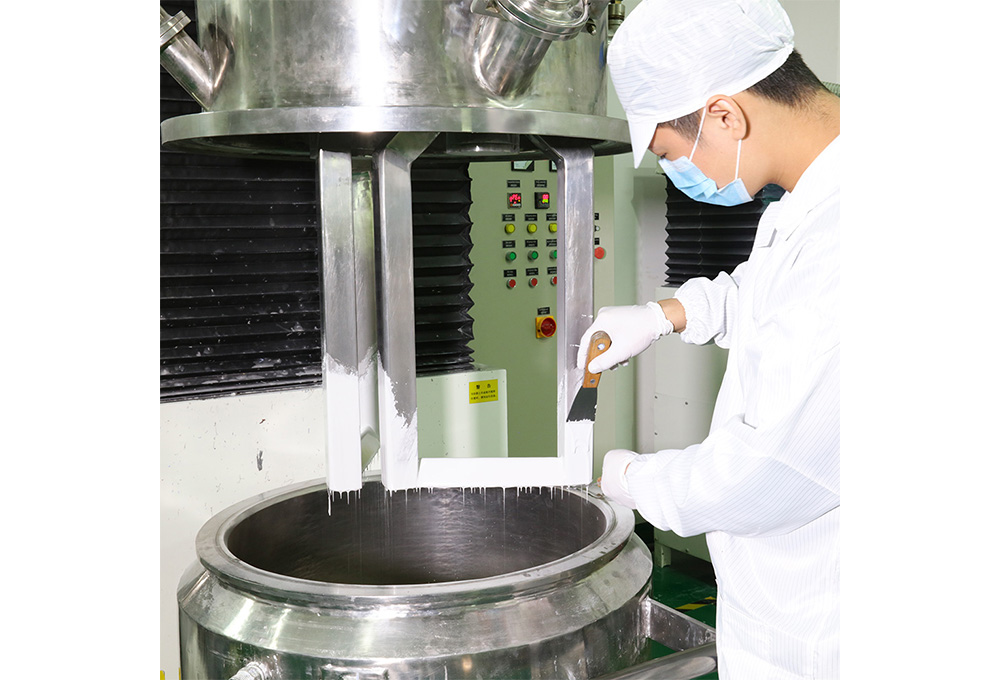
In automated manufacturing, thermal paste must exhibit stable rheological properties to ensure consistent dispensing and application across large-scale production lines.
Industry Trends: How AI is Reshaping Thermal Paste Development
The rapid expansion of AI technologies is driving innovation in thermal paste design and manufacturing:
- Data-driven material optimization: AI-assisted modeling enables faster development of high-performance thermal paste formulations.
- Automation in application: Integration with precision dispensing systems improves consistency and reduces variability.
- Increased performance demands: Higher chip power densities require thermal paste with enhanced thermal and mechanical properties.
- Broader application scope: Expanding into EV systems, edge AI devices, and advanced cooling architectures.
Engineering Challenges in Thermal Paste Selection
Selecting the appropriate thermal paste involves more than comparing datasheet specifications. Engineers must evaluate:
- Thermal design power (TDP)
- Cooling architecture (air vs. liquid cooling)
- Assembly and dispensing processes
- Reliability requirements under thermal cycling
In real-world validation, materials with similar nominal thermal conductivity can exhibit significantly different performance due to variations in interface behavior and long-term stability. Therefore, empirical testing remains essential when qualifying thermal paste for AI systems.
Application Example: High-Performance Thermal Paste Solution
A representative example of modern thermal paste design can be found in the following product:
https://www.itousen.com/product-5665408556491864.html

This thermal paste solution reflects several key engineering priorities in AI thermal management:
- Efficient heat transfer: Designed to handle high heat flux in AI processors, improving overall thermal performance.
- Optimized interface contact: Advanced filler distribution enhances gap-filling capability and reduces interfacial resistance.
- Manufacturing compatibility: Suitable for automated dispensing systems, ensuring repeatability in production.
- Long-term reliability: Maintains stable performance under prolonged thermal stress and cycling conditions.
From an engineering perspective, such thermal paste solutions should be considered integral components of system design rather than interchangeable consumables.
Future Outlook: The Evolving Role of Thermal Paste in AI Systems
As AI workloads continue to grow, thermal paste technology is expected to evolve in several directions:
- Higher thermal conductivity (>10 W/m·K)
- Integration of advanced materials such as graphene and nano-fillers
- Environmentally sustainable, non-silicone formulations
- Optimization for hybrid cooling systems, including liquid cooling
More importantly, thermal paste will increasingly be treated as a critical parameter in system-level thermal design, rather than a post-design consideration.
Conclusion
In the context of rapidly advancing AI technologies, thermal paste has become a fundamental element in achieving reliable and efficient system performance. From reducing interfacial thermal resistance to enabling sustained high-performance operation, its role is both technical and strategic.
For engineers and system designers, a deeper understanding of thermal paste—including its material properties, application methods, and long-term behavior—is essential for optimizing next-generation AI hardware.
Ultimately, without a well-engineered thermal paste solution, even the most advanced processors cannot operate at their full potential.
Thermal Paste Engineering for Semiconductor Thermal Management
Thermal Paste for Industrial Power Electronics Performance
Related Article