Thermal Paste for Industrial Power Electronics Performance
From Power Devices to System Reliability: An Engineering Perspective on Thermal Paste in Industrial and Power Electronics
In industrial automation, power electronics, renewable energy systems, and advanced equipment manufacturing, increasing power density has made thermal management a primary design constraint rather than a secondary consideration. For high-power devices such as IGBTs, MOSFETs, and emerging SiC and GaN components, junction temperature directly impacts efficiency, reliability, and service life. In this context, thermal paste, as a fundamental thermal interface material, plays a critical and often underestimated role in system performance.
1. Engineering Fundamentals: Addressing Invisible Interface Gaps
From a practical engineering standpoint, no mating surface—no matter how precisely machined—achieves perfect flatness. Microscopic surface irregularities create air gaps at the interface between components such as power modules and heat sinks. Since air has extremely low thermal conductivity, these gaps significantly increase thermal resistance.
The primary function of thermal paste is to fill these microscopic voids, displacing air and establishing a more efficient thermal conduction path. It is important to emphasize that thermal paste does not inherently outperform solid metals in conductivity; rather, it minimizes interfacial thermal resistance, which is the dominant factor in real-world assemblies.
- Fills micro-scale surface irregularities
- Eliminates air pockets
- Improves effective heat transfer across interfaces
2. Application Scenarios in Power Electronics
2.1 Power Modules (IGBT and SiC)
In high-power modules, the interface between the baseplate and the heat sink is a critical thermal bottleneck. Proper application of thermal paste ensures efficient heat transfer from the device to the cooling system. Poor interface performance can lead to elevated junction temperatures, increased switching losses, and reduced component lifespan.
2.2 Renewable Energy Inverters and Energy Storage Systems
As switching frequencies and power densities increase, thermal loads become more concentrated. High-performance thermal paste is essential for maintaining stable operation under continuous and dynamic load conditions.
2.3 Industrial Power Supplies and Drive Systems
In long-duration operation environments, the long-term stability of thermal paste—including resistance to خشک-out and pump-out effects—is a key reliability factor.
3. Key Selection Criteria for Engineers
3.1 Thermal Conductivity
Typical thermal paste products range from 1 to 10 W/m·K, with advanced formulations exceeding this range. However, higher conductivity alone does not guarantee better system performance; interface thickness and application quality are equally critical.
3.2 Thermal Resistance
Thermal resistance is the most direct indicator of interface performance. A well-formulated thermal paste should maintain low resistance even at minimal bond-line thickness.
3.3 Viscosity and Process Compatibility
Material viscosity must align with the manufacturing process. Low viscosity may cause overflow and contamination, while high viscosity can hinder uniform application. Consistency is especially important in automated dispensing environments.
3.4 Long-Term Reliability
Engineers must evaluate:
- Resistance to drying and cracking
- Pump-out behavior under thermal cycling
- Mechanical stability under vibration
4. Common Industry Challenges
In real-world applications, several recurring issues arise with standard thermal interface materials:
- Degradation over time leading to increased thermal resistance
- Inconsistent application in manual processes
- Material incompatibility with metals or electrical requirements
These challenges become particularly critical in high-reliability systems such as industrial servo drives, data center power supplies, and electric vehicle control units. As a result, engineers increasingly prioritize validated and application-specific thermal paste solutions.
5. Example of an Optimized Thermal Paste Solution
To address these challenges, specialized thermal paste formulations have been developed for industrial and power electronics applications.
For example, the following product provides a targeted solution:
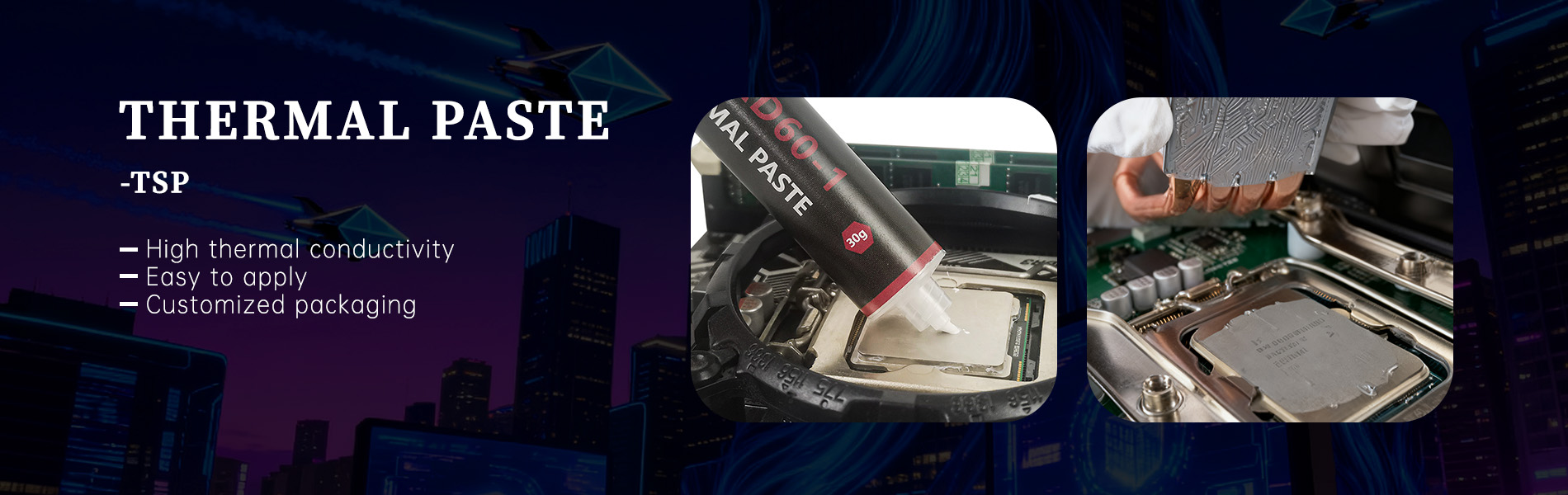
High-Performance Thermal Paste Solution

Such products typically offer the following engineering advantages:
5.1 Advanced Filler Systems
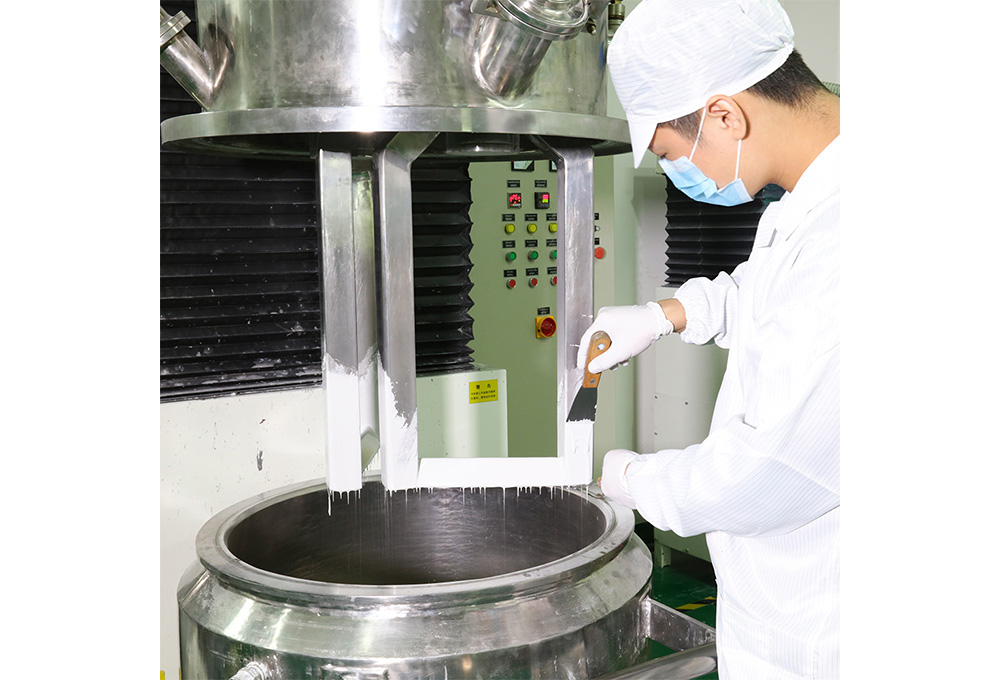
High loading of thermally conductive particles, such as aluminum oxide or boron nitride, improves heat transfer while maintaining electrical insulation.
5.2 Low Thermal Resistance Design
Optimized formulations enable efficient heat conduction even at thin interface layers, reducing junction temperatures in power devices.
5.3 Process Adaptability
Compatible with automated manufacturing methods, including screen printing and precision dispensing, ensuring consistent application.
5.4 Long-Term Stability
Designed to withstand thermal cycling and mechanical stress, making it suitable for demanding industrial environments.
6. Engineering Best Practices
- Control bond-line thickness: Apply thermal paste as thinly as possible while ensuring full coverage
- Match surface roughness: Select viscosity based on mating surface characteristics
- Optimize clamping force: Adequate pressure reduces interfacial resistance
- Evaluate aging performance: Especially under high temperature and humidity conditions
7. Future Trends in Thermal Paste Development
As power density continues to increase, thermal paste technologies are evolving in several directions:
- Incorporation of nano-scale fillers such as graphene and boron nitride
- Low-volatility and silicone-free formulations for improved reliability
- Enhanced compatibility with automated manufacturing processes
- Integration with system-level cooling solutions such as liquid cooling and vapor chambers
Conclusion
From an engineering perspective, thermal paste is not merely a supporting material but a critical component of system-level thermal design. Proper selection and application can significantly improve efficiency, extend device lifespan, and reduce maintenance costs in industrial and power electronics systems.
As performance requirements continue to rise, the role of thermal paste will become increasingly important. Leveraging proven, application-specific solutions is essential for achieving reliable and efficient thermal management in modern high-power systems.
Thermal Paste for AI Systems High Performance Thermal Management
Thermal Paste in Electric Vehicles Engineering and Thermal Management
Related Article