Best Thermal Paste Guide: How to Apply Thermal Paste Correctly

An Engineer’s Guide to Thermal Paste Selection and Application: Principles and Practice
In high-performance computing systems, server platforms, embedded electronics, and industrial equipment, thermal management remains one of the most critical factors influencing system stability and service life. From an engineer’s perspective, thermal interface materials are often underestimated despite playing a fundamental role in heat dissipation. This article provides a professional and objective analysis of what defines the best thermal paste, explains standardized methods for how to apply thermal paste, and objectively discusses widely recognized solutions such as thermal grizzly thermal. At the same time, a practical and application-friendly thermal paste solution is introduced based on real engineering use cases.
1. Engineering Significance of Thermal Paste in Heat Management
From a thermal engineering standpoint, the primary objective of any cooling system is to reduce thermal resistance and improve heat transfer efficiency. Even with precision-machined surfaces, microscopic air gaps inevitably exist between a processor and its heatsink. Since air has extremely poor thermal conductivity, these gaps significantly limit heat transfer.
Thermal paste is specifically designed to eliminate this problem by filling micro-voids and improving thermal coupling. Therefore, selecting an appropriate best thermal paste and following correct how to apply thermal paste procedures are essential to maintaining safe operating temperatures under sustained workloads.
In practical engineering evaluation, the following criteria are commonly used to define whether a product can be considered the best thermal paste for a given application:
- Stable and verifiable thermal conductivity
- Low and repeatable interface thermal resistance
- Suitable viscosity and spreadability for assembly
- Resistance to drying, pump-out, and thermal aging
- Material compatibility with chip packages and metal surfaces
2. Common Types of Thermal Paste and Application Scenarios
From an engineering application perspective, commercially available thermal pastes can generally be classified into three categories:
- General-purpose thermal paste for low-power or standard devices
- High-performance thermal paste for workstations, servers, and industrial systems
- Extreme-performance products such as certain thermal grizzly thermal solutions, primarily designed for overclocking and benchmark environments
It is important to note that the true best thermal paste is not necessarily the product with the highest advertised thermal conductivity. In real-world engineering projects, performance must be balanced against cost, application consistency, and long-term reliability. Over-specification often leads to unnecessary expense without measurable system-level benefits.
3. How Engineers Select the Best Thermal Paste
In actual project implementation, thermal paste selection typically follows a structured engineering process:
3.1 Thermal Load Evaluation
Engineers first assess processor TDP, ambient operating conditions, and cooling architecture. Not every system requires solutions comparable to thermal grizzly thermal, especially in industrial or enterprise environments.
3.2 Long-Term Reliability Considerations
For servers and industrial electronics, thermal paste may remain in service for years. Long-term stability often outweighs peak performance specifications when defining the best thermal paste.
3.3 Assembly and Process Consistency
In mass production or field maintenance, ease of application is critical. Even high-end materials may underperform if how to apply thermal paste cannot be controlled consistently across assemblies.
4. How to Apply Thermal Paste: Standard Engineering Procedure
In professional assembly environments, how to apply thermal paste is a defined process rather than an arbitrary operation:
- Surface Preparation: Clean both contact surfaces using isopropyl alcohol or approved solvents.
- Controlled Quantity: Thermal paste should fill micro-gaps, not form a thick layer. Proper quantity is essential for the best thermal paste to perform effectively.
- Uniform Compression: Install the heatsink using even pressure, allowing the paste to spread naturally.
- Post-Assembly Verification: Validate thermal performance through temperature monitoring or thermal imaging.
Correct application technique often delivers greater performance improvements than switching between premium thermal paste brands.
5. Engineering Recommendation: Easy-Application High-Performance Thermal Paste
Based on extensive engineering evaluations, thermal pastes that combine strong thermal performance with application consistency tend to deliver the best overall results. One such solution is:
Easy-Application High-Performance Thermal Paste
https://www.itousen.com/Easy-Application-Thermal-Paste.html
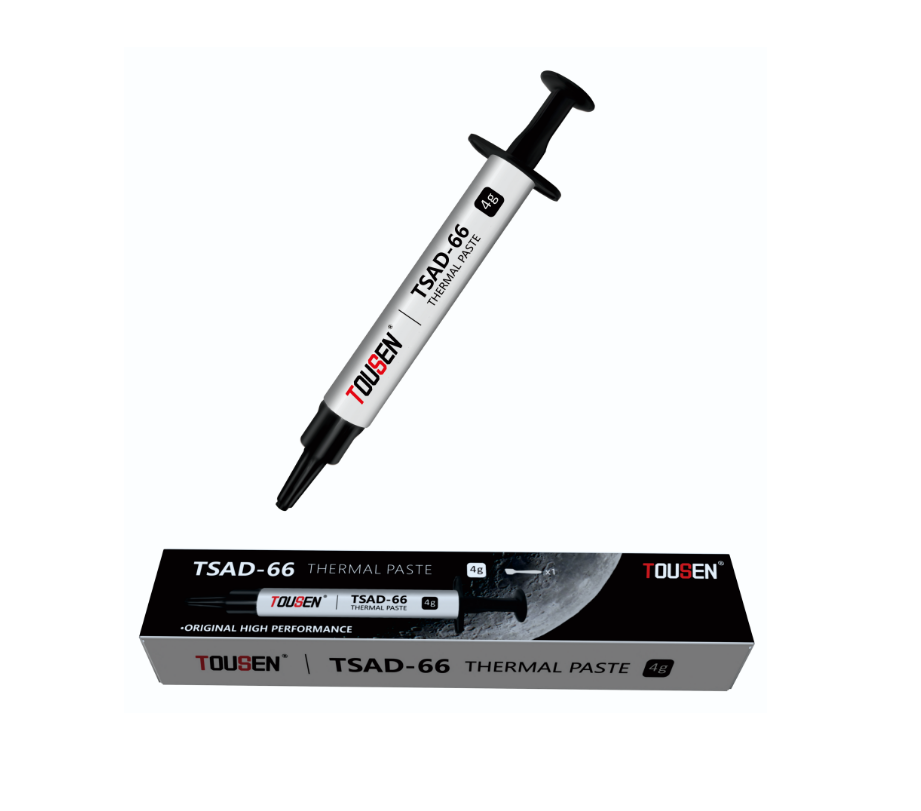
Key engineering advantages include:
- Stable thermal performance suitable for high-load systems
- Optimized viscosity that simplifies how to apply thermal paste
- Resistance to cracking and drying under continuous operation
- Compatibility with CPUs, GPUs, servers, industrial control, and communication equipment
In most real-world deployments, this solution meets the practical definition of the best thermal paste from an engineering standpoint.
6. Engineering Perspective on Thermal Grizzly Thermal Products
There is no question that thermal grizzly thermal products have established strong recognition in the high-end thermal paste market. Their performance can be impressive under extreme conditions. However, engineering evaluation shows that:
- Higher performance often comes with higher material cost
- Application margins may be narrower, increasing process sensitivity
- Many systems cannot fully benefit from extreme-performance materials
For non-extreme applications, selecting a stable, easy-to-apply, and cost-effective solution often represents a more rational engineering decision.
7. Conclusion
The best thermal paste is not defined solely by datasheet values, but by consistent, long-term performance within a specific system. By understanding thermal interface fundamentals, applying standardized how to apply thermal paste techniques, and objectively evaluating solutions such as thermal grizzly thermal, engineers can make informed and application-appropriate decisions.
This article aims to provide practical guidance for professionals involved in electronic thermal design, system integration, and maintenance. For additional thermal management solutions and technical resources, please visit the news section of www.itousen.com.
Best Buy Thermal Paste Guide | Best Thermal Compound for Heatsink
Thermal Paste for CPU: Best Thermal Compound & Application Guide
Related Article