Thermal Interface Pads for EV Battery and Energy Storage Systems | TOUSEN
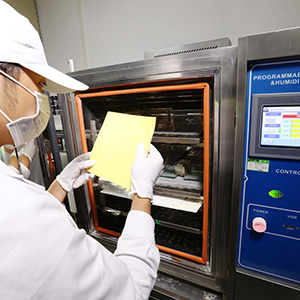
White Paper: Thermal Interface Pads for EV Battery and Energy Storage Modules
By CHACE / Tousen Thermal Management Engineering Team
1. Overview of Application Scenarios
As the power density of electric vehicle (EV) battery packs and energy storage modules continues to increase, effective thermal management has become a decisive factor in ensuring both performance and safety. Thermal interface pads (TIMs)—typically silicone-based—serve as a critical bridge between battery cells, module housing, and cooling structures, effectively balancing heat conduction, insulation, and mechanical buffering.
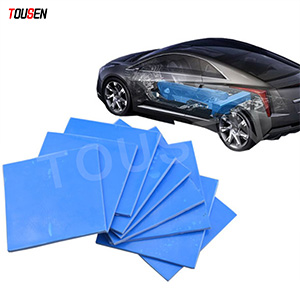 EV Battery Thermal Interface Solutions
2. Key Application Areas
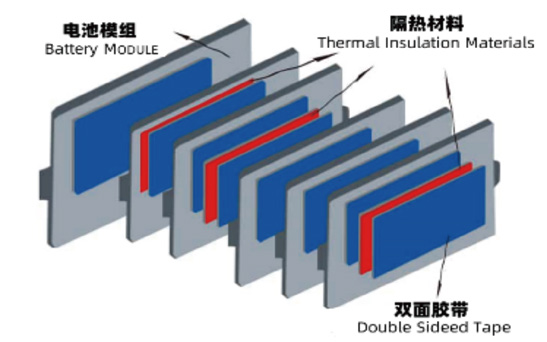
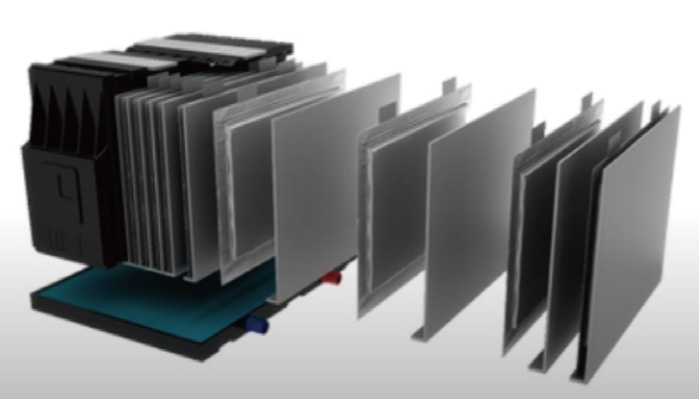
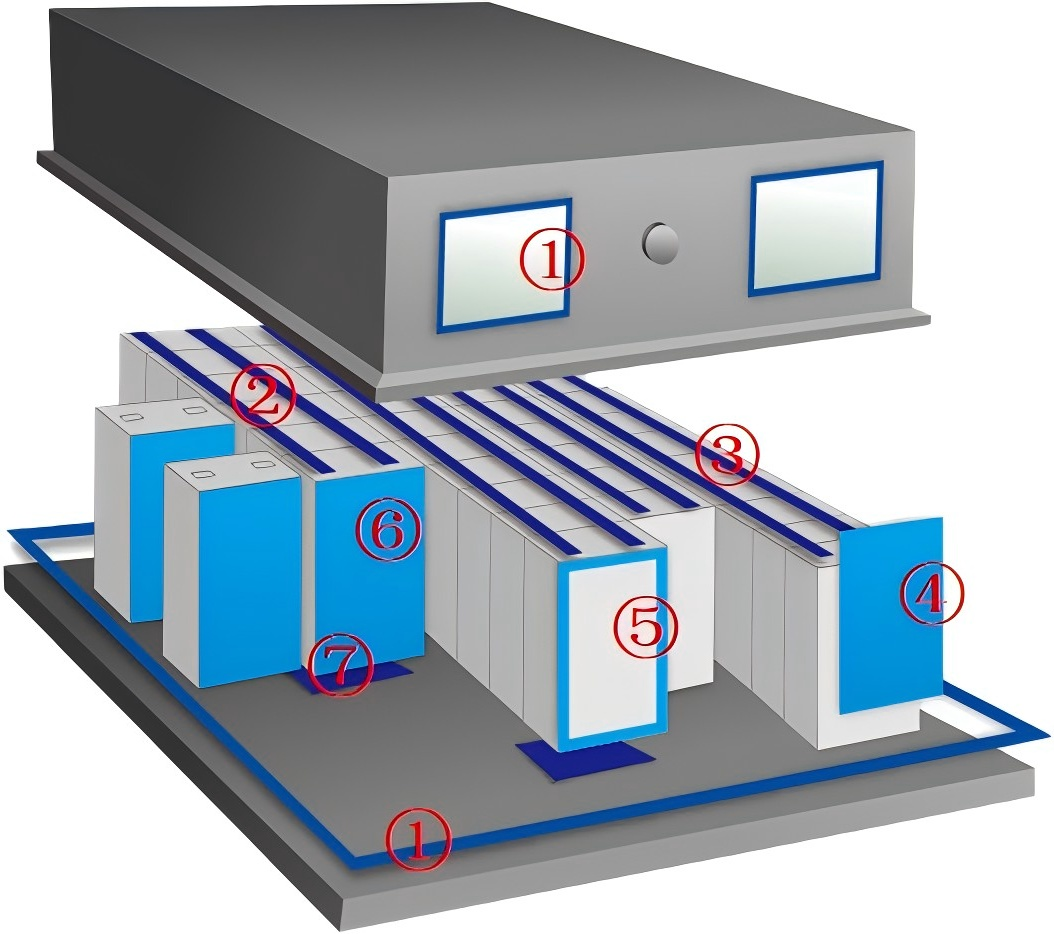
- Between battery cells and cooling plates
- Between battery modules and outer casing
- Between the battery module and liquid cooling system
- In structural integration zones for vibration and thermal buffering
In some high-performance battery systems, individual module requirements may exceed 80 cm in length and demand complex geometric shaping. A single module can require over 10 kg of thermal interface material. Such large-scale and customized TIM solutions require optimized formulation and process design to maintain uniform thickness and thermal conductivity under compression.
3. Technical Requirements from Automakers
To ensure a faster and more precise design–supply match, automakers are encouraged to provide the following key parameters:
- Operating temperature range (°C)
- Thermal conductivity target (W/m·K)
- Compression rate and allowable deformation
- Assembly gap tolerance (mm)
- Required electrical insulation strength (kV/mm)
- Environmental exposure (humidity, salt spray, chemical contact)
- Mechanical vibration and long-term aging expectations
Providing complete parameter information in early communication can reduce design iteration cycles by up to 30% and ensure reliability validation in the first trial phase.
▶ Reference Product: Tousen High-Conductivity Silicone Thermal Pad Series
4. Reliability & Validation Testing
Reliability evaluation is a core requirement in EV and energy storage applications. Common validation tests include:
- Thermal conductivity retention after 1000h thermal aging at 125°C
- Thermal cycling: -40°C to +125°C, 500 cycles, performance deviation ≤10%
- Compression set test at 25%, 70°C × 1000h, deformation ≤5%
- Dielectric breakdown test ≥10 kV/mm
- Flammability: UL94 V-0 certification
- Salt fog and chemical resistance test per IEC 60068-2-11
To minimize disputes from test condition variations, both parties are recommended to align on detailed test setups (e.g., specimen size, pre-compression ratio, temperature ramp rate) prior to validation.

5. Conclusion
As EVs and energy storage systems continue to evolve toward higher power density and stricter safety standards, the role of high-performance thermal interface pads becomes increasingly vital. Through standardized communication, precise material selection, and robust reliability verification, component suppliers and OEMs can jointly enhance system performance and longevity.
Battery Pack Thermal Runaway Mitigation Materials & Design Guide
Thermal Runaway in EV Battery Packs: Causes, Mechanisms, and Material Solutions
Related Article