Advanced Two-Part Thermal Gel for High-Performance Thermal Management | TOUSEN
Executive summary
This article provides an objective engineering review of TOUSEN’s two-part thermal gel, SE800AB, intended for thermal designers, reliability engineers and production teams. The gel targets irregular gaps and interfaces where conventional thermal grease or pre-formed pads are suboptimal. Key advantages include a high bulk thermal conductivity, post-cure elastomeric behavior for long-term contact stability, electrical insulation and regulatory compliance. Practical recommendations focus on interface preparation, compression control, cure management and accelerated validation to ensure system-level thermal gains translate to real products.
Why choose a two-part thermal gel?
At the system level, total thermal resistance is the sum of bulk material resistance and contact/interface resistance. Materials with high nominal thermal conductivity can still underperform if interface contact is poor. Two-part thermal gels bridge gaps, conform to rough surfaces, and — after curing — maintain contact geometry, which reduces interface thermal resistance over time compared with uncured greases that can pump out or dry.
- Conforms to irregular geometries and fills voids effectively.
- Cures to an elastomeric state that resists flow and bleed.
- Can combine mechanical protection and thermal management in one material.
SE800AB — product positioning and key attributes
SE800AB is positioned as a high-performance two-part gap filler for applications that require stable long-term thermal contact and electrical insulation. Typical target applications include power modules, inverters, ECU assemblies, high-power LED modules and other devices where gap variation and vibration/thermal cycling are design constraints.

Engineering benefits in practice
If implemented correctly, SE800AB can deliver measurable system benefits:
- Lower steady-state junction temperature: improved conduction across irregular interfaces reduces device thermal resistance.
- Improved lifetime stability: cured elastomer reduces risk of migration/bleed compared with low-viscosity greases.
- Mechanical protection: elastomeric cushion can reduce mechanical stress on solder joints and components under vibration.
- Design flexibility: suitable for one-time fill or field service environments where pre-formed pads are impractical.
Key considerations for successful implementation
Adoption of SE800AB should be accompanied by targeted process controls and validation. Below are recommended engineering practices.
Interface preparation
Surfaces must be clean, oil-free and free of loose oxides or contamination. For high-performance interfaces, consider light mechanical flattening or controlled surface planarization to improve real contact area prior to gel dispensing.
Dispensing and mixing
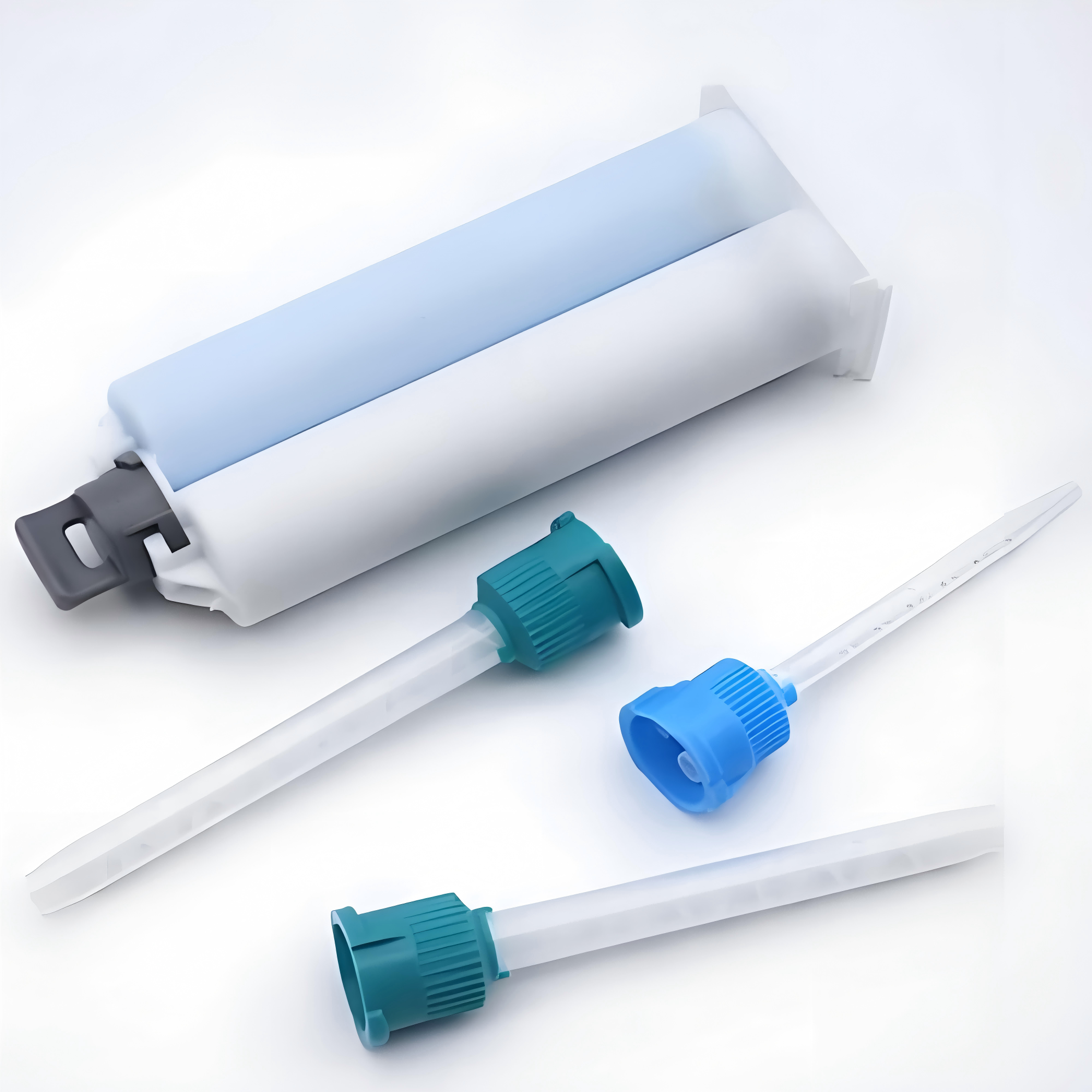
SE800AB is a 1:1 two-part system. Use dispensers or static mixers capable of accurately metering both parts to avoid under/over cure. Validate delivered mix ratio and verify mix quality (visual and, ideally, sample cure checks).
Compression and thickness control
Define target bond line thickness and compression ratio in the assembly fixture. Though the product supports small gaps (~0.17 mm), correct compression ensures the gel fills micro-asperities and minimizes trapped air pockets. Excessive compression may squeeze filler out or reduce mechanical clearance.
Cure schedule
Follow the product cure curve. Typical behavior: tack reduction within ~30 minutes at room temperature and full cure within hours (or accelerated cure at elevated temperature). Do not subject assemblies to final mechanical handling until sufficient cure is achieved.
Reliability testing
Perform application-specific accelerated testing: thermal cycling, humidity + temperature bias, vibration and power soak tests. Monitor contact thermal resistance over time, and correlate to field lifetime expectations (e.g., AEC-Q or customer reliability targets).
Limitations and trade-offs
No material is universally optimal. Be aware of common trade-offs:
- Cost vs. benefit: High thermal conductivity gels cost more than simple greases or pads — justify with thermal budget and reliability requirements.
- Process complexity: Two-part dispensing and cure add steps compared with pre-formed pads.
- High filler loading: Can increase viscosity and influence dispensing equipment selection.
- Application fit: For extremely thin, high-throughput assemblies, pre-formed pads or automated grease may be preferable.
Recommended validation matrix (core items)
At minimum, include the following in your design validation plan:
- Thermal impedance (Zth) measurement on assembled stacks across operating compression states.
- Thermal cycling (e.g., −40 °C ↔ +125 °C) with periodic Zth checks.
- Humidity and temperature bias exposure with electrical insulation verification.
- Vibration and mechanical shock to confirm film integrity and adhesion.
- Long-term power soak to detect any thermal drift or delamination.
Application examples
SE800AB is particularly well suited for:
- Power electronics: inverters, converters and motor drive modules where gap variation and vibration exist.
- Automotive ECUs and powertrain controls requiring insulation and thermal durability.
- High-power LED modules with non-flat mounting surfaces.
- Telecom power units and 5G radio units where long-term stability under thermal load matters.
Concluding remarks
From an engineering standpoint, SE800AB represents a practical, high-performance option when the system requires reliable gap filling and long-term thermal contact under mechanical and thermal stress. Realizing the product’s full benefit requires disciplined process control — surface prep, correct dispensing and cure, compression management and thorough accelerated reliability testing. When those engineering controls are in place, two-part thermal gels like SE800AB can reduce device temperatures, improve field reliability and simplify thermal integration for complex geometries.
Note: This analysis is intended to be objective and engineering-focused. For application-specific advice, sample testing and thermal modeling are recommended.
For technical datasheets, application support, or samples, please visit the product page: TOUSEN — Two-Part Thermal Gel (SE800AB)
Thermal Paste Testing: Dual-Track Analysis of Lab and Bench Data
High-Performance CPU Thermal Paste | TOUSEN OEM/ODM Solutions
Related Article