Phase Change Thermal Pad for High Performance Electronics
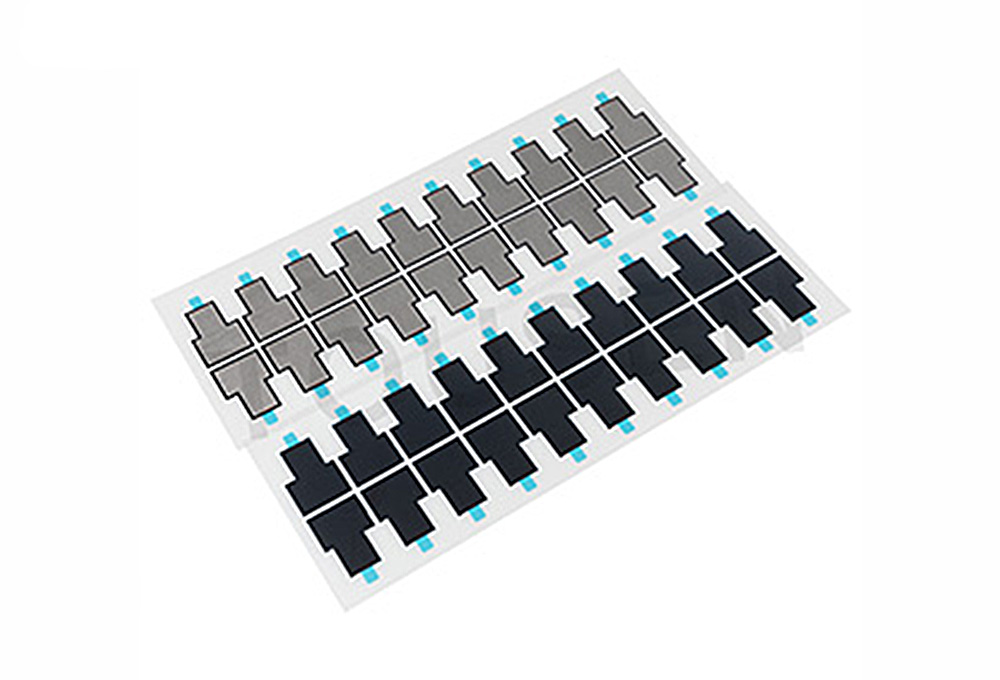
Phase Change Thermal Pad for High Performance Electronics
As CPU, GPU, AI accelerators, power modules, and high-speed communication devices continue to operate at higher power densities, thermal management has become a critical part of electronic system design. For engineers, selecting the right thermal pad requires more than comparing thermal conductivity values. Interface resistance, bond line thickness, surface conformity, operating temperature, assembly pressure, long-term reliability, and manufacturing requirements all influence the actual thermal performance of a thermal interface material.
Conventional thermal pad materials remain widely used because they are easy to handle, available in controlled thicknesses, and well suited to automated assembly. However, as thermal loads increase and allowable temperature margins become smaller, reducing contact resistance between the heat source and heat sink becomes increasingly important. A phase change thermal pad offers an alternative approach by combining the handling advantages of a solid thermal pad with the improved interface conformity of a phase change material.
What Is a Phase Change Thermal Pad?
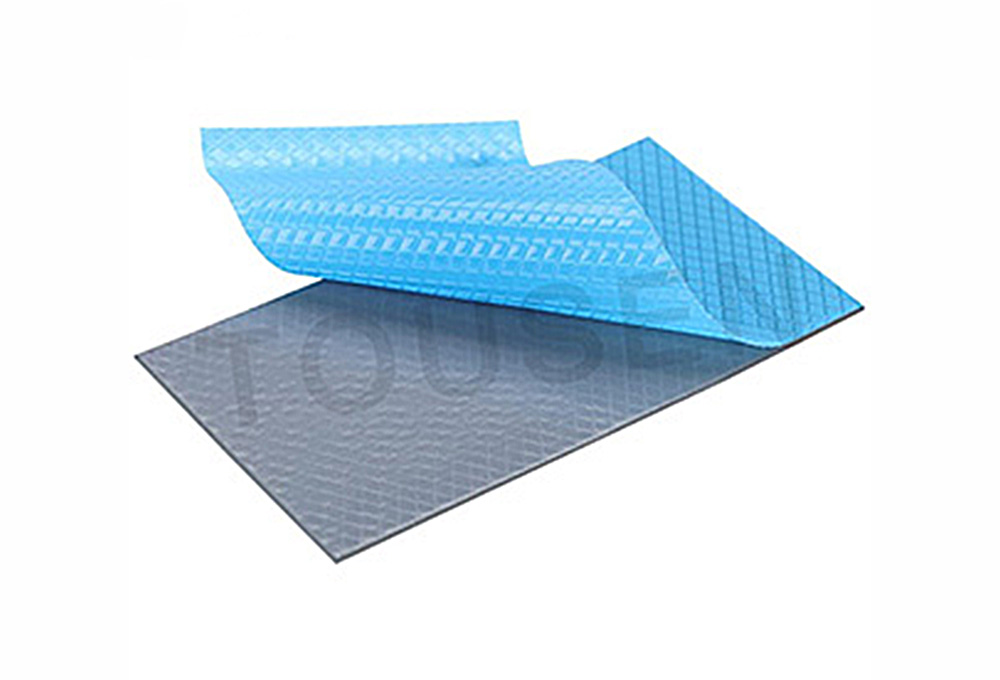
A phase change thermal pad is a thermal interface material designed to change its physical behavior within a specific temperature range. At room temperature, the material remains sufficiently solid for handling, positioning, cutting, and assembly. Once the operating temperature reaches its designed phase transition range, the material softens and conforms more effectively to the microscopic irregularities between the electronic component and heat spreader or heat sink.
This mechanism is important because real electronic interfaces are never perfectly flat. Even polished surfaces contain microscopic peaks and valleys, and air trapped between two surfaces can create significant thermal resistance. A conventional thermal pad relies primarily on its compressibility and flexibility to fill these imperfections. A phase change thermal pad can further improve surface conformity after reaching its transition temperature, helping establish a more continuous thermal path.
From an engineering perspective, the benefit of a phase change thermal pad should therefore not be evaluated solely by its nominal thermal conductivity. Thermal resistance, phase transition temperature, thickness, compression behavior, surface conformity, and actual assembly conditions are equally important when determining system-level thermal performance.
Key Advantages of Phase Change Thermal Pads
1. Improved Interface Conformity and Lower Thermal Resistance
One of the primary advantages of a phase change thermal pad is its ability to improve contact between the heat source and heat dissipation surface. When the material softens at its designed transition temperature, it can conform more closely to microscopic surface irregularities.
This can reduce the amount of air remaining at the interface and improve heat transfer across the thermal interface layer. For high-power CPUs, GPUs, AI accelerators, power electronics, and other heat-intensive devices, controlling interface resistance can be just as important as increasing the thermal conductivity of the material itself.
2. Solid-State Handling for Easier Assembly
Traditional thermal grease can provide excellent surface conformity, but production engineers may need to manage dispensing volume, coating thickness, material contamination, process control, and automated application. A phase change thermal pad is supplied in a solid form at room temperature, allowing it to be pre-cut or die-cut according to the component geometry.
This characteristic can simplify material handling and positioning during production. For high-volume electronics manufacturing, a preformed thermal interface material can also help improve process consistency and reduce variability associated with manual application.
3. A Practical Solution for High Power Density Electronics
As semiconductor power density increases, thermal interfaces must accommodate increasingly demanding operating conditions. A conventional thermal pad can remain an effective solution where a relatively large gap must be filled or where mechanical compliance is a primary requirement. However, applications with tighter interface requirements may benefit from a phase change material that can provide improved conformity after reaching its transition temperature.
For this reason, phase change thermal pads are increasingly considered for applications such as high-performance computing, graphics processing, AI infrastructure, power conversion, telecommunications, and other compact electronic systems where thermal resistance directly affects operating temperature and system reliability.
How Engineers Should Select a Phase Change Thermal Pad
Selecting a phase change thermal pad should begin with the actual mechanical and thermal requirements of the application rather than with thermal conductivity alone. The first consideration is the interface thickness. A material that is unnecessarily thick can increase the thermal path length, while a material that is too thin may not adequately compensate for component tolerances, surface roughness, or assembly variation.
The phase transition temperature is another important parameter. The material should be capable of reaching its designed transition state under the actual operating conditions of the electronic device. If the operating temperature remains significantly below the transition range, the material may not achieve its intended level of conformity.
Engineers should also evaluate thermal resistance, thermal conductivity, compression characteristics, operating temperature range, assembly pressure, surface finish, reliability under thermal cycling, and compatibility with the component and heat sink materials.
TOUSEN PCM8500 Phase Change Thermal Pad
To address the thermal management requirements of high-power electronic systems, TOUSEN offers the PCM8500 phase change thermal pad, designed for applications where low interface resistance and controlled assembly are important considerations.
According to the product specifications, PCM8500 provides a thermal conductivity of 8.5 W/m·K and a thermal resistance as low as 0.04 °C·cm²/W. Its phase transition temperature is approximately 45°C. At room temperature, the material remains in a solid state for convenient handling and positioning. As the operating temperature approaches the designed transition range, the material softens and improves conformity between the heat source and cooling surface.
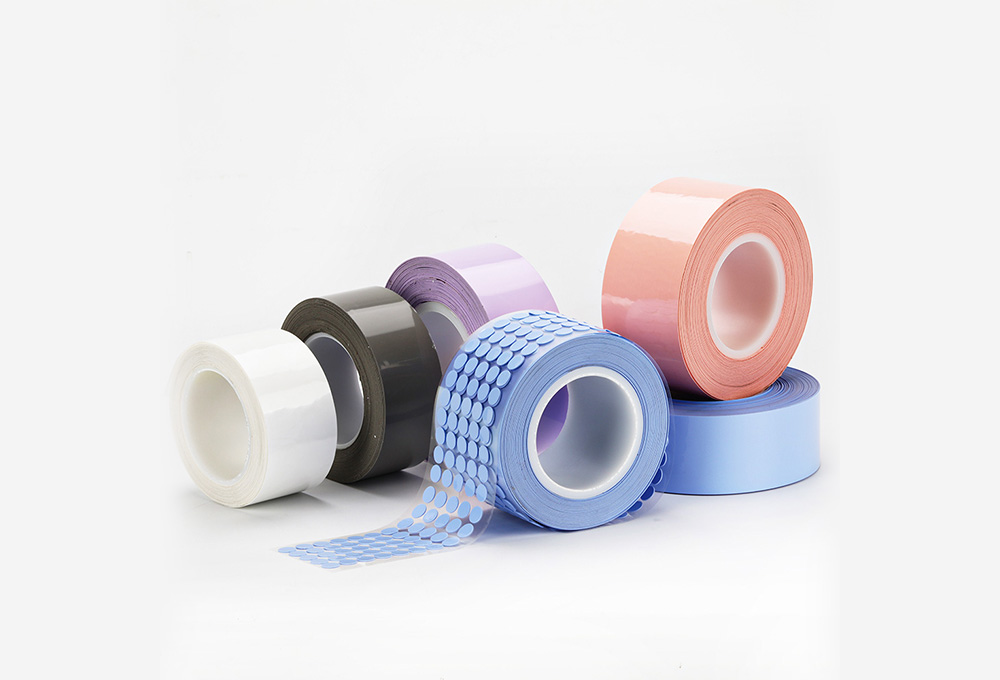
PCM8500 is available in thicknesses including 0.2 mm, 0.25 mm, 0.3 mm, 0.4 mm, and 0.5 mm. This range allows engineers to select a suitable bond line thickness based on component tolerances and mechanical stack-up. The material can also be supplied in sheet, roll, or precision die-cut formats, making it suitable for different production and assembly requirements.
For more information about the TOUSEN PCM8500 phase change thermal pad, please visit: TOUSEN PCM8500 Phase Change Thermal Pad.
Applications for PCM8500
The PCM8500 thermal pad can be considered for a range of high-performance electronics applications, including CPUs, GPUs, AI servers, data center hardware, power electronics, telecommunications equipment, and other compact electronic systems with demanding thermal requirements.
For projects currently using a conventional thermal pad but facing limitations related to interface resistance, a phase change thermal interface material may provide an alternative design path. Similarly, for applications currently using thermal grease but seeking a preformed material that can simplify assembly and improve process consistency, a phase change thermal pad can be evaluated as part of the overall thermal management strategy.
When Should You Consider a Phase Change Thermal Pad?
A phase change thermal pad is particularly relevant when an application requires low thermal resistance, controlled interface thickness, reliable surface conformity, and convenient solid-state handling. It can be especially useful in high-power semiconductor applications where thermal performance and manufacturing consistency are both important.
However, phase change materials are not a universal replacement for every type of thermal pad. Applications with large mechanical gaps may still require a highly compressible gap-filling material. Other designs may benefit from thermal grease, thermal gel, or a conventional thermal pad depending on the required thickness, mechanical tolerance, assembly pressure, and operating environment.
From an engineering standpoint, the appropriate thermal interface material should be selected according to the complete thermal and mechanical design rather than a single material specification. Thermal conductivity, thermal resistance, interface thickness, phase transition temperature, compression, assembly pressure, and long-term reliability should be evaluated together.
Conclusion
As electronic devices continue to move toward higher power density and more compact mechanical designs, the thermal interface is becoming an increasingly important part of overall system performance. A conventional thermal pad remains a practical solution for many applications, while a phase change thermal pad provides an additional option when lower interface resistance and improved thermal conformity are required.
With 8.5 W/m·K thermal conductivity, thermal resistance as low as 0.04 °C·cm²/W, an approximately 45°C phase transition temperature, and multiple thickness options, TOUSEN PCM8500 provides engineers with a flexible solution for demanding electronic thermal management applications. Final material selection should always be validated under the actual operating temperature, mechanical pressure, interface thickness, and thermal cycling conditions of the target product.
Thermal Pads for LED Lighting and Electronic Heat Management
Related Article